This article addresses challenges in the Internet of Consumer Electronics (ICE), such as random task arrivals, limited resources, and system stability, by proposing a collaborative computing framework that integrates edge intelligence with Lyapunov-based deep reinforcement learning (DRL). The framework adopts a three-tier architecture. 1) The application layer generates multiple types of tasks; 2) the intelligent decision-making layer incorporates large artificial intelligence (AI) models to extract global features and employs Lyapunov optimization to transform long-term stochastic problems into deterministic optimization while utilizing an actor-critic DRL architecture for resource allocation; and 3) the resource layer integrates distributed edge nodes to form a unified resource pool. Experiments demonstrate that the framework achieves efficient, stable, and scalable intelligent services on the edge.
The findings indicate that while AI techniques substantially improve network adaptability, resource management, and autonomous operation, significant challenges remain regarding scalability, computational complexity, data dependency, interoperability, explainability, and deployment in real-world environments.
Ali Ahmed Mirza, T. Mahmood, E. Dhulkefl· Scientific Journal of Engine...· 0 citations
The Receptron model is proposed, a single-unit architecture capable of implementing non-linearly separable decision boundaries, without resorting to multi-layer networks, designed for direct deployment on mid-range MCUs, while supporting continuous on-device adaptation.
Stefano Radice, Ludovico Casaccia, Riccaro Emanuele Beccalli et al.· arXiv.org· 0 citations
A unified view of how 6G communications, empowered by advanced AI and ML technologies and distributed intelligence, are expected to drive evolution and expedite the journey toward a smart and intelligent connected world is offered.
Jamal Hussain Arman, Fazal Muhammad, Muhammad Abdullah et al.· Telecommunications Systems· 0 citations
This article presents the first dedicated and comprehensive survey of DRL for Open AI-RAN, and reviews the foundations of model-free, model-based, offline, safe, multi-agent, federated, and transfer learning, and provides an O-RAN-aware framework for formulating RAN control problems through states, observations, action...
Jie Lu, Peihao Yan, Qijun Wang et al.· 0 citations
A Dual-Stage Multi-Time-Scale Temporal Attention-Based LSTM network (D-MTSTA-LSTM) has been architected, which effectively learns short- and long-term relationships in network trends, thereby precisely predicting optimal communication routes and associated power and spectrum allocation.
Nishu Gupta, Rupali Bhartiya, S. Rathod et al.· Scientific Reports· 0 citations
Generative AI (GAI) refers to advanced models that can generate new, realistic, context-aware data or solutions by learning from existing datasets, making them extremely valuable in adaptive intelligent systems. Traditional AI technologies often face limitations, including a lack of interpretability, sensitivity to noi...
Ashis Kumar Mohapatra· 2026 International Conferenc...· 0 citations
Related blog posts
Microsoft Research Blog· microsoft.comOct 21, 2026
For decades, a fundamental question about the difficulty of computing in high-dimensional spaces has resisted proof. New research resolves this question, removing a major theoretical obstacle to understanding the efficiency of randomized algorithms used across science and computing. The Kannan–Lovász–Simonovits (KLS) conjecture was proposed in 1995. It asks whether, for a broad class of high-dimensional […] The post Solving a 31-year-old grand challenge in mathematics – the KLS conjecture appear…
MIT News · Artificial Intelligence· news.mit.eduOct 15, 2026
A new computational approach reveals how cells communicate to assemble into tissues. This could accelerate stem cell engineering, improve disease models, and inform therapies.
Microsoft Research Blog· microsoft.comOct 15, 2026
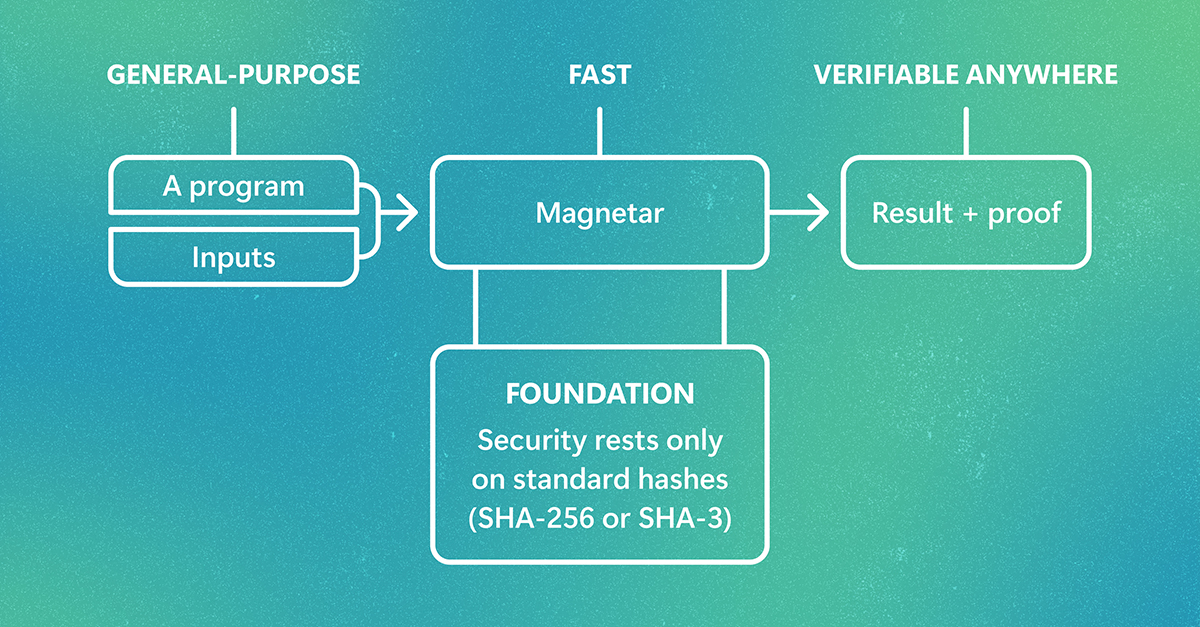
Zero-knowledge proofs can verify computing results without rerunning workloads or exposing sensitive data. Magnetar helps bring them into the mainstream with support for standard programming languages, major speed gains, and quantum-resistant security. The post Proof-based general-purpose computing with Magnetar appeared first on Microsoft Research.
MIT News · Artificial Intelligence· news.mit.eduOct 8, 2026