Skip to content

Learning the Shared Latent Structure of Cryo-EM Inverse Problems

Oct 2026 · 0 citations · 47 references
Computer Science Biology

TL;DR

The EMber family of vision transformers are introduced, pre-trained on>50 million experimental particle images from 214 EMPIAR datasets together with simulated projections from 268,000 molecular assemblies, and it is demonstrated how to learn representations that capture biological information for use across multiple cryo-EM inverse problems.


Abstract

Understanding biomolecular function requires characterizing three-dimensional structure and conformational variability, for which cryogenic electron microscopy (cryo-EM) is a powerful tool. Cryo-EM produces noisy two-dimensional particle images in which molecular structure, particle pose, and imaging conditions are jointly encoded. Recovering biological information from these observations spans inverse problems including pose estimation, heterogeneity analysis, and reconstruction. These tasks are usually addressed independently despite shared protein structure and image formation, motivating a common representation across inverse problems. Since biologically meaningful differences may be spatially localized, we study self-distillation with complementary global and masked patch objectives. Because experimental dataset discrimination can reflect acquisition-specific cues, we develop controlled synthetic and experimental evaluations and find that structural discrimination benefits from dense spatial features. We introduce the EMber family of vision transformers, pre-trained on>50 million experimental particle images from 214 EMPIAR datasets together with simulated projections from 268,000 molecular assemblies. EMber improves upon existing methods at conformational and compositional discrimination by 14.85 and 14.26 percentage points, estimates conformational populations to within 1.59pp error with a linear probe, and produces particle assignments yielding reference-quality reconstructions in fewer epochs. We demonstrate how to learn representations that capture biological information for use across multiple cryo-EM inverse problems.

View source

Similar papers

#artificial intelligence Preprint Oct 2026

Fold'EM: Direct atomic structure inference from Cryo-EM particles

Fold'EM is introduced, an inference-time framework that combines priors from protein generative models directly with cryo-EM particle images to determine atomic models from a small number of single particle images, bypassing both intermediate density reconstruction and downstream model building against the reconstructe...

Advaith Maddipatla, Märt-Erik Mäeots, M. Pegoraro et al. · 0 citations
Open access Oct 2026

CryoTriplane: triplane-based neural radiance field representation for high-resolution cryo-EM 3D homogeneous reconstruction

Abstract Motivation Determining the three-dimensional (3D) structure of proteins is a cornerstone of structural biology, providing essential insights into their underlying biological mechanisms and functional roles. Cryogenic electron microscopy (cryo-EM) single-particle analysis allows researchers to investigate biomo...

Yi-Ran Cheng, Bin-Tao He, Qiong Zeng et al. · 0 citations
Open access Sep 2026

CryoMV: Structure-Prior-Guided Modeling and Real-Particle Validation of Continuous Conformational Transitions in Cryo-EM

Continuous protein conformations are essential for understanding fundamental biological processes and supporting drug discovery. Although cryo-EM can resolve individual states at high resolution, recovering continuous heterogeneity from 2D particle images remains challenging. High noise, motion blur, and limited struct...

Fu-Wei Li, Hao Dong, Shuai Tang et al. · 0 citations
Open access Oct 2026

CryoCodex: learning discrete structural representations for cryo-EM map post-processing

Cryo-EM maps frequently suffer from weak structural signals, spatially variable quality, and noise, complicating interpretation and downstream modeling. Existing post-processing approaches treat density enhancement, quality assessment, and masking as separate tasks, often amplifying residual noise or introducing local...

Bin Cheng, Bao-Quan Su, Jian-Yi Yang · 0 citations
#artificial intelligence Preprint Sep 2026

Atelier: Learning Local Self-Supervised Features for CryoEM Volumes via Hypernetworks

Atelier is a self-supervised framework that amortizes INR fitting for reconstructed cryoEM maps, a transformer-based hypernetwork that generates high-fidelity reconstructions across a wide range of protein structures, including large multi-subunit assemblies.

Phillip Lo, Sudarshan Babu, D. Kimanius et al. · 0 citations
Open access Sep 2026

The CAHRA Challenge: A Community-Wide Assessment of Cryo-EM Heterogeneous Reconstruction Algorithms

The ability of cryo-electron microscopy (cryo-EM) to interrogate the atomic structure and motion of biomolecules has motivated the development of a wide range of algorithms for heterogeneity analysis. However, evaluating and comparing these methods remains challenging because ground-truth structures are generally unkno...

J. Feathers, Robert C. Heeter, Geoffrey Woollard et al. · 2 citations

Related blog posts

MIT News · Artificial Intelligence Oct 28, 2026

Making machines that can listen

Professor Paris Smaragdis develops computers with superhuman hearing for applications like speech recognition, music understanding, and environmental monitoring.

Microsoft Research Blog Aug 11, 2026

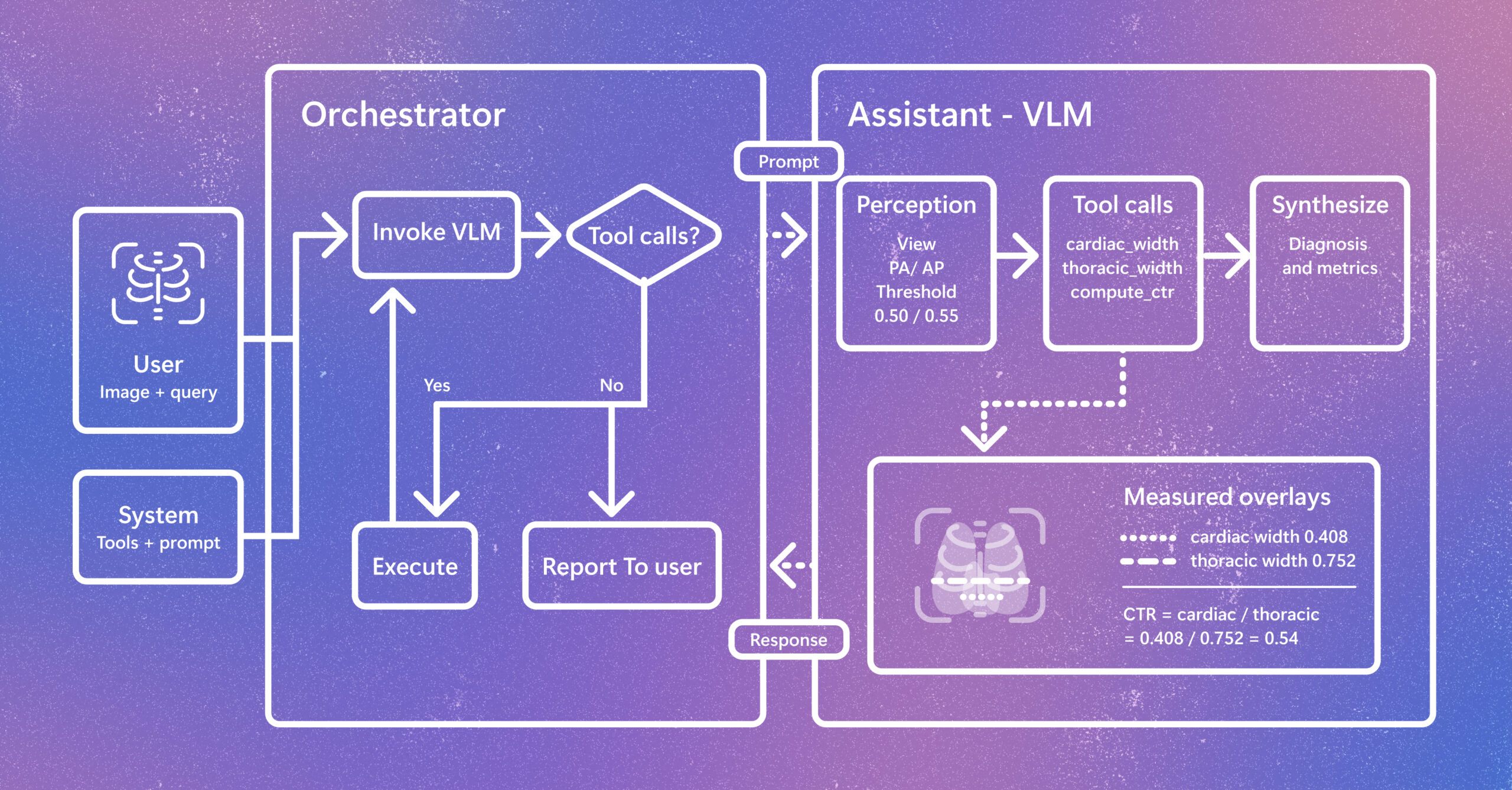
Introducing CARE-X: Towards Clinically Useful Radiology VLMs with Auxiliary Supervision, Reward-Aligned Learning, and Tool-Augmented Measurement

Radiology AI is evolving beyond report generation. CARE-X explores a unified approach that combines flexible reasoning, calibrated predictions, and measurement-based tools for chest X-ray interpretation. The post Introducing CARE-X: Towards Clinically Useful Radiology VLMs with Auxiliary Supervision, Reward-Aligned Learning, and Tool-Augmented Measurement appeared first on Microsoft Research.

We use cookies to run the site and, with your consent, for analytics and to show ads. See our Cookie Policy.