Replay Pruning and Few-Bit Integer Inference for Hardware-Efficient Speed-Sign Recognition
Se Un ParkKyungkeon ChungHuigeol KimJunyoung Park
Oct 2026
Machine LearningComputer Vision
Abstract
Speed-limit sign recognition on an automotive camera system-on-chip (SoC) must fit a detector and a classifier (the reader) into the memory, arithmetic, and energy budgets of the device. In our two-stage recognizer, the detector, a YOLO-family network with ReLU and hard-sigmoid operators, is compressed by channel replay: an iterative pruning cascade identifies the channels to remove, the recorded deletions are replayed on the original task-trained network, the parent, and one continuous knowledge-distillation recovery follows. On a YOLOv5n, replay removes 60.3% of the parameters at the accuracy of the parent and, in validation mAP50-95 over five matched seeds, outperforms iterative pruning and training from scratch, and its per-step variant (per-step replay) is the most accurate pruning method. On a YOLOv8n, replay and per-step replay outperform every other method and the unpruned parent. The reader, a five-layer CNN with 18k parameters, and the post-processing of the YOLOv5n and YOLOv8n heads use integer arithmetic only. With 4-bit weights and 8-bit activations (W4A8), the reader matches FP32 accuracy in 12.1 KB of on-chip memory, and an executable streaming model reproduces the INT8 class predictions of its runtime on all 9,850 test crops. On a Jetson AGX Orin, INT8 is faster than FP16 only in the implicit formulation of TensorRT, and the replay detector runs fastest on the deep-learning accelerator (DLA). Trained on public data only, the combined system of 0.72 M parameters recognizes 95.2% of the signs of a held-out automotive camera at 90% precision and 94 frames per second.

This publication proposes a definition and a classification of agile software development approaches and analyses ten software development methods that can be characterized as being "agile" against the defined criterion.
P. Abrahamsson, O. Salo, Jussi Ronkainen et al.· arXiv.org· 727 citations· ⚡54
The study shows that agile practices improve both informal and formal communication, but indicates that, in larger development situations involving multiple external stakeholders, a mismatch of adequate communication mechanisms can sometimes even hinder the communication.
M. Pikkarainen, Jukka Haikara, O. Salo et al.· Empirical Software Engineeri...· 401 citations· ⚡48
The results indicate that software engineering work practices are chosen opportunistically, adapted and configured to provide value under the constrains imposed by the startup context.
Nicolò Paternoster, Carmine Giardino, M. Unterkalmsteiner et al.· Information and Software Tec...· 394 citations· ⚡54
The possibility of inferring high-dimensional data inference in a model that consists of a prior and an auxiliary differentiable constraint given some additional information is considered, thereby allowing a range of potential applications in adapting models to new domains and tasks.
Alexandros Graikos, Esmeralda S. Whitammer, N. Jojic et al.· Neural Information Processin...· 316 citations· ⚡15
It is proved that any global minimizer of the trajectory balance objective can define a policy that samples exactly from the target distribution, and empirically demonstrate the benefits of the trajectories balance objective for GFlowNet convergence, diversity of generated samples, and robustness to long action sequenc...
Esmeralda S. Whitammer, Moksh Jain, Emmanuel Bengio et al.· Neural Information Processin...· 302 citations· ⚡60
Exploring how generative AI could make machine vision more accessible to businesses. The post GenEye in a Box: Making Machine Vision Something You Can Just Ask For appeared first on GPT-Lab.
Microsoft Research Blog· microsoft.comAug 11, 2026
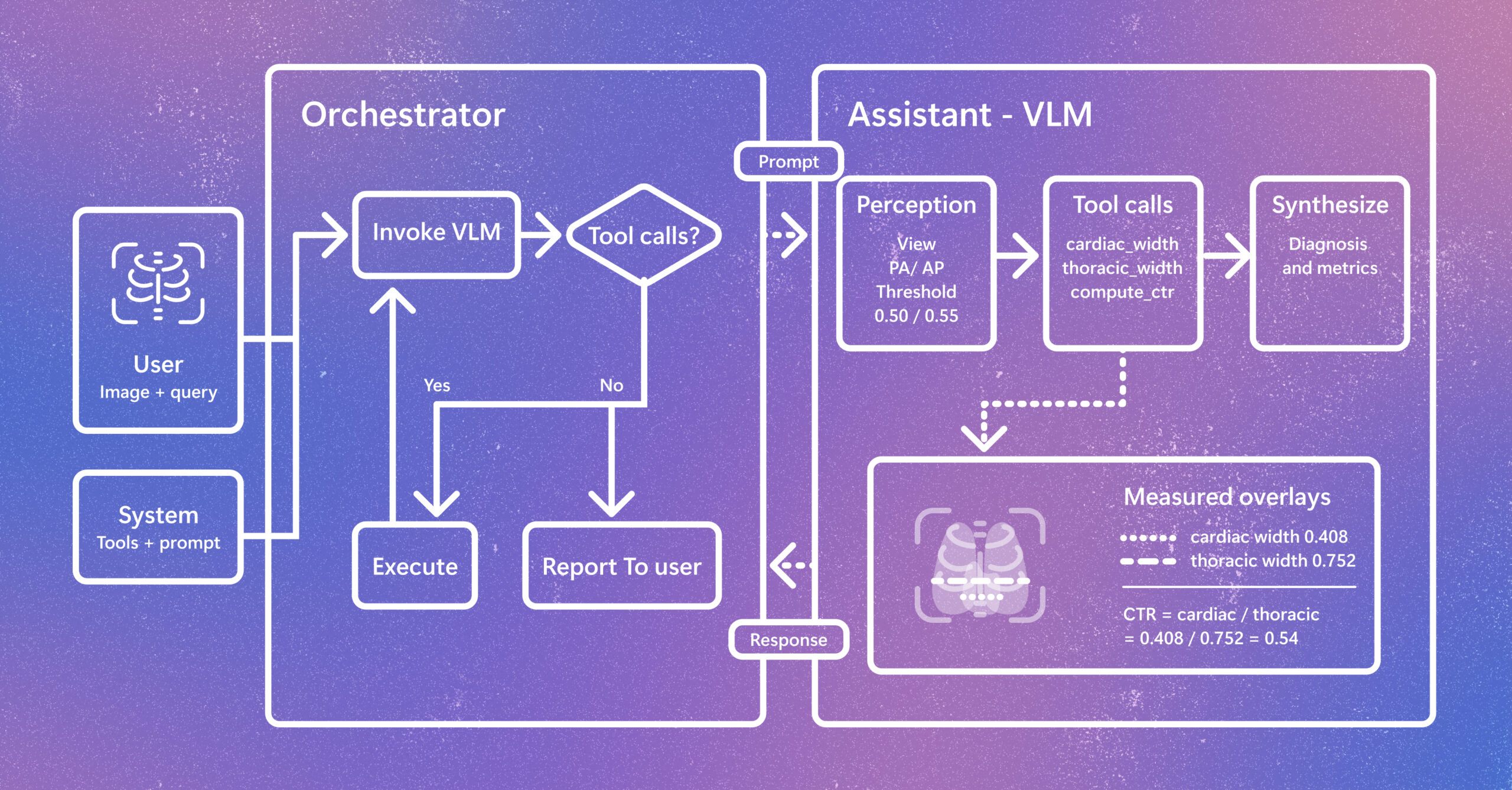
Radiology AI is evolving beyond report generation. CARE-X explores a unified approach that combines flexible reasoning, calibrated predictions, and measurement-based tools for chest X-ray interpretation. The post Introducing CARE-X: Towards Clinically Useful Radiology VLMs with Auxiliary Supervision, Reward-Aligned Learning, and Tool-Augmented Measurement appeared first on Microsoft Research.