Skip to content
#machine learning #computer vision Preprint Open access

Data-Driven Vision-Language Models for Remote Sensing: A Survey

Yue Zhou Shujun Zhao Xue Yang Ruigang Li Tianwen Zhang Mengcheng Lan Chaofeng Chen Lingfei Ma Hongjie He Jonathan Li
Oct 2026
Machine Learning Computer Vision

Abstract

During the deep learning era, innovations in remote sensing (RS) vision models primarily focused on optimizing network architectures for specific tasks and conducting end-to-end training. However, with the advent of the Vision-Language Models (VLMs) era, constrained by substantial computational resource demands, the mainstream research paradigm has shifted towards adapting general-purpose VLMs using RS vertical domain data for fine-tuning, rather than modifying their core architectures. This transition marks a change in the innovation pathway from model-centric to data-centric. Despite the increasing importance of data, the academic community still lacks a systematic, data-centric survey to guide researchers in constructing high-quality RS vision-language datasets for various application scenarios and in conducting effective model fine-tuning and performance evaluation based on these datasets. To address this gap, this paper presents a systematic review of the development status of RS datasets tailored for VLMs. It further provides a comprehensive practical guide for RS researchers in the large model era, covering the entire pipeline from data construction to fine-tuning and evaluation. This paper aims to encourage the academic community to build more diverse and higher-quality vision-language datasets for specialized RS sub-fields. Ultimately, the goal is to converge these efforts into a comprehensive RS vision-language corpus that offers extensive task coverage and a wide geographical distribution, thereby laying a solid data foundation for advancing towards general artificial intelligence in RS.


View source

Similar papers

#artificial intelligence Conference Open access Jun 2018

Gibson Env: Real-World Perception for Embodied Agents

This paper investigates developing real-world perception for active agents, proposes Gibson Environment for this purpose, and showcases a set of perceptual tasks learned therein.

F. Xia, Amir Zamir, Zhi-Yang He et al. · 1,069 citations · ⚡112
#computer vision Review Sep 2017

Agile Software Development Methods: Review and Analysis

This publication proposes a definition and a classification of agile software development approaches and analyses ten software development methods that can be characterized as being "agile" against the defined criterion.

P. Abrahamsson, O. Salo, Jussi Ronkainen et al. · 727 citations · ⚡54
#computer vision Jun 2008

The impact of agile practices on communication in software development

The study shows that agile practices improve both informal and formal communication, but indicates that, in larger development situations involving multiple external stakeholders, a mismatch of adequate communication mechanisms can sometimes even hinder the communication.

M. Pikkarainen, Jukka Haikara, O. Salo et al. · 401 citations · ⚡48
#machine learning Review Open access Oct 2014

Software development in startup companies: A systematic mapping study

The results indicate that software engineering work practices are chosen opportunistically, adapted and configured to provide value under the constrains imposed by the startup context.

Nicolò Paternoster, Carmine Giardino, M. Unterkalmsteiner et al. · 394 citations · ⚡54

Diffusion models as plug-and-play priors

The possibility of inferring high-dimensional data inference in a model that consists of a prior and an auxiliary differentiable constraint given some additional information is considered, thereby allowing a range of potential applications in adapting models to new domains and tasks.

Alexandros Graikos, Esmeralda S. Whitammer, N. Jojic et al. · 316 citations · ⚡15

Related blog posts

MIT News · Artificial Intelligence Oct 28, 2026

Making machines that can listen

Professor Paris Smaragdis develops computers with superhuman hearing for applications like speech recognition, music understanding, and environmental monitoring.

Microsoft Research Blog Aug 11, 2026

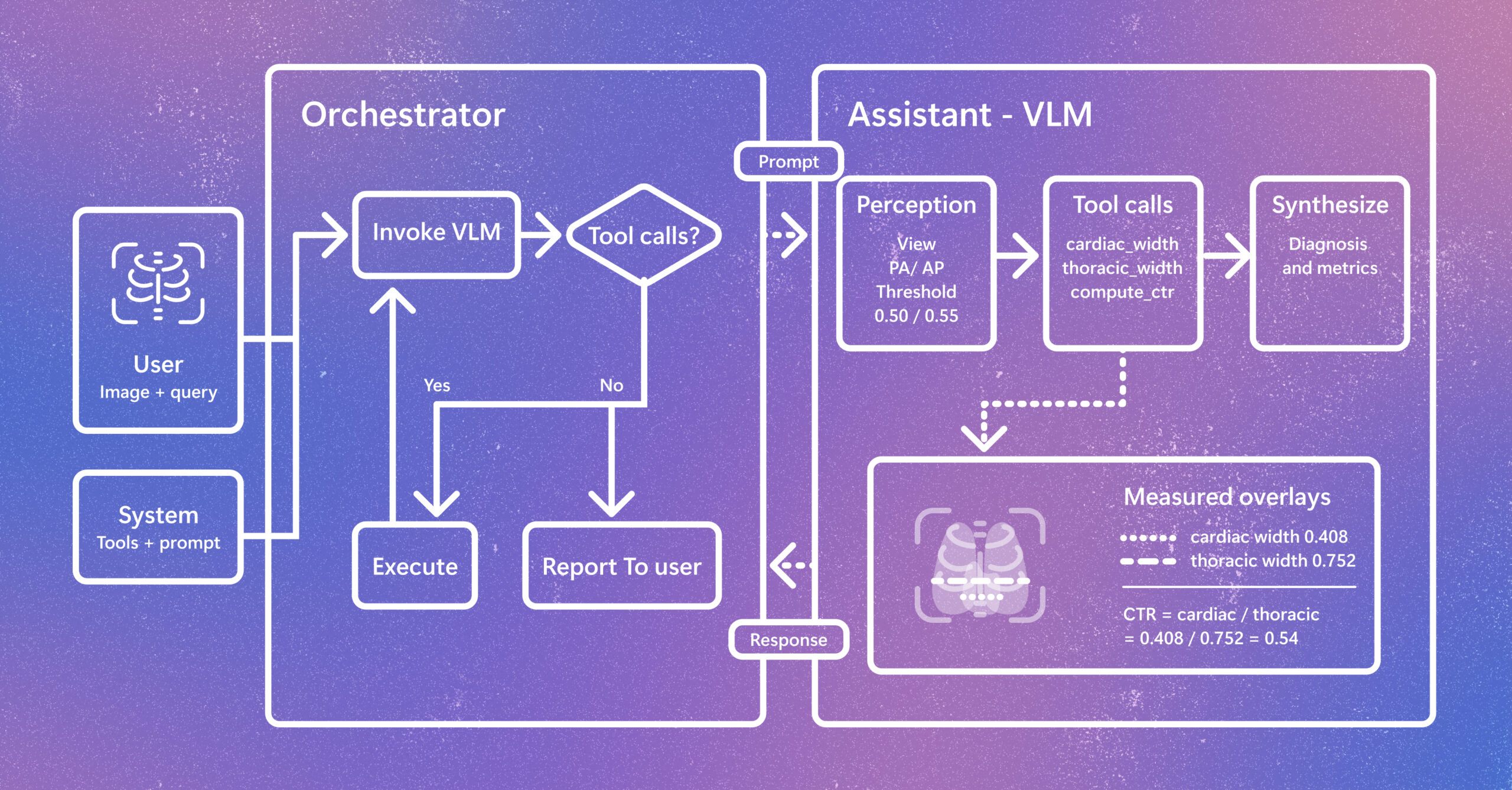
Introducing CARE-X: Towards Clinically Useful Radiology VLMs with Auxiliary Supervision, Reward-Aligned Learning, and Tool-Augmented Measurement

Radiology AI is evolving beyond report generation. CARE-X explores a unified approach that combines flexible reasoning, calibrated predictions, and measurement-based tools for chest X-ray interpretation. The post Introducing CARE-X: Towards Clinically Useful Radiology VLMs with Auxiliary Supervision, Reward-Aligned Learning, and Tool-Augmented Measurement appeared first on Microsoft Research.

We use cookies to run the site and, with your consent, for analytics and to show ads. See our Cookie Policy.