Aug 2026· Sensing and Imaging· Vol 27· 0 citations· 45 references
TL;DR
Experimental results demonstrate that the proposed sequential pipeline preserves high specificity while reducing missed detections compared to radar-only processing and indicates that sequential processing can offer a viable alternative to parallel fusion for edge-based drone detection under SNR and computing constraints.
The increasing density of unmanned aerial systems (UAS) in urban low-altitude airspace introduces significant safety and security challenges, particularly for detecting non-cooperative drones in environments where RADAR (Radio Detection and Ranging) deployment is impractical. This paper presents a distributed, artifici...
Neno Ruseno, Enrique Puertas, Aurilla Aurelie Arntzen Bechina· International Conference on...· 0 citations
A controlled synthetic feature-level benchmark indicates that reliability-aware hard suppression can mitigate multimodal negative transfer under asymmetric degradation and should not be interpreted as evidence of robustness to waveform-level or real-world acoustic disturbances.
An advanced radar signal processing framework for autonomous vehicles that integrates adaptive preprocessing, target detection, clutter suppression, feature extraction, and object classification to improve perception performance is presented.
Kuruba Theja Kuruba Theja, Dharavath Sunil Dharavath Sunil, Dr B Ramprasad Dr B Ramprasad· International Journal of Sci...· 0 citations
This paper proposes a novel Transformer-based neural network architecture specifically designed for radar signal processing that integrates multi-head self-attention mechanisms with temporal convolutional networks to effectively model both local patterns and global dependencies in radar data.
Jun Hu, Cheng Yu, Yahui Hu et al.· International Conference on...· 0 citations
Continuous traffic monitoring is critical for accurate structural load assessment and fatigue life estimation of highway bridges. However, conventional vision-based methods suffer from limitations such as line-of-sight restrictions, susceptibility to adverse weather and lighting conditions, and limited spatial coverage...
Cong Chen, Shenghan Zhang· e-Journal of Nondestructive...· 0 citations
This study presents an optimized, cost-effective radar sensor system for real-time, and contactless driver drowsiness detection. The system consist on a 24 GHz frequency-modulated continuous Wave radar module integrated behind the central rearview mirror for highly sensitive analysis of driver micromovements, including...
María-José López, César Palacios-Arias, B. Ordoñez et al.· IEEE Sensors Letters· 0 citations
Related blog posts
Microsoft Research Blog· microsoft.comOct 21, 2026
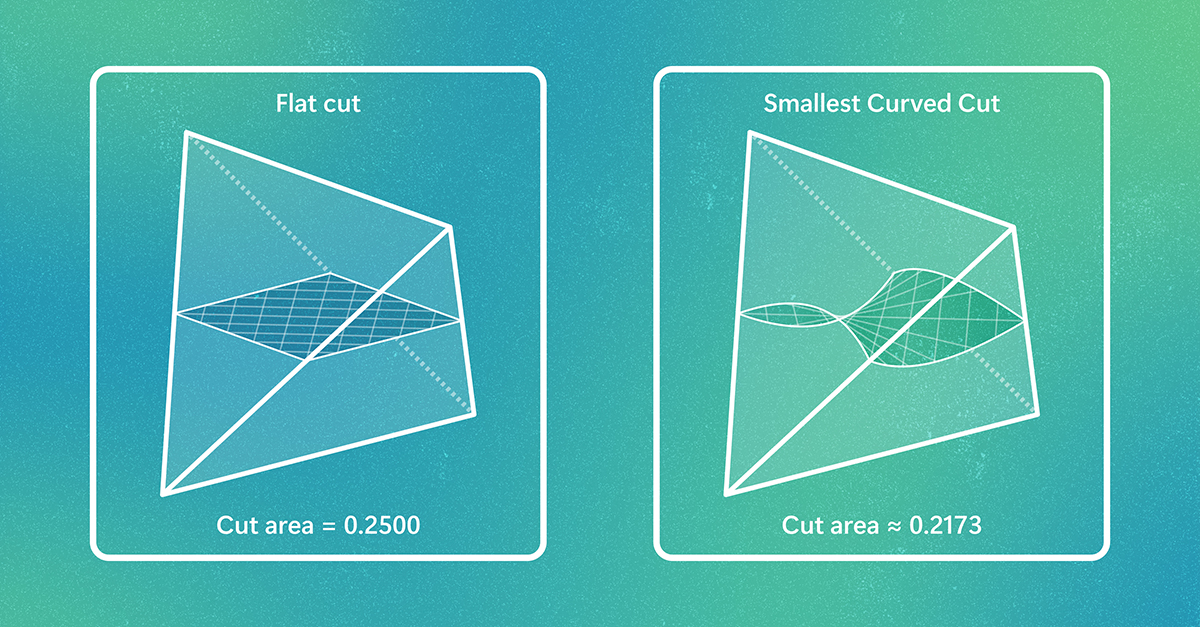
For decades, a fundamental question about the difficulty of computing in high-dimensional spaces has resisted proof. New research resolves this question, removing a major theoretical obstacle to understanding the efficiency of randomized algorithms used across science and computing. The Kannan–Lovász–Simonovits (KLS) conjecture was proposed in 1995. It asks whether, for a broad class of high-dimensional […] The post Solving a 31-year-old grand challenge in mathematics – the KLS conjecture appear…
MIT News · Artificial Intelligence· news.mit.eduOct 15, 2026
A new computational approach reveals how cells communicate to assemble into tissues. This could accelerate stem cell engineering, improve disease models, and inform therapies.
Microsoft Research Blog· microsoft.comOct 15, 2026
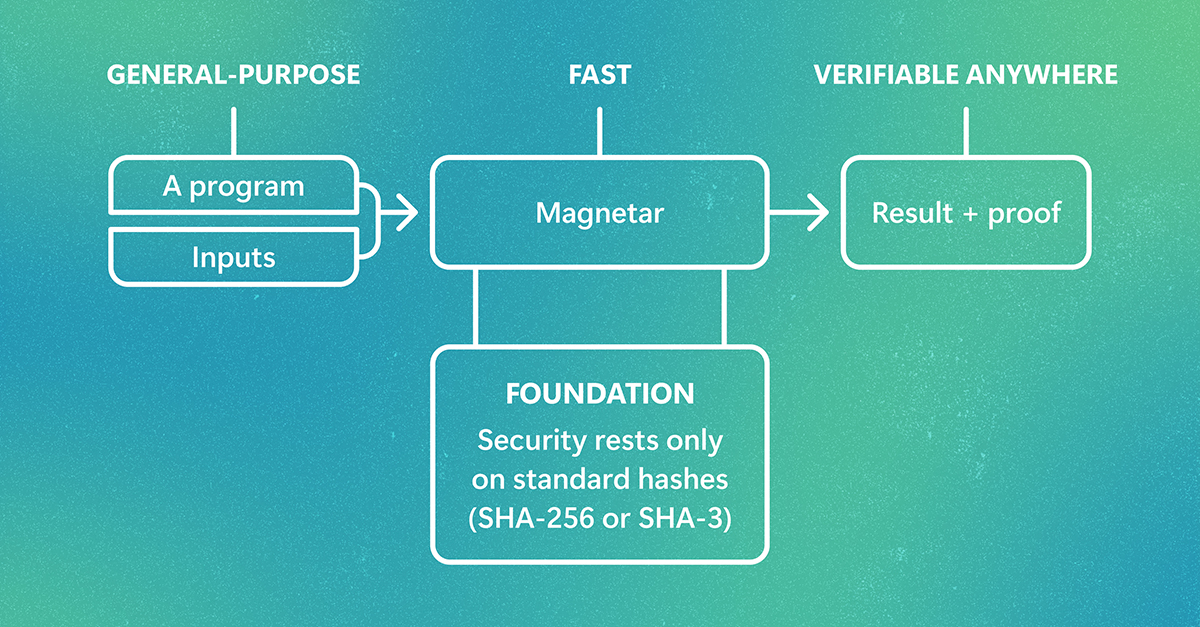
Zero-knowledge proofs can verify computing results without rerunning workloads or exposing sensitive data. Magnetar helps bring them into the mainstream with support for standard programming languages, major speed gains, and quantum-resistant security. The post Proof-based general-purpose computing with Magnetar appeared first on Microsoft Research.
MIT News · Artificial Intelligence· news.mit.eduOct 8, 2026