Semantic Representation for Agentic Self-Play in Automated Laboratories
Yves DelleyJohn CollerZachary CuttsAlexander DaryinMathias BellaicheJun W. KimOscar DonosaSrinidhi B. SeshadriTanner ClarySandy KlemmAvinatan HassidimYossi MatiasPooja RaoPetar SirkovicAnnalisa Pawlosky
Oct 2026
Artificial IntelligenceRobotics
Abstract
Navigating complex, high-dimensional biological search spaces necessitates scalable physical and computational intelligence to explore beyond local optima through iterative self-play across ideation, experimentation, and automation. Translating experimental designs into reliable physical execution remains bottlenecked by static laboratory automation and unmodeled physical variability. To address this, we introduce VERified Infrastructure for Discovery Laboratories, or VERID, a foundational infrastructure designed to bridge the gap between the high-level reasoning of artificial intelligence (AI) agents and complex, error-prone physical realities of wet labs. VERID is a persistent, high-fidelity semantic digital twin of the laboratory workcell that provides four core services: queryable introspection for agentic reasoning, time-compressed simulation for protocol validation, comprehensive trace persistence for a complete scientific record, and a framework for safe execution.
We present three case studies using aqueous dye and deionized water mixtures to validate the optical and fluidic foundations of VERID. These studies demonstrate how VERID enables pre-emptive detection of critical errors in experimental protocols, stateful mid-run error recovery and post-hoc identification of subtle physical failures. The simulation functions as a discrete accounting engine, allowing agents to safely and inexpensively explore experimental designs in silico and refine experimental strategies through iterative self-play. VERID also captures structured multimodal experimental data for downstream analysis, knowledge mining and agent training. We argue that this semantic layer is an essential prerequisite for deploying autonomous agents in the biochemical and biomedical sciences, ensuring data integrity, operational safety, and paving the way for tackling previously intractable grand challenges in biology.

This paper investigates developing real-world perception for active agents, proposes Gibson Environment for this purpose, and showcases a set of perceptual tasks learned therein.
F. Xia, Amir Zamir, Zhi-Yang He et al.· 2018 IEEE/CVF Conference on...· 1,069 citations· ⚡112
GAOKAO-Bench is introduced, an intuitive benchmark that employs questions from the Chinese GAOKAO examination as test samples, including both subjective and objective questions that contribute a robust evaluation benchmark for future large language models and offers valuable insights into the advantages and limitations...
Xiaotian Zhang, Chun-yan Li, Yi Zong et al.· arXiv.org· 216 citations· ⚡17
An algorithm is proposed which leverages disentangled semantic factors to generate adversarial perturbation by altering controlled semantic attributes to fool the learner towards various "adversarial" targets.
Haonan Qiu, Chaowei Xiao, Lei Yang et al.· arXiv.org· 208 citations· ⚡17
This work proposes a HALO that directly maximizes the utility of generations instead of maximizing the log-likelihood of preferences, and suggests that the best loss depends on the inductive biases most appropriate for a given setting, an oft-overlooked consideration.
This work investigates the possibilities of using LLMs in a resume screening setting via a document retrieval framework that simulates job candidate selection and finds that the MTEs are biased, significantly favoring White-associated names in 85% of cases and female-associated names in only 11.1% of cases.
This work shows that orders of magnitude enhancement in performance could be obtained by a combination of hardware improvements and tight quantum-HPC integration and introduces high-performance architectures for quantum-probabilistic computing with custom-designed accelerators to tackle today's industry-scale classical...
Masoud Mohseni, Artur Scherer, K. Johnson et al.· arXiv.org· 121 citations· ⚡9
Related blog posts
MIT News · Artificial Intelligence· news.mit.eduJul 30, 2026
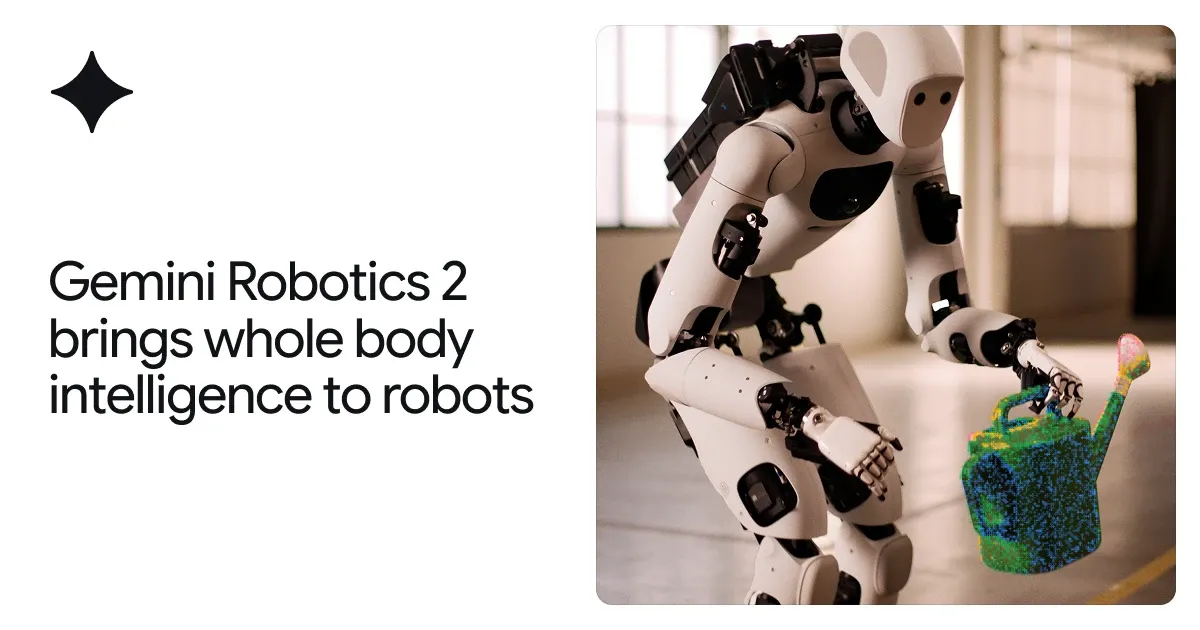
From feet to fingertips — we are teaching robots intelligent whole-body control, fine dexterity, and teamwork to complete a broad range of complex tasks.