Skip to content
#machine learning #computer vision Preprint Open access

RADIANT: Object-Centric Feed-Forward Global Illumination

Sarah Zhang Zhiyang Dou Minghao Guo Benjamin Tod Jones Wojciech Matusik
Oct 2026
Machine Learning Computer Vision

Abstract

Feed-forward neural renderers synthesize global illumination across novel 3D scenes without per-scene optimization or runtime ray tracing. Existing transformer-based renderers tokenize individual triangles, so self-attention scales quadratically with mesh resolution. Yet macroscopic radiative transport is governed by the underlying surface geometry and object arrangements rather than a particular mesh discretization; finer tessellation can thus inflate token counts without changing the underlying transport physics, motivating a discretization-agnostic and object-centric representation. We introduce RADIANT (RADiance-based Inter-Actor Neural Transformer), an object-centric architecture for feed-forward global illumination from point inputs. By representing each object with a compact budget of 32 surface-patch tokens, RADIANT decouples attention sequence length from polygon counts. In a single network, an inter-object scene transformer models 3D radiative exchange and a view decoder renders images at target camera poses. To capture light transport without materializing O(N^2) bias matrices, invariant form-factor attention embeds geometric distances and surface orientations directly into query-key dot products as SE(3)-invariant inner products weighted by learned area and material gains. For primary visibility without mesh connectivity, camera rays cross-attend scene tokens guided by depth-tested point splats in a shared spherical frame. Across a 1.03M-scene benchmark under matched model capacity, RADIANT reaches 25 dB tone-mapped PSNR in 5x fewer training steps than RenderFormer, and achieves 32.2 dB at 600k steps (+3.3 dB over RenderFormer and +7.6 dB over RenderFormer-V2). We further demonstrate the scalability of RADIANT, which completes a 512x512 forward pass of a 500-object scene in 0.83 s, with computational cost scaling with the number of objects rather than polygons.


View source

Similar papers

#artificial intelligence Conference Open access Jun 2018

Gibson Env: Real-World Perception for Embodied Agents

This paper investigates developing real-world perception for active agents, proposes Gibson Environment for this purpose, and showcases a set of perceptual tasks learned therein.

F. Xia, Amir Zamir, Zhi-Yang He et al. · 1,069 citations · ⚡112
#computer vision Review Sep 2017

Agile Software Development Methods: Review and Analysis

This publication proposes a definition and a classification of agile software development approaches and analyses ten software development methods that can be characterized as being "agile" against the defined criterion.

P. Abrahamsson, O. Salo, Jussi Ronkainen et al. · 727 citations · ⚡54
#computer vision Jun 2008

The impact of agile practices on communication in software development

The study shows that agile practices improve both informal and formal communication, but indicates that, in larger development situations involving multiple external stakeholders, a mismatch of adequate communication mechanisms can sometimes even hinder the communication.

M. Pikkarainen, Jukka Haikara, O. Salo et al. · 401 citations · ⚡48
#machine learning Review Open access Oct 2014

Software development in startup companies: A systematic mapping study

The results indicate that software engineering work practices are chosen opportunistically, adapted and configured to provide value under the constrains imposed by the startup context.

Nicolò Paternoster, Carmine Giardino, M. Unterkalmsteiner et al. · 394 citations · ⚡54

Diffusion models as plug-and-play priors

The possibility of inferring high-dimensional data inference in a model that consists of a prior and an auxiliary differentiable constraint given some additional information is considered, thereby allowing a range of potential applications in adapting models to new domains and tasks.

Alexandros Graikos, Esmeralda S. Whitammer, N. Jojic et al. · 316 citations · ⚡15

Related blog posts

MIT News · Artificial Intelligence Oct 28, 2026

Making machines that can listen

Professor Paris Smaragdis develops computers with superhuman hearing for applications like speech recognition, music understanding, and environmental monitoring.

Microsoft Research Blog Aug 11, 2026

Introducing CARE-X: Towards Clinically Useful Radiology VLMs with Auxiliary Supervision, Reward-Aligned Learning, and Tool-Augmented Measurement

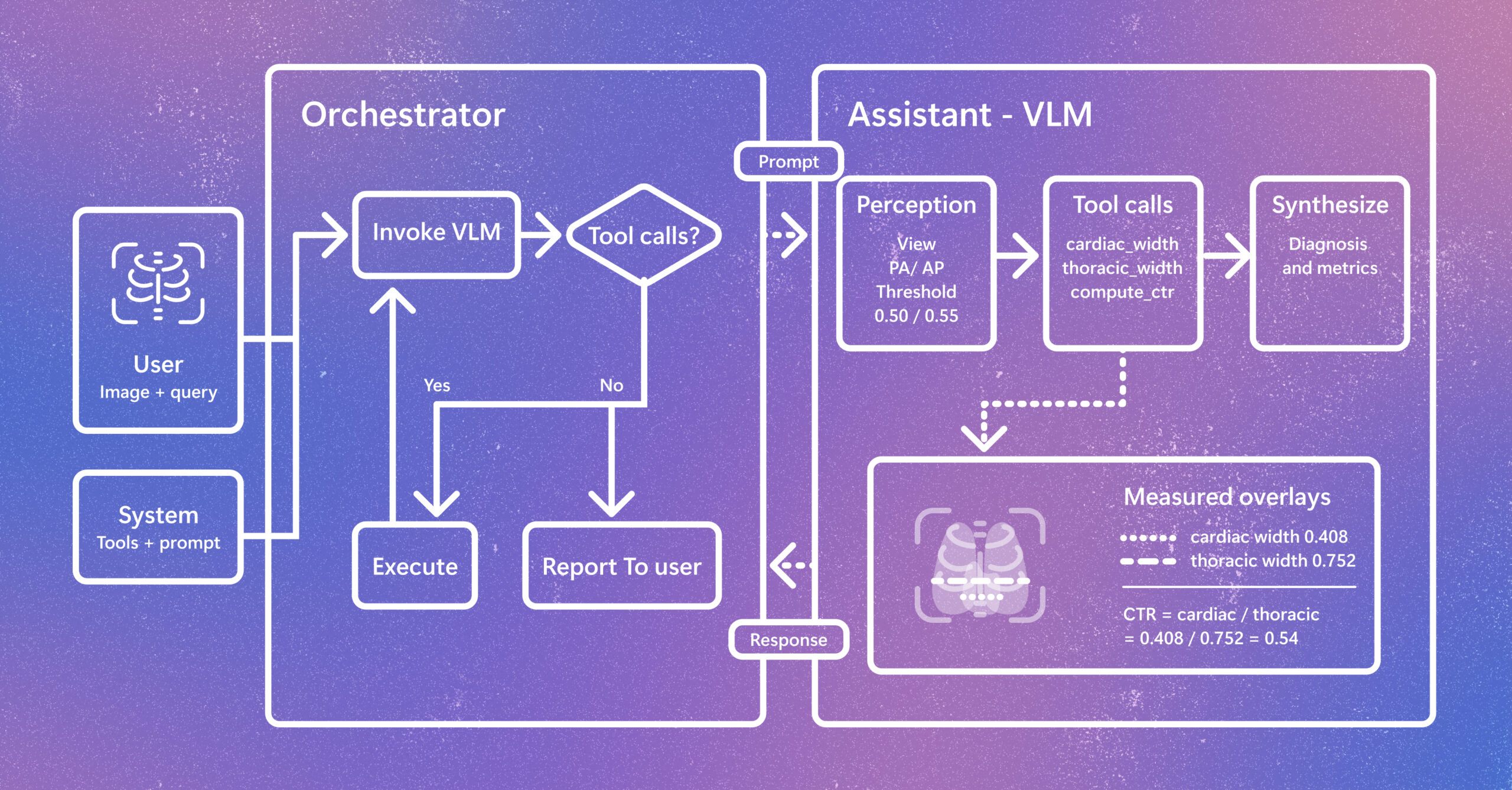
Radiology AI is evolving beyond report generation. CARE-X explores a unified approach that combines flexible reasoning, calibrated predictions, and measurement-based tools for chest X-ray interpretation. The post Introducing CARE-X: Towards Clinically Useful Radiology VLMs with Auxiliary Supervision, Reward-Aligned Learning, and Tool-Augmented Measurement appeared first on Microsoft Research.

We use cookies to run the site and, with your consent, for analytics and to show ads. See our Cookie Policy.