Skip to content
#software testing Open access

Smart Tourist Safety System: Integrating Machine Learning, Spatial Data, and Human-Centred Emergency Workflows

Oct 2026 · International Journal for Research in Applied Science and Engineering Technology · 0 citations

TL;DR

STSS is presented as a developing decision-support platform rather than a proven replacement for emergency services because further reproducible evaluation and real-world testing are required before its effectiveness can be established.

Abstract

Tourists visiting unfamiliar locations may face difficulties identifying nearby emergency services, communicating their location, and obtaining timely information about the status of an emergency request. The Smart Tourist Safety System (STSS) is designed to address these challenges through a software platform that combines location-aware services, emergency-service directories, machine-learning models, and responder communication workflows. The system includes district-level crime-risk estimation, audio-based distress classification, and natural-language intent recognition. It also uses geospatial calculations to support distance estimation and location-based processing. According to the available project audit, the calibrated crime-risk model achieved 82.54% accuracy, while the TF-IDF and LinearSVC intent classifier achieved 84.92% test accuracy with a macro F1-score of 0.8437. The audio distress classifier reported 37.72% precision and 54.43% recall at a distress threshold of 0.80. At this threshold, the reported number of false positives decreased from 791 to 71. These results illustrate both the potential and the limitations of applying machine learning to tourist safety. In particular, prediction errors, incomplete geographic data, and differences between offline model artifacts and active application components must be considered. STSS is therefore presented as a developing decision-support platform rather than a proven replacement for emergency services. Further reproducible evaluation and real-world testing are required before its effectiveness can be established


Read PDF

Similar papers

Open access Oct 2026

Smart Weather-Aware and Safety-Optimized Route Planning Using Machine Learning and Spatial Risk Analytics

The environmental characteristics and weather conditions of cities directly influence the safety of city streets. Conventional navigation systems are optimized for the quickest possible travel times and shortest distances, without consideration for safety or the risks associated with travel through these areas. In this...

Suraj Kumar, Anam Aaliya, D. Kumar · 0 citations
Open access Sep 2026

AN INTELLIGENT MOBILE PLATFORM TO BRIDGE COMMUNITY INCIDENT REPORTING AND POLICE RESPONSE USING AI-BASED CLASSIFICATION AND REAL-TIME GEOSPATIAL HEATMAPPING

Community public safety has traditionally relied on a one-way pipeline — a resident calls, and a dispatcher and officer respond with no shared visibility into the surrounding situation, a gap that especially discourages reporting in communities with lower trust in police. GuardLink addresses this with a Flutter mobile...

Matthew Shen, Ang Li · 0 citations
Open access 2026

Predictive RFID Tour Monitoring Dashboard Integrating Multimodal Machine Learning and Contextual Data

The results demonstrated the feasibility of the proposed automated tour group monitoring system, but further multi-user and field-based evaluation is required to establish its scalability and generalizability for larger smart tourism environments.

Heng Jin Koey, Siti Zuraidah Ibrahim, Ismahayati Adam et al. · 0 citations
Open access Oct 2026

NAVISCAPE: An Intelligent Navigation and Risk Analysis

Navigation apps usually minimize travel time or distance, which can send drivers through accident-prone or congested stretches. This paper presents NAVISCAPE, a navigation platform that ranks candidate routes using accident-severity prediction, traffic forecasting, live traffic data, and nearby emergency resources. An...

K. Kubra, R. Yadav, S. M et al. · 0 citations
Open access Oct 2026

Intelligent Monitoring and Warning for Road‐Network Tunnels Via Feature Matching

Mountain tunnel construction involves complex geological conditions and frequent cross‐operations, making safety accident prevention particularly challenging. To enhance the foresight and specificity of construction safety management, this paper develops a feature element system for safety accidents in mountain tunne...

Ying-Hui Zhang, Xiang-Hui Liu · 0 citations
Review Open access Oct 2026

Construction of Urban Functional Zones Identification Model Based on TF-IDF and Public Perception-Weighted Algorithms

This paper combines a TF-IDF weighting scheme with survey-based perception scores and feeds both into a POI-based functional-zone classifier, which yields a noticeably sharper read of urban functional structure on Pudong New Area in Shanghai.

Shuo Yang · 0 citations

Related blog posts

Microsoft Research Blog Nov 12, 2026

Microsoft Research Focus – Edition #98

What's new in research at Microsoft? Host Anson Ho explores the latest, including AI-powered universal translation, a breakthrough in a 31-year-old mathematics challenge, and advances making AI coding agents faster and more efficient.  The post Microsoft Research Focus – Edition #98 appeared first on Microsoft Research.

Microsoft Research Blog Nov 5, 2026

Formally verifying agent-written full-stack web apps with PDD Kit

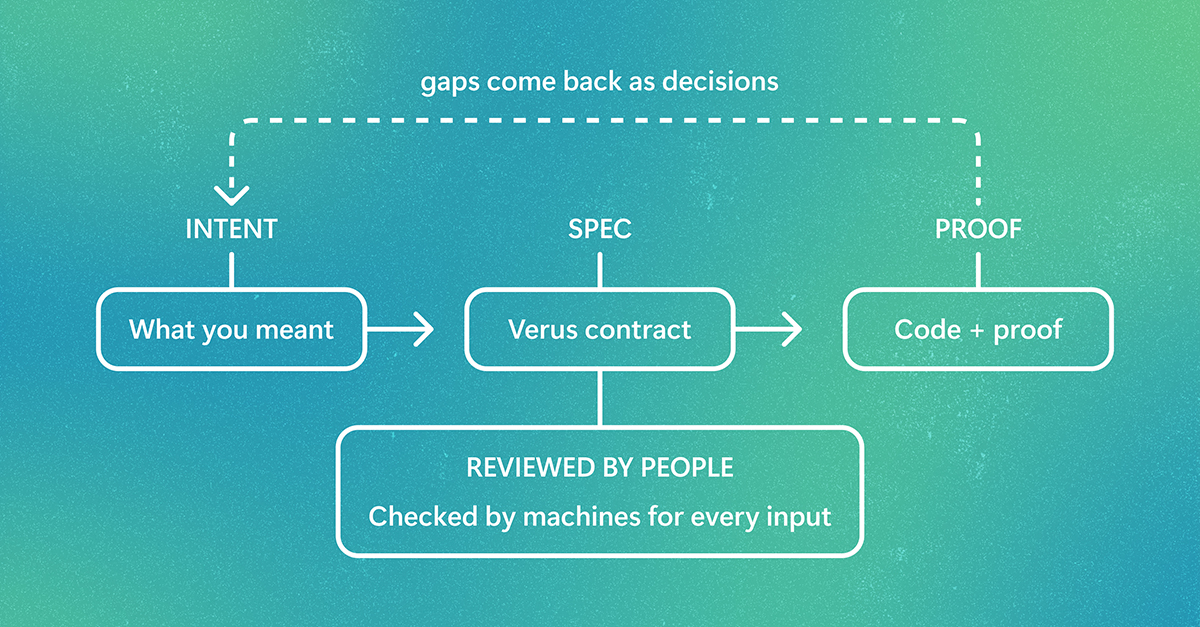
AI agents can generate code at a scale that’s hard for humans to review line-by-line. PDD Kit helps ensure the code is doing what the developer intended by creating formal specifications and testing against them. It converts developer intent into a Verus specification, proves AI-generated code meets it for every input, and uses tests where proofs aren't practical. Developers review intent, not every line. The post Formally verifying agent-written full-stack web apps with PDD Kit appeared first o…

We use cookies to run the site and, with your consent, for analytics and to show ads. See our Cookie Policy.