Skip to content
#artificial intelligence #robotics Preprint Open access

SpaceAct: Benchmarking 3D Spatial and Temporal Reasoning via Closed-Loop Action and Active Perception

Chenglong Shi Zekai Yuan Yue Song Jon Pu Will Wu
Oct 2026
Artificial Intelligence Robotics

Abstract

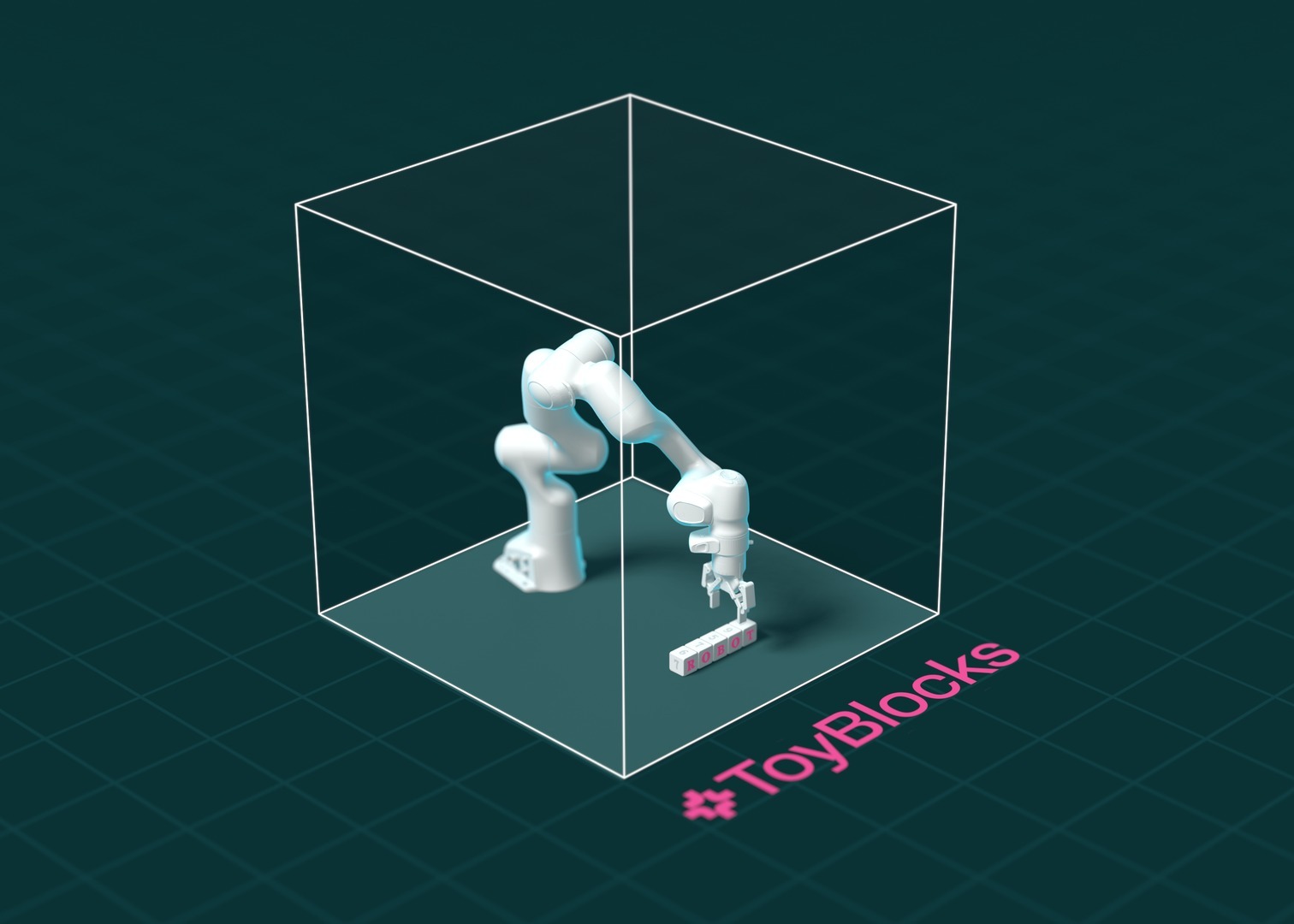
To solve problems in 3D space rather than merely describe images, multimodal large language models (MLLMs) need 3D spatiotemporal reasoning: reconstructing 3D geometry from occluded 2D views, anticipating physical dynamics, and executing precise, closed-loop actions. Prior studies test passive VQA on static images or symbolic planning, requiring no execution or supplying privileged coordinates while ignoring collision, statics, and timing. We introduce SpaceAct, an interactive benchmark evaluating 3D spatiotemporal reasoning via closed-loop physical action and active perception, with SAPA, a Spatiotemporal Active-Probing Agent framework. Built on interlocking bricks and mechanical puzzles, it has 108 verified instances across 36 task families in six categories, without privileged coordinates, and diagnostic modes (+plan, +state, no-camera, blind, L7 levers). In brick-bridging or aperture-threading, models rotate the camera to resolve occlusion, read in-scene rulers, output 6-DoF poses under swept-collision and statics checks, and self-correct via split-screen rollback feedback (dynamic tasks freeze time during deliberation and give five strobe frames). Across 10 frontier MLLMs on the 44 hardest instances, scores span 4.8-79.1 (seven solve at most 27.3% of 6-DoF tasks); for the top three, a reference plan (+plan) closes 44% of the gap while leaving collisions at 5.2 per episode, whereas adding exact 3D state (+state) closes 90% and cuts collisions to 0.5; for four others, +plan lifts the mean score from 10.9 to 35.3 and +state to 81.8; and 46% of failures are collision or observation loops. SpaceAct and SAPA advance evaluation to closed-loop physical interaction, showing that even with a valid plan, MLLMs remain bottlenecked by 3D visual grounding and action refinement, while offering a testbed for active multi-view exploration and explicit 3D grounding.
View source

Similar papers

#artificial intelligence Conference Open access Jun 2018

Gibson Env: Real-World Perception for Embodied Agents

This paper investigates developing real-world perception for active agents, proposes Gibson Environment for this purpose, and showcases a set of perceptual tasks learned therein.

F. Xia, Amir Zamir, Zhi-Yang He et al. · 1,069 citations · ⚡112
#artificial intelligence Open access May 2023

Evaluating the Performance of Large Language Models on GAOKAO Benchmark

GAOKAO-Bench is introduced, an intuitive benchmark that employs questions from the Chinese GAOKAO examination as test samples, including both subjective and objective questions that contribute a robust evaluation benchmark for future large language models and offers valuable insights into the advantages and limitations...

Xiaotian Zhang, Chun-yan Li, Yi Zong et al. · 216 citations · ⚡17

KTO: Model Alignment as Prospect Theoretic Optimization

This work proposes a HALO that directly maximizes the utility of generations instead of maximizing the log-likelihood of preferences, and suggests that the best loss depends on the inductive biases most appropriate for a given setting, an oft-overlooked consideration.

Kawin Ethayarajh, Winnie Xu, Niklas Muennighoff et al. · 195 citations · ⚡28
#artificial intelligence Open access Jul 2024

Gender, Race, and Intersectional Bias in Resume Screening via Language Model Retrieval

This work investigates the possibilities of using LLMs in a resume screening setting via a document retrieval framework that simulates job candidate selection and finds that the MTEs are biased, significantly favoring White-associated names in 85% of cases and female-associated names in only 11.1% of cases.

Kyra Wilson, Aylin Caliskan · 131 citations · ⚡8
#artificial intelligence Review Nov 2024

How to Build a Quantum Supercomputer: Scaling from Hundreds to Millions of Qubits

This work shows that orders of magnitude enhancement in performance could be obtained by a combination of hardware improvements and tight quantum-HPC integration and introduces high-performance architectures for quantum-probabilistic computing with custom-designed accelerators to tackle today's industry-scale classical...

Masoud Mohseni, Artur Scherer, K. Johnson et al. · 121 citations · ⚡9

Related blog posts

We use cookies to run the site and, with your consent, for analytics and to show ads. See our Cookie Policy.