Audio descriptions (AD) are essential for making visual media accessible to blind and low-vision (BLV) users. While Multimodal Large Language Models (MLLMs) offer a scalable solution for generating audio descriptions on-demand, their performance on ``inline'' audio descriptions -- which must fit within existing silences in a video -- remains under-explored, particularly for diverse user-generated content (UGC). We present a comprehensive investigation into MLLM-generated inline audio descriptions. First, we introduce MTG-AD, a professionally annotated dataset of 36 hours of videos, each averaging $\sim$5 mins. and 8k+ descriptions in total, co-created by paired blind and sighted AD professionals to provide a high-quality benchmark for this task. Second, we propose MTG-AD-Eval, an evaluation framework based on audio description expert guidelines that provides fine-grained, reference-free actionable metrics for model improvement. Crucially, our framework evaluates the end-to-end task: it renders the generated scripts into audio tracks to assess their fit within the original video's natural silences, minimizing disruptive overlaps. Our analysis across frontier MLLMs reveals that while models accurately describe visual events and substantially reduce speech overlaps, gaps persist in narrative pacing and flow. Finally, we empirically validate that our automated and reference-free metrics correlate significantly with human quality ratings from sighted raters and 7 BLV participants, finding that while users narrowly prefer human-authored audio descriptions, they find MLLM-generated audio descriptions highly beneficial for comprehension. We provide actionable system design guidance and release MTG-AD at https://hf.co/datasets/google/mind-the-gap-inline-ad and MTG-AD-Eval at https://github.com/google/mtg-ad.

This paper investigates developing real-world perception for active agents, proposes Gibson Environment for this purpose, and showcases a set of perceptual tasks learned therein.
F. Xia, Amir Zamir, Zhi-Yang He et al.· 2018 IEEE/CVF Conference on...· 1,069 citations· ⚡112
This publication proposes a definition and a classification of agile software development approaches and analyses ten software development methods that can be characterized as being "agile" against the defined criterion.
P. Abrahamsson, O. Salo, Jussi Ronkainen et al.· arXiv.org· 727 citations· ⚡54
The study shows that agile practices improve both informal and formal communication, but indicates that, in larger development situations involving multiple external stakeholders, a mismatch of adequate communication mechanisms can sometimes even hinder the communication.
M. Pikkarainen, Jukka Haikara, O. Salo et al.· Empirical Software Engineeri...· 401 citations· ⚡48
The results indicate that software engineering work practices are chosen opportunistically, adapted and configured to provide value under the constrains imposed by the startup context.
Nicolò Paternoster, Carmine Giardino, M. Unterkalmsteiner et al.· Information and Software Tec...· 394 citations· ⚡54
The possibility of inferring high-dimensional data inference in a model that consists of a prior and an auxiliary differentiable constraint given some additional information is considered, thereby allowing a range of potential applications in adapting models to new domains and tasks.
Alexandros Graikos, Esmeralda S. Whitammer, N. Jojic et al.· Neural Information Processin...· 316 citations· ⚡15
Known for his clear and elegant writing style, Bertsekas shaped fields from control and optimization to large-scale computation and artificial intelligence.
MIT News · Artificial Intelligence· news.mit.eduOct 28, 2026
Professor Paris Smaragdis develops computers with superhuman hearing for applications like speech recognition, music understanding, and environmental monitoring.
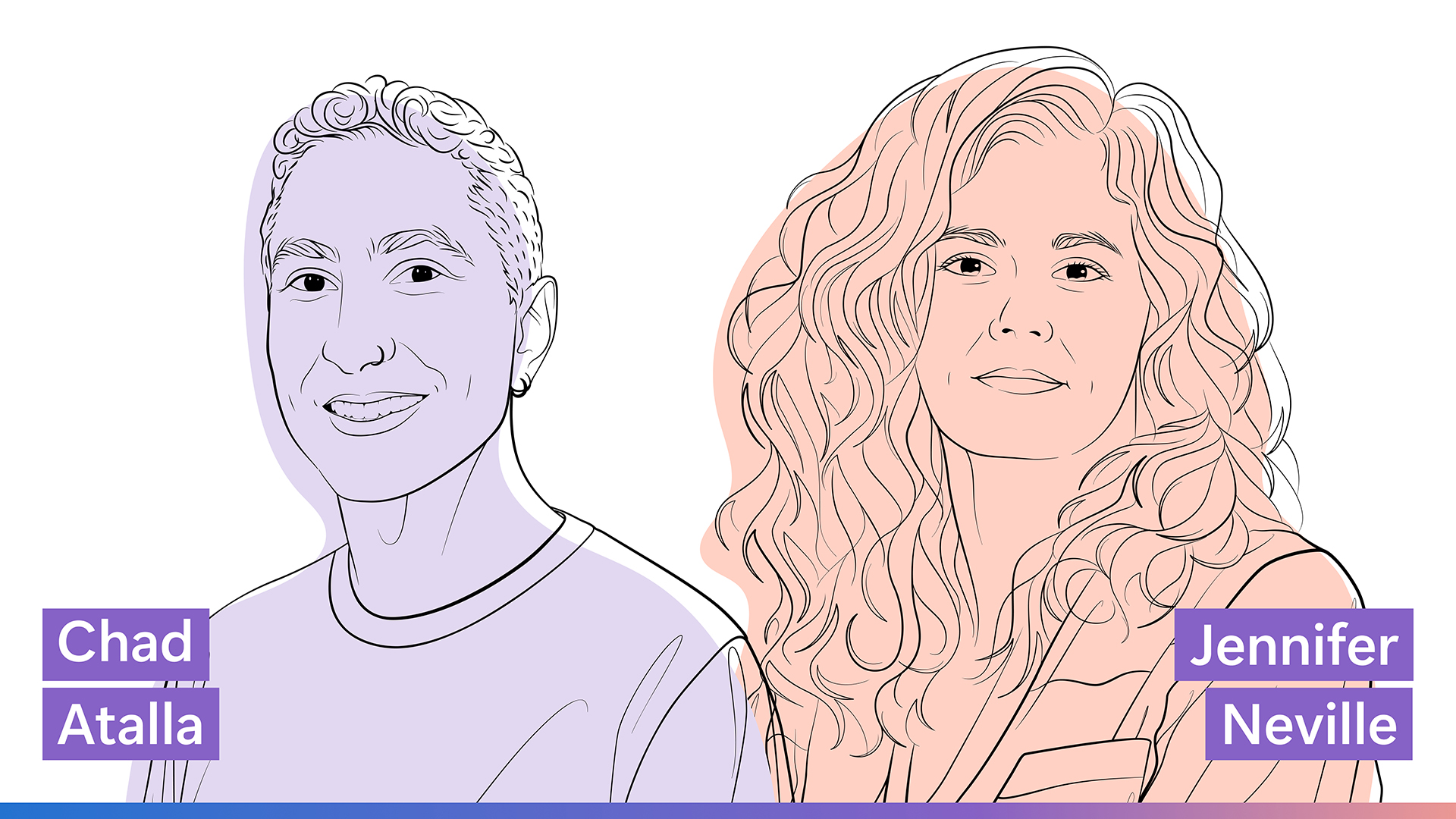
Jennifer Neville did not want to go into computer science—but that’s exactly where she landed. Neville discusses the starts and stops that led to her professional sweet spot and her work identifying “surprising failures” making it hard for AI to handle complexity. The post What AI gets wrong and what failure teaches us appeared first on Microsoft Research.
We use cookies to run the site and, with your consent, for analytics and to show ads.
See our Cookie Policy.