The Athlete as a Scientist of One: Agentic Bayesian Experimental Design for Individualized Physiology from Consumer Wearables
Behnam Moradi
Oct 2026
Artificial IntelligenceRobotics
Abstract
Large language model (LLM) agents for personal health read wearable data and recommend, but do not learn about the individual in a way that can be audited or falsified. We present EpiCoach, an agentic system that treats one athlete, a cross-country mountain biker, as the subject of accountable N-of-1 science. Claims about the athlete live in an evidence-gated hypothesis registry: each must issue a probabilistic prediction about a future session before it occurs, and its belief moves only through computed evidence from a logged statistical fit. Predictions come from a mechanistic digital twin inferred from heart rate, GPS and barometric altitude: a lagged heart-rate response model, a fitness-fatigue model with learned time constants, and a latent technical-descending skill state, measured on discovered trail segments. The agent prescribes the next training week as a constrained experiment maximizing information gain subject to load and safety constraints, around two instrument rides. We evaluate the system two ways over eighteen months of data. A rolling-origin replay benchmark shows the twin beats standard forecasters on heart rate but not segment time, and the agentic loop matches a static model. A live prospective phase runs the weekly cycle: in its first three weeks the ledger sealed 20 predictions, scored 14, the descent forecast calibrated after one correction, the climb forecast pessimistic as the athlete improved, and the safety officer vetoed the agent twice. Every correction is preserved in the registry, a template for auditable, falsifiable personalization in digital health. We release the registry, benchmark and protocol.

This paper investigates developing real-world perception for active agents, proposes Gibson Environment for this purpose, and showcases a set of perceptual tasks learned therein.
F. Xia, Amir Zamir, Zhi-Yang He et al.· 2018 IEEE/CVF Conference on...· 1,069 citations· ⚡112
GAOKAO-Bench is introduced, an intuitive benchmark that employs questions from the Chinese GAOKAO examination as test samples, including both subjective and objective questions that contribute a robust evaluation benchmark for future large language models and offers valuable insights into the advantages and limitations...
Xiaotian Zhang, Chun-yan Li, Yi Zong et al.· arXiv.org· 216 citations· ⚡17
An algorithm is proposed which leverages disentangled semantic factors to generate adversarial perturbation by altering controlled semantic attributes to fool the learner towards various "adversarial" targets.
Haonan Qiu, Chaowei Xiao, Lei Yang et al.· arXiv.org· 208 citations· ⚡17
This work proposes a HALO that directly maximizes the utility of generations instead of maximizing the log-likelihood of preferences, and suggests that the best loss depends on the inductive biases most appropriate for a given setting, an oft-overlooked consideration.
This work investigates the possibilities of using LLMs in a resume screening setting via a document retrieval framework that simulates job candidate selection and finds that the MTEs are biased, significantly favoring White-associated names in 85% of cases and female-associated names in only 11.1% of cases.
This work shows that orders of magnitude enhancement in performance could be obtained by a combination of hardware improvements and tight quantum-HPC integration and introduces high-performance architectures for quantum-probabilistic computing with custom-designed accelerators to tackle today's industry-scale classical...
Masoud Mohseni, Artur Scherer, K. Johnson et al.· arXiv.org· 121 citations· ⚡9
Related blog posts
MIT News · Artificial Intelligence· news.mit.eduJul 30, 2026
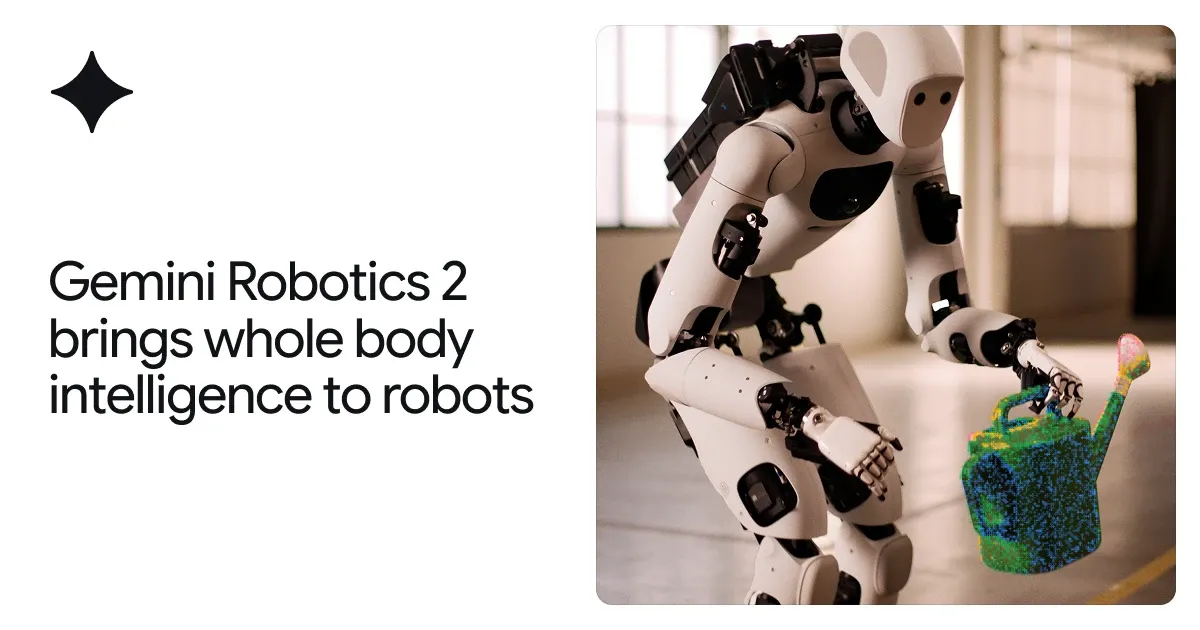
From feet to fingertips — we are teaching robots intelligent whole-body control, fine dexterity, and teamwork to complete a broad range of complex tasks.