Embodied perception requires positional representations that capture both physical geometry and the spatial and temporal extent of observations. We introduce POD-RoPE (Physical Observation Distribution RoPE), which represents token observation footprints as distributions over camera centers, viewing directions, and sampling times. Under independent sampling, expected rotations encode relative relationships between distributions; when each distribution collapses to a single address, the construction recovers pointwise RoPE. The same rotation statistics support Q/K matching and coherence-dependent V/O transformations, allowing observation geometry to guide both information selection and content aggregation. Per-token pre-aggregation avoids increasing sequence length or processing pairs of observation nodes. We evaluate POD-RoPE across four robot policy architectures, simulation and real-world manipulation, and complementary reconstruction, depth-estimation, and novel-view-synthesis tasks. Integrating POD-RoPE into Fast-WAM improves mean success from 91.83% to 92.88% across all 50 RoboTwin 2.0 tasks, and from 32.5% to 52.5% on two real-robot tasks on Sharpa North. Controlled reconstruction ablations support the contributions of distribution encoding and V/O transformations. In H20 model-block benchmarks, POD-RoPE achieves median forward-plus-backward speedups of $1.91\times$ over P-RoPE and $5.34\times$ over RayRoPE, with a median latency overhead of 17.4% over Standard RoPE. These results support physical observation distributions as an effective and computationally efficient basis for geometry-aware attention.

This paper investigates developing real-world perception for active agents, proposes Gibson Environment for this purpose, and showcases a set of perceptual tasks learned therein.
F. Xia, Amir Zamir, Zhi-Yang He et al.· 2018 IEEE/CVF Conference on...· 1,069 citations· ⚡112
GAOKAO-Bench is introduced, an intuitive benchmark that employs questions from the Chinese GAOKAO examination as test samples, including both subjective and objective questions that contribute a robust evaluation benchmark for future large language models and offers valuable insights into the advantages and limitations...
Xiaotian Zhang, Chun-yan Li, Yi Zong et al.· arXiv.org· 216 citations· ⚡17
An algorithm is proposed which leverages disentangled semantic factors to generate adversarial perturbation by altering controlled semantic attributes to fool the learner towards various "adversarial" targets.
Haonan Qiu, Chaowei Xiao, Lei Yang et al.· arXiv.org· 208 citations· ⚡17
This work proposes a HALO that directly maximizes the utility of generations instead of maximizing the log-likelihood of preferences, and suggests that the best loss depends on the inductive biases most appropriate for a given setting, an oft-overlooked consideration.
This work investigates the possibilities of using LLMs in a resume screening setting via a document retrieval framework that simulates job candidate selection and finds that the MTEs are biased, significantly favoring White-associated names in 85% of cases and female-associated names in only 11.1% of cases.
This work shows that orders of magnitude enhancement in performance could be obtained by a combination of hardware improvements and tight quantum-HPC integration and introduces high-performance architectures for quantum-probabilistic computing with custom-designed accelerators to tackle today's industry-scale classical...
Masoud Mohseni, Artur Scherer, K. Johnson et al.· arXiv.org· 121 citations· ⚡9
Related blog posts
MIT News · Artificial Intelligence· news.mit.eduJul 30, 2026
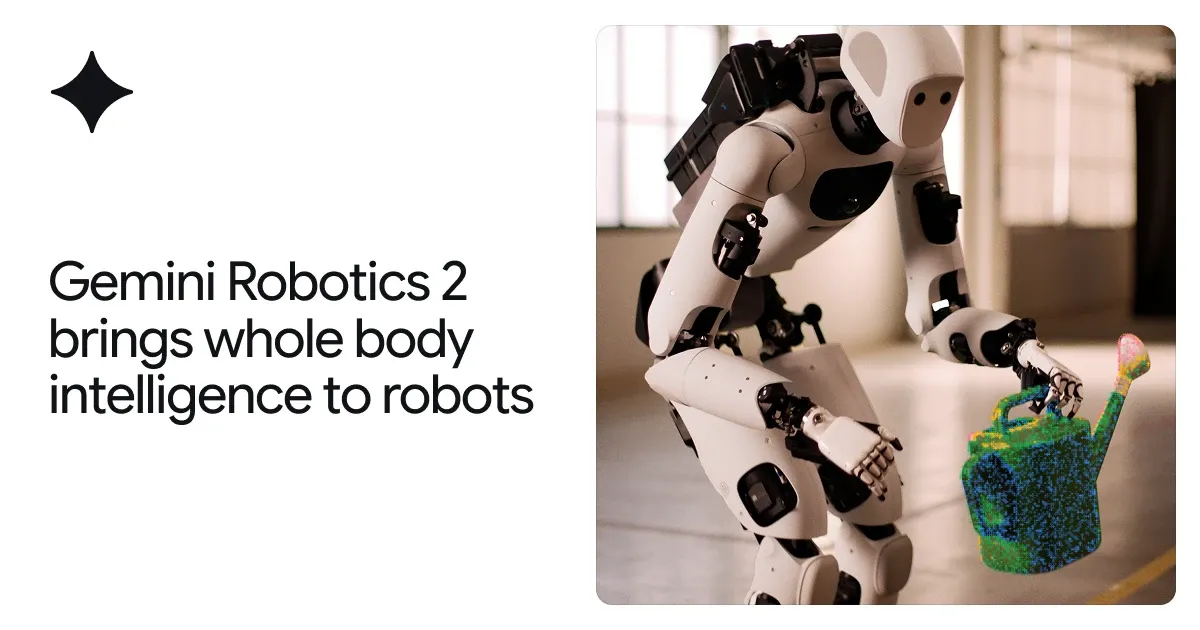
From feet to fingertips — we are teaching robots intelligent whole-body control, fine dexterity, and teamwork to complete a broad range of complex tasks.