Skip to content
#diffusion models Review Open access

Conventional MRI Features Associated with Histopathological Markers of Biological Aggressiveness in Atypical Meningiomas

Oct 2026 · Journal of Clinical Medicine · 0 citations · 34 references
Meningioma and schwannoma management

Abstract

Background: Atypical meningiomas (CNS WHO grade 2) are biologically heterogeneous, and reliable preoperative imaging correlates of tumor biology remain incompletely defined. This study investigated associations between routinely acquired conventional MRI features and histopathological markers of biological aggressiveness within this tumor grade. Methods: We retrospectively analyzed 90 consecutive patients who underwent surgical resection for histologically defined atypical meningiomas between January 2016 and March 2025. Histopathological specimens were re-reviewed according to the 2021 WHO Classification. Conventional MRI features and apparent diffusion coefficient (ADC) values were evaluated in relation to the Ki-67 labeling index (LI), mitotic count, hypercellularity, spontaneous necrosis, pathological brain invasion, and progesterone receptor expression. Ki-67 LI and ADC were analyzed primarily as continuous variables. A literature-informed Ki-67 threshold of ≥8% was used for secondary categorical analysis, with ≥4% and ≥10% retained as sensitivity analyses. Benjamini–Hochberg false-discovery-rate correction was applied to exploratory categorical comparisons. Results: The median age was 59 years, and 56 patients (62.2%) were female. The median Ki-67 LI was 10% (IQR, 5–15), and the median ADC was 0.78 × 10⁻³ mm2/s (IQR, 0.73–0.88). ADC showed a weak inverse correlation with Ki-67 LI (ρ = −0.255; 95% CI, −0.44 to −0.05; p = 0.015) but was not significantly correlated with mitotic count (ρ = −0.124; p = 0.244). In the adjusted continuous model, the association between ADC and Ki-67 was not statistically significant (Ki-67 ratio per 0.1 × 10⁻³ mm2/s increase in ADC, 0.95; 95% CI, 0.87–1.04; p = 0.264). Similarly, the secondary analysis using Ki-67 ≥ 8% yielded an imprecise association with ADC (OR, 0.865; 95% CI, 0.713–1.002; p = 0.054). Among 96 exploratory categorical comparisons, only the association between radiological and pathological brain invasion remained significant after false-discovery-rate correction (q = 0.003). Conclusions: Conventional MRI features showed weak and largely exploratory associations with histopathological markers of biological aggressiveness in histologically defined atypical meningiomas. Lower ADC was weakly correlated with higher Ki-67 LI, but this association was not robust after adjustment. Radiological brain invasion was strongly associated with pathological brain invasion. These findings should be considered hypothesis-generating and require prospective multicenter validation incorporating standardized imaging, molecular profiling, and clinically relevant outcomes before clinical application.

Read PDF

Similar papers

#computer vision Open access Jun 2016

Software Development in Startup Companies: The Greenfield Startup Model

The results are packaged in the Greenfield Startup Model (GSM), which explains the priority of startups to release the product as quickly as possible, and the need to shorten time-to-market, by speeding up the development through low-precision engineering activities.

Carmine Giardino, Nicolò Paternoster, M. Unterkalmsteiner et al. · 178 citations · ⚡14
#computer vision Open access Oct 2016

Software Startups - A Research Agenda

Software startup companies develop innovative, software-intensive products within limited timeframes and with few resources, searching for sustainable and scalable business models.

M. Unterkalmsteiner, P. Abrahamsson, Xiaofeng Wang et al. · 157 citations · ⚡17
#machine learning Review Open access Oct 2016

“Failures” to be celebrated: an analysis of major pivots of software startups

This study conducts a case survey study based on the secondary data of the major pivots happened in 49 software startups, and demonstrates that customer need pivot is the most common among all pivot types.

Sohaib Shahid Bajwa, Xiaofeng Wang, Anh Nguyen-Duc et al. · 127 citations · ⚡15
#computer vision Review Open access May 2015

A survey study on major technical barriers affecting the decision to adopt cloud services

The comparison of adopter and non-adopter sample reveals three potential adoption inhibitor, security, data privacy, and portability, which underlines the importance of the technical and security perspectives for research investigating the adoption of technology.

Nattakarn Phaphoom, Xiaofeng Wang, S. Samuel et al. · 111 citations · ⚡8
#large language models Review Open access Nov 2020

Status of the WHO recommended timing and frequency of antenatal care visits in Northern Bangladesh

Objective There is dearth of information on the timeliness of antenatal care (ANC) uptake. This study aimed to determine the timely ANC uptake by a medically trained provider (MTP) as per the World Health Organization (WHO) recommendations and the country guideline. Methods Cross-sectional survey was done with 2,731 wo...

B. Sarker, Musfikur Rahman, T. Rahman et al. · 89 citations · ⚡7
#computer vision Open access Feb 2018

Lean Internal Startups for Software Product Innovation in Large Companies: Enablers and Inhibitors

This study investigates how Lean internal startup facilitates software product innovation in large companies and identifies its enablers and inhibitors, and shows the potential of the method-in-action framework to investigate the Lean startup approach in non-startup context.

Henry Edison, Nina M. Smørsgård, Xiaofeng Wang et al. · 78 citations · ⚡6

Related blog posts

Microsoft Research Blog Nov 16, 2026

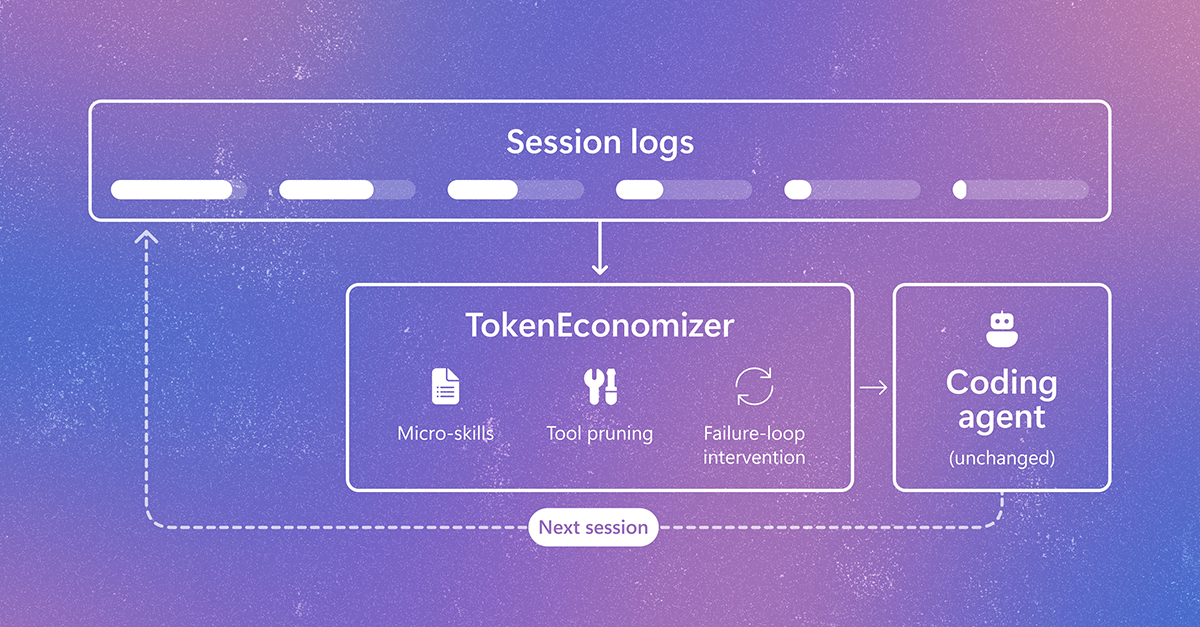
TokenEconomizer: Learning from Experience to Make AI Coding Agents More Efficient

AI coding agents are increasingly help developers fix bugs and build features largely on their own, but every interaction with their models consumes tokens. In each session, an agent sends instructions, tool descriptions, and session history to its model. Most efforts to reduce this cost focus on individual tasks. Yet developers return to the same […] The post TokenEconomizer: Learning from Experience to Make AI Coding Agents More Efficient appeared first on Microsoft Research.

We use cookies to run the site and, with your consent, for analytics and to show ads. See our Cookie Policy.