Nov 2026· ACM Interational Symposium on Mobile Ad Hoc Networking and Computing· 0 citations· 8 references
Computer Science
TL;DR
Overall, the results show that agentic AI can support zero-touch onboarding while exposing measurable differences among models in reliability, efficiency, and runtime convergence.

Abstract
The heterogeneity of Internet of Things (IoT) devices remains a major barrier to scalable deployment, automated onboarding, and cross-platform interoperability. Device-specific protocols, software dependencies, telemetry formats, and runtime constraints often require manual configuration and ad-hoc integration logic. This paper proposes an agentic AI architecture for zero-touch IoT device onboarding, where a large language model is used as an autonomous configuration agent capable of generating device-side software, installing dependencies, validating runtime behavior, and recursively correcting failures until convergence is achieved. The proposed architecture introduces a closed-loop workflow that combines device inspection, AI-based runtime generation, remote deployment, telemetry validation, and self-correction. Interoperability is addressed through a normalized telemetry contract that abstracts device-specific behavior into a common telemetry representation. We evaluate the approach on a real IoT device by benchmarking multiple AI models under clean installation conditions in two campaigns: the original pipeline and a second pipeline assisted by a locally trained semantic context optimizer. The comparison covers convergence time, correction cycles, recursive iterations, and prompt tokens. The optimizer-assisted campaign reduced prompt redundancy and recursive recovery effort while preserving successful onboarding across all tested models. Overall, the results show that agentic AI can support zero-touch onboarding while exposing measurable differences among models in reliability, efficiency, and runtime convergence.
A modular architecture combining authenticated MQTT-based ingestion, schema-flexible payload handling, an event-and rule-based evaluation engine, and a role-aware multi-level escalation model with a pluggable notification layer for heterogeneous laboratory environments is proposed.
M. Baskaran, M. Al-Okby, Thomas Roddelkopf et al.· Proceedings of the 23rd Inte...· 0 citations
The increasing intelligence of connected objects creates a design dilemma: devices must interpret sensor information quickly, yet continuous transmission to distant servers can waste bandwidth, energy, and time. This review examines how Internet of Things (IoT) infrastructures and edge artificial intelligence (Edge AI)...
K. Sudhir· International Journal of Sci...· 0 citations
An IEEE 11073 Service-Oriented Device Connectivity-to-MCP gateway that exposes metrics, alarms, context references, and semantic metadata as read-only resources, while representing selected action affordances as policy-validated dry-run tools is presented.
Bennet Gerlach, Stefan Fischer· arXiv.org· 0 citations
A fully local, autonomous incident-response framework for edge gateways that combines a compact classifier that routes traffic by confidence, a tool-using language-model agent restricted to vetted mitigation actions, and an Explanation Engine grounded in the agent's recorded observations is presented.
Shaghayegh Shajarian, Sajad Khorsandroo, Mahmoud Abdelsalam· Proceedings of the 17th ACM...· 0 citations
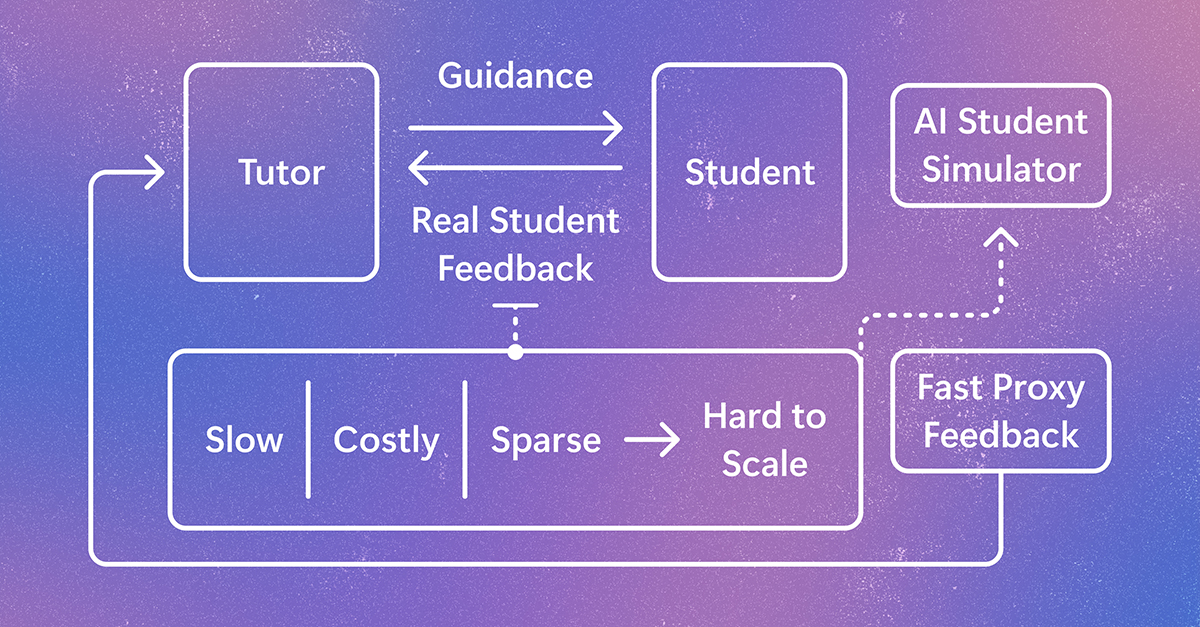
StudentSim is a research system for evaluating and improving AI tutoring tools before they are tested with learners. It models how individuals may engage with tutors, giving feedback to improve tutor performance across subjects like chess, writing, and mathematics. The post Simulating student learning for better AI tutoring appeared first on Microsoft Research.
We use cookies to run the site and, with your consent, for analytics and to show ads.
See our Cookie Policy.