Skip to content

Satellite-derived bathymetry of Arabian Gulf ports under leakage-free validation: a multi-site benchmark of empirical, machine-learning and deep-learning models against 285,000 multibeam soundings, with an outlook for UAE waters

Muhammad Saeed Mohamed H. Alhosani Dmitry Mikhaylov Yasser F. Al Wahedi
Nov 2026
Machine Learning Computer Vision Climate Science

Abstract

Satellite-derived bathymetry (SDB) is often proposed as a low-cost complement to multibeam surveys of ports, but its accuracy is seldom measured on an area the model has never seen. We test SDB in the turbid, shallow and tidal waters of the Abu Dhabi coast against 285,619 multibeam soundings from twelve surveys at six port areas, reduced to Lowest Astronomical Tide. The Stumpf ratio, the Lyzenga transform, a monotonic gradient-boosted tree model (LightGBM) and a U-Net ensemble were trained on 72 Sentinel-2 images and tested in transfer to an unseen site and with local control (about 20% of a site's soundings, spatial blocks beyond a 225 m buffer). The validation design changed the result more than the model: the same LightGBM model gave 0.57 m RMSE under a random pixel split, 1.30 m under spatial blocks and 1.66 m at an unseen site. In transfer the Stumpf ratio (1.45 m) was not beaten by LightGBM, the U-Net or Lyzenga. With local control a hybrid of the tree output and the band ratio reached 1.11 m over 0-11 m, 67% of pixels within the IHO S-44 Order 2 tolerance and a conformal 95% interval with 95% observed coverage; in clear water it reached 0.29-0.53 m. The seabed could not be read beyond 11 m, and summer images were five to six times more turbid than winter ones. ICESat-2 ATL24 agreed with the surveys to 0.25 m after a depth-dependent offset was removed. A 60 m reconnaissance mosaic of 17,200 km2 of the UAE coast, calibrated cell by cell on ICESat-2 without any vessel survey, reached 1.42 m RMSE on held-out blocks over half of the product. Sentinel-2 SDB with about a hundred control depths per image is a usable reconnaissance and change-monitoring tool in these waters to about 10 m; it does not meet S-44 Order 1 without local control, and accuracies from random splits should not be taken as operational accuracy.


View source

Similar papers

#artificial intelligence Conference Open access Jun 2018

Gibson Env: Real-World Perception for Embodied Agents

This paper investigates developing real-world perception for active agents, proposes Gibson Environment for this purpose, and showcases a set of perceptual tasks learned therein.

F. Xia, Amir Zamir, Zhi-Yang He et al. · 1,069 citations · ⚡112
#computer vision Review Sep 2017

Agile Software Development Methods: Review and Analysis

This publication proposes a definition and a classification of agile software development approaches and analyses ten software development methods that can be characterized as being "agile" against the defined criterion.

P. Abrahamsson, O. Salo, Jussi Ronkainen et al. · 727 citations · ⚡54
#computer vision Jun 2008

The impact of agile practices on communication in software development

The study shows that agile practices improve both informal and formal communication, but indicates that, in larger development situations involving multiple external stakeholders, a mismatch of adequate communication mechanisms can sometimes even hinder the communication.

M. Pikkarainen, Jukka Haikara, O. Salo et al. · 401 citations · ⚡48
#machine learning Review Open access Oct 2014

Software development in startup companies: A systematic mapping study

The results indicate that software engineering work practices are chosen opportunistically, adapted and configured to provide value under the constrains imposed by the startup context.

Nicolò Paternoster, Carmine Giardino, M. Unterkalmsteiner et al. · 394 citations · ⚡54

Diffusion models as plug-and-play priors

The possibility of inferring high-dimensional data inference in a model that consists of a prior and an auxiliary differentiable constraint given some additional information is considered, thereby allowing a range of potential applications in adapting models to new domains and tasks.

Alexandros Graikos, Esmeralda S. Whitammer, N. Jojic et al. · 316 citations · ⚡15

Related blog posts

MIT News · Artificial Intelligence Oct 28, 2026

Making machines that can listen

Professor Paris Smaragdis develops computers with superhuman hearing for applications like speech recognition, music understanding, and environmental monitoring.

Microsoft Research Blog Oct 6, 2026

What AI gets wrong and what failure teaches us

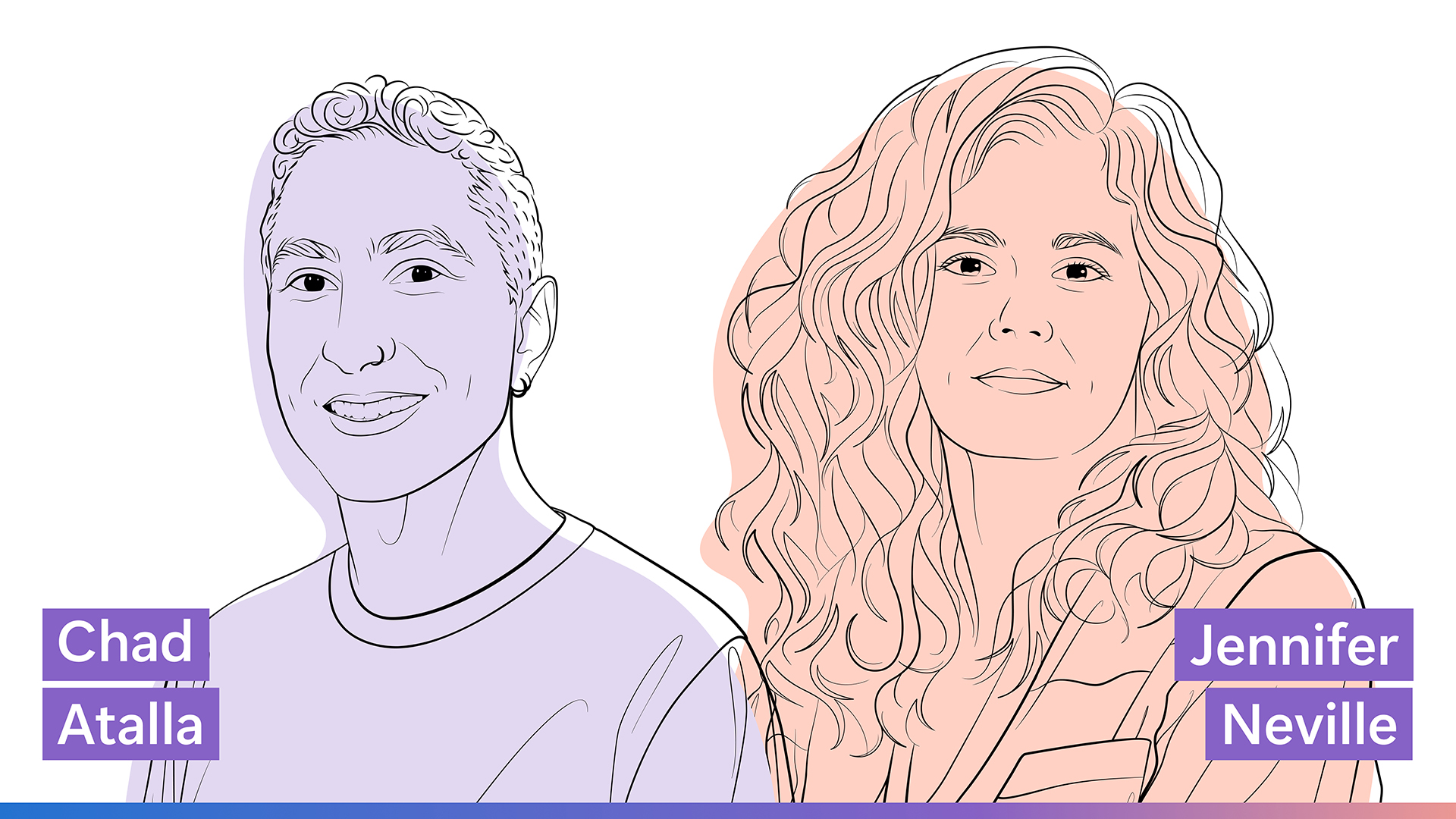
Jennifer Neville did not want to go into computer science—but that’s exactly where she landed. Neville discusses the starts and stops that led to her professional sweet spot and her work identifying “surprising failures” making it hard for AI to handle complexity.  The post What AI gets wrong and what failure teaches us appeared first on Microsoft Research.

We use cookies to run the site and, with your consent, for analytics and to show ads. See our Cookie Policy.