Cycle WAM: Coupling Action and Video through Cycle Consistency
Qinglin YangJiepeng WangYuxing HuangHaibin HuangKai XuChi ZhangRuizhen HuXuelong Li
Nov 2026
Artificial IntelligenceComputer VisionRobotics
Abstract
Recent advances in video modeling have driven substantial progress in world action models (WAMs). Existing approaches exploit pretrained video priors by decoding actions from latent representations or inferring them from generated videos. The underlying link is causal: robot actions produce changes in the scene, and video observations of these changes provide evidence for inferring the actions that produced them. However, existing training formulations do not by themselves ensure that actions and their predicted visual consequences are consistent, potentially limiting the use of pretrained capabilities. We treat video and action as paired modalities linked by this causal relationship and learn their correspondence through a unified training framework designed to better exploit pretrained video priors. Cycle WAM first augments video-action co-training with bidirectional conversion to reinforce cross-modal correspondence and recover forward and inverse dynamics. It then introduces a differentiable cycle-reconstruction objective to further couple the two mappings. The resulting model supports both forward and inverse dynamics, with the potential to improve performance through more effective use of pretrained video priors. Cycle WAM achieves state-of-the-art performance among comparable methods on LIBERO-Pro and substantially improves DreamZero on DROID. Comparisons with UWM characterize its inverse-dynamics performance and show sharper visual detail in the displayed forward-dynamics predictions.

This paper investigates developing real-world perception for active agents, proposes Gibson Environment for this purpose, and showcases a set of perceptual tasks learned therein.
F. Xia, Amir Zamir, Zhi-Yang He et al.· 2018 IEEE/CVF Conference on...· 1,069 citations· ⚡112
This publication proposes a definition and a classification of agile software development approaches and analyses ten software development methods that can be characterized as being "agile" against the defined criterion.
P. Abrahamsson, O. Salo, Jussi Ronkainen et al.· arXiv.org· 727 citations· ⚡54
The study shows that agile practices improve both informal and formal communication, but indicates that, in larger development situations involving multiple external stakeholders, a mismatch of adequate communication mechanisms can sometimes even hinder the communication.
M. Pikkarainen, Jukka Haikara, O. Salo et al.· Empirical Software Engineeri...· 401 citations· ⚡48
The results indicate that software engineering work practices are chosen opportunistically, adapted and configured to provide value under the constrains imposed by the startup context.
Nicolò Paternoster, Carmine Giardino, M. Unterkalmsteiner et al.· Information and Software Tec...· 394 citations· ⚡54
The possibility of inferring high-dimensional data inference in a model that consists of a prior and an auxiliary differentiable constraint given some additional information is considered, thereby allowing a range of potential applications in adapting models to new domains and tasks.
Alexandros Graikos, Esmeralda S. Whitammer, N. Jojic et al.· Neural Information Processin...· 316 citations· ⚡15
Related blog posts
MIT News · Artificial Intelligence· news.mit.eduJul 30, 2026
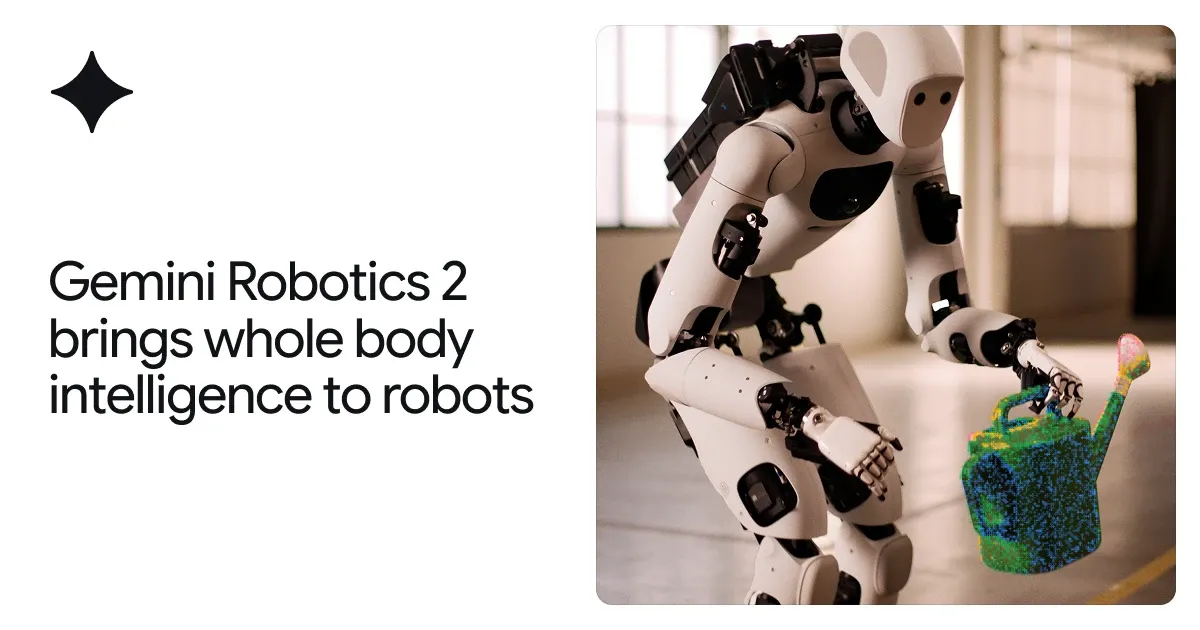
From feet to fingertips — we are teaching robots intelligent whole-body control, fine dexterity, and teamwork to complete a broad range of complex tasks.
Known for his clear and elegant writing style, Bertsekas shaped fields from control and optimization to large-scale computation and artificial intelligence.
We use cookies to run the site and, with your consent, for analytics and to show ads.
See our Cookie Policy.