Skip to content

ReListen: Training-Free Evidence Localization in Hour-Long Audio with Frozen Audio Language Models

Nov 2026 · 0 citations · 38 references
Computer Science Engineering

Abstract

Audio language models are meant to answer questions from the audio itself, but an hour-long recording rarely fits in their context, and the answer often depends on a few seconds of it. Transcribing the recording first makes it fit but discards sounds and voices, while systems that return to the audio must be trained for this behavior. We propose ReListen, a training-free method in which a frozen audio language model finds its own evidence before answering. In a Jev-style scan, the model scores each 20-second window by the probability that it helps answer the question, and it then answers from the highest-scoring minute. This minute overlaps the annotated evidence far more often than transcript retrieval, for 88.5% of VoiceGiraffe questions. Without any change, the same scan also grounds events on LAT-Bench as well as a model trained for temporal grounding. Answering from it matches or exceeds hearing the whole recording with a small fraction of the audio, and on VoiceGiraffe it exceeds a transcript of the whole recording by 9.2 points. The selected evidence is also worth hearing rather than reading. Given the same excerpts, reading their transcript matches listening on speech content, but listening is clearly more accurate on questions about sounds and voices. Moreover, ReListen answers faster than every transcript-based system, and its memory stays constant even for recordings too long to hear whole on one GPU. Therefore, a frozen audio language model can search hour-long recordings by itself, without a transcript or additional training.


View source

Similar papers

#computer vision Review Sep 2017

Agile Software Development Methods: Review and Analysis

This publication proposes a definition and a classification of agile software development approaches and analyses ten software development methods that can be characterized as being "agile" against the defined criterion.

P. Abrahamsson, O. Salo, Jussi Ronkainen et al. · 727 citations · ⚡54
#small language model Dataset Open access Oct 2026

Socratic guiding questions in synthetic arithmetic data: matched LoRA runs (revision v2)

Supporting data, adapters, predictions and code for the article *Low-Cost LoRA Fine-Tuning of Small Language Models for Multi-Step Arithmetic Reasoning* by Jake O'Grady, Asena Isik Gürhan, Chee Fong Ting and Effirul Ramlan (University of Galway). We generated 20,000 GSM8K-derived arithmetic problems with step-by-step s...

O'Grady, Jake, Gürhan, Asena Isik, Chee, Fong Ting et al. · 465 citations
#computer vision Open access Jul 2017

What happens when software developers are (un)happy

Consequences of happiness and unhappiness that are beneficial and detrimental for developers' mental well-being, the software development process, and the produced artifacts are found.

D. Graziotin, Fabian Fagerholm, Xiaofeng Wang et al. · 236 citations · ⚡13
#computer vision Open access Oct 2004

Mobile-D: an agile approach for mobile application development

The Mobile-D approach is briefly outlined here and the experiences gained from four case studies are discussed, which helped develop an agile development approach for mobile application development.

P. Abrahamsson, Antti Hanhineva, H. Hulkko et al. · 225 citations · ⚡18
#computer vision Open access Mar 2014

Happy software developers solve problems better: psychological measurements in empirical software engineering

A study with 42 participants investigates the relationship between the affective states, creativity, and analytical problem-solving skills of software developers and offers support for the claim that happy developers are indeed better problem solvers in terms of their analytical abilities.

D. Graziotin, Xiaofeng Wang, P. Abrahamsson · 216 citations · ⚡13
#artificial intelligence Open access May 2023

Evaluating the Performance of Large Language Models on GAOKAO Benchmark

GAOKAO-Bench is introduced, an intuitive benchmark that employs questions from the Chinese GAOKAO examination as test samples, including both subjective and objective questions that contribute a robust evaluation benchmark for future large language models and offers valuable insights into the advantages and limitations...

Xiaotian Zhang, Chun-yan Li, Yi Zong et al. · 216 citations · ⚡17

Related blog posts

Microsoft Research Blog Oct 22, 2026

Flint-interactive: A language for creating interactive data visualizations

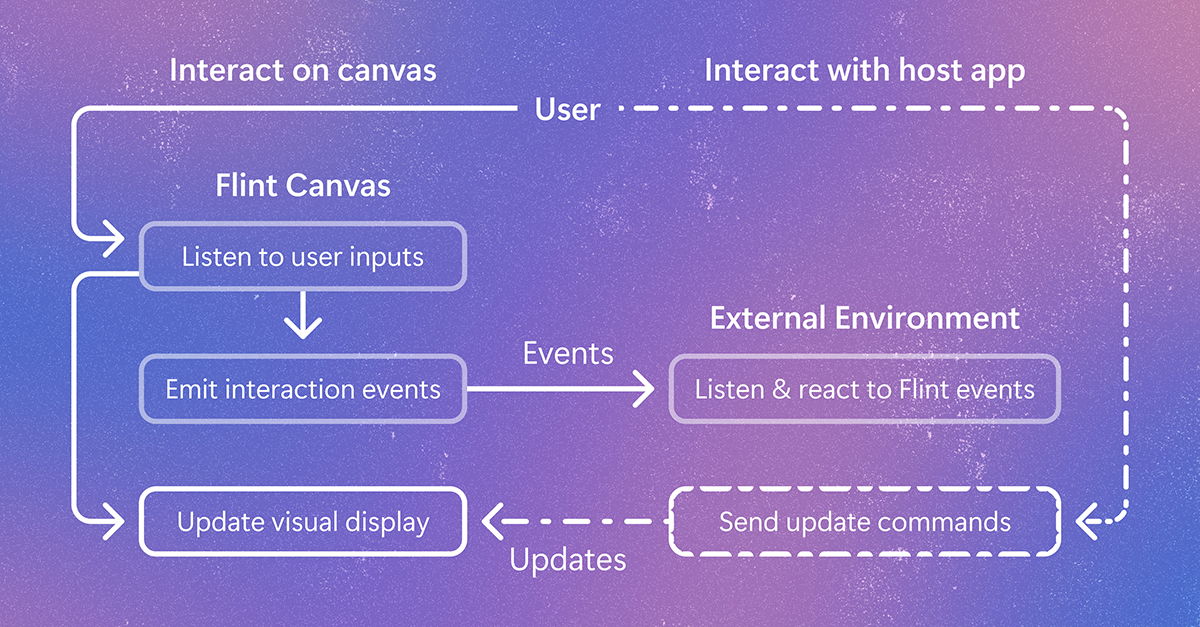
Flint-interactive gives AI agents a language for creating interactive visualizations. Click a chart, filter data, highlight related content, and explore beyond the view the author originally chose. The post Flint-interactive: A language for creating interactive data visualizations appeared first on Microsoft Research.

We use cookies to run the site and, with your consent, for analytics and to show ads. See our Cookie Policy.