Skip to content

POLAR: Policy Optimization through Larger Reasoners

Nov 2026 · Proceedings of the 35th ACM International Conference on Information and Knowledge Management · 0 citations · 19 references

Abstract

Reinforcement learning with verifiable rewards (RLVR) is a practical way to improve the reasoning and decision-making abilities of large language models, but its training signal is often sparse. When a policy faces prompts beyond its current ability, every sampled trajectory in a group may fail the verifier, resulting in an all-zero group. In this case, group-relative policy optimization gives little useful gradient even when the prompt contains valuable learning content. This capacity-difficulty mismatch is especially costly for smaller models used in knowledge-intensive and web-interaction tasks. We present POLAR, a difficulty-aware training framework that augments on-policy RL with conditional guidance from a larger reasoner. POLAR uses the standard GRPO branch when at least one sampled response succeeds, and switches to a supervised objective over verified teacher trajectories only when the whole student group receives zero reward. The method can turn otherwise wasted all-zero groups into targeted learning opportunities while keeping policy exploration on prompts the student can handle. We formalize the switching criterion, teacher selection objective, mixed RL/supervised loss, and compute overhead. We evaluate POLAR on WebShop, GAIA, and WebWalkerQA using Qwen2.5-7B-Instruct, Qwen3-4B, and Qwen3-8B policies. The results show consistent gains over matched GRPO baselines, with large improvements on hard web traversal questions for the two smaller policies. Ablations and diagnostics further show that the gains come from the proposed all-zero recovery mechanism.

Read PDF

Similar papers

#small language model Dataset Open access Oct 2026

Socratic guiding questions in synthetic arithmetic data: matched LoRA runs (revision v2)

Supporting data, adapters, predictions and code for the article *Low-Cost LoRA Fine-Tuning of Small Language Models for Multi-Step Arithmetic Reasoning* by Jake O'Grady, Asena Isik Gürhan, Chee Fong Ting and Effirul Ramlan (University of Galway). We generated 20,000 GSM8K-derived arithmetic problems with step-by-step s...

O'Grady, Jake, Gürhan, Asena Isik, Chee, Fong Ting et al. · 465 citations
#machine learning Review Open access Oct 2014

Software development in startup companies: A systematic mapping study

The results indicate that software engineering work practices are chosen opportunistically, adapted and configured to provide value under the constrains imposed by the startup context.

Nicolò Paternoster, Carmine Giardino, M. Unterkalmsteiner et al. · 394 citations · ⚡54
#computer vision Open access Jun 2016

Software Development in Startup Companies: The Greenfield Startup Model

The results are packaged in the Greenfield Startup Model (GSM), which explains the priority of startups to release the product as quickly as possible, and the need to shorten time-to-market, by speeding up the development through low-precision engineering activities.

Carmine Giardino, Nicolò Paternoster, M. Unterkalmsteiner et al. · 178 citations · ⚡14
#machine learning Review Open access Jun 2014

Why Early-Stage Software Startups Fail: A Behavioral Framework

This state-of-practice investigation was performed using a literature review followed by a multiple-case study approach and presents how inconsistency between managerial strategies and execution can lead to failure by means of a behavioral framework.

Carmine Giardino, Xiaofeng Wang, P. Abrahamsson · 175 citations · ⚡19
#computer vision Open access Oct 2016

Software Startups - A Research Agenda

Software startup companies develop innovative, software-intensive products within limited timeframes and with few resources, searching for sustainable and scalable business models.

M. Unterkalmsteiner, P. Abrahamsson, Xiaofeng Wang et al. · 157 citations · ⚡17
#machine learning Review Open access Oct 2016

“Failures” to be celebrated: an analysis of major pivots of software startups

This study conducts a case survey study based on the secondary data of the major pivots happened in 49 software startups, and demonstrates that customer need pivot is the most common among all pivot types.

Sohaib Shahid Bajwa, Xiaofeng Wang, Anh Nguyen-Duc et al. · 127 citations · ⚡15

Related blog posts

MIT News · Artificial Intelligence Oct 23, 2026

Q&A: How AI came to model the “messy” human mind

Assistant Professor Benjamin Lindquist studies how engineers deliberately injected randomness into early AI, giving rise to deep-learning models that sometimes hallucinate.

Microsoft Research Blog Oct 12, 2026

Simulating student learning for better AI tutoring

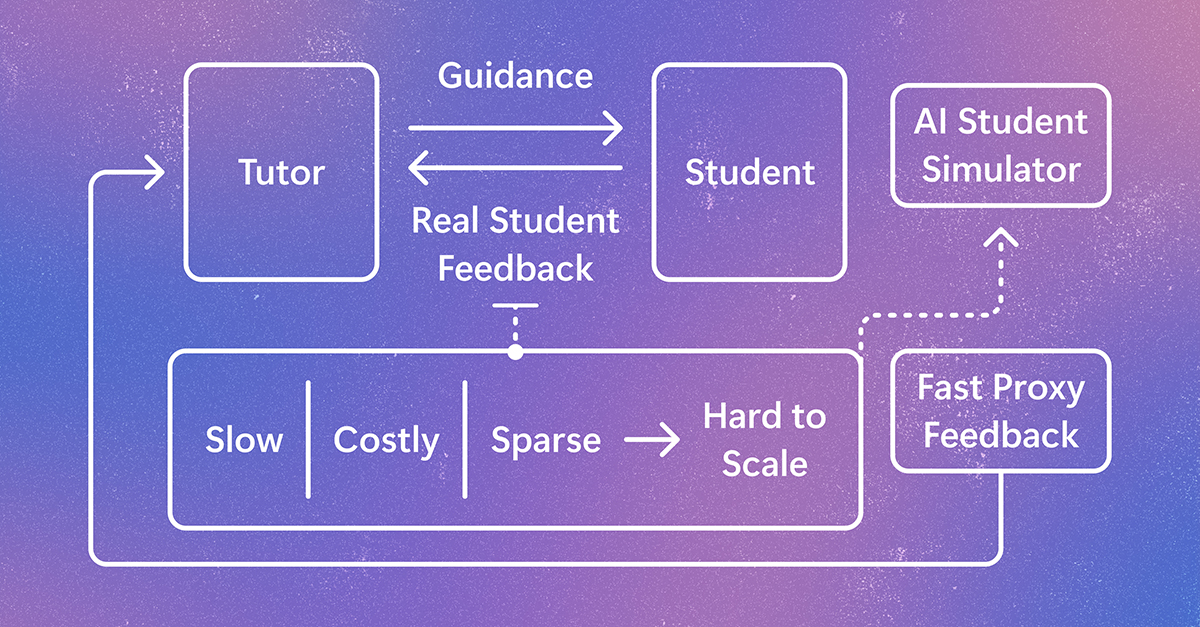
StudentSim is a research system for evaluating and improving AI tutoring tools before they are tested with learners. It models how individuals may engage with tutors, giving feedback to improve tutor performance across subjects like chess, writing, and mathematics. The post Simulating student learning for better AI tutoring appeared first on Microsoft Research.

We use cookies to run the site and, with your consent, for analytics and to show ads. See our Cookie Policy.