Skip to content
#small language model Review Open access

Intravascular Optical Coherence Tomography for Neuroendovascular Intervention: Applications, Devices, and Future Directions

Nov 2026 · Diagnostics · 0 citations · 60 references

TL;DR

The physical principles of OCT, its plaque-characterization criteria and their histologic validation, the coronary evidence base, the imaging hardware available for intracranial use, and the reported clinical applications across intracranial atherosclerotic disease, intracranial aneurysms treated with flow diverters, carotid disease and carotid webs, arterial dissection, and venous and thromboembolic disease are summarized.

Abstract

Background/Objectives: Intravascular optical coherence tomography (OCT) is a near-infrared light-based imaging modality with an axial resolution approaching 10 µm, roughly tenfold finer than intravascular ultrasound. Although OCT is established in coronary practice, its use in the cerebral circulation has been limited by catheter crossing profile, vessel tortuosity, and the need to clear blood from the vascular lumen during acquisition. In this narrative review, we summarize the physical principles of OCT, its plaque-characterization criteria and their histologic validation, the coronary evidence base, the imaging hardware available for intracranial use, and the reported clinical applications across intracranial atherosclerotic disease, intracranial aneurysms treated with flow diverters, carotid disease and carotid webs, arterial dissection, and venous and thromboembolic disease. We also discuss the technical barriers that limit routine neuroendovascular use. Methods: MEDLINE and PubMed were searched from inception through 1 September 2026 for English-language reports of intravascular OCT in human or animal cervical and intracranial vessels; study selection was not systematic. Results: The evidence base is composed largely of preclinical models, small human feasibility series, and case reports; no randomized or large-scale clinical outcome data exist. OCT has been feasible in selected cerebrovascular series, but the pooled evidence comes largely from extracranial carotid studies and does not establish its performance in intracranial vessels. Dedicated neurovascular probes have recently entered clinical study. In the coronary circulation, randomized evidence supports intravascular imaging-guided stent implantation and OCT-defined plaque features are associated with events; corresponding benefits have not been established intracranially. Conclusions: Intravascular OCT resolves the cerebral arterial wall and endoluminal devices in detail, but its safety and clinical benefit in neuroendovascular practice require further study. Prospective studies are needed to determine whether OCT findings change management and improve patient outcomes.

Read PDF

Similar papers

#small language model Dataset Open access Oct 2026

Socratic guiding questions in synthetic arithmetic data: matched LoRA runs (revision v2)

Supporting data, adapters, predictions and code for the article *Low-Cost LoRA Fine-Tuning of Small Language Models for Multi-Step Arithmetic Reasoning* by Jake O'Grady, Asena Isik Gürhan, Chee Fong Ting and Effirul Ramlan (University of Galway). We generated 20,000 GSM8K-derived arithmetic problems with step-by-step s...

O'Grady, Jake, Gürhan, Asena Isik, Chee, Fong Ting et al. · 465 citations
#computer vision Open access Jun 2016

Software Development in Startup Companies: The Greenfield Startup Model

The results are packaged in the Greenfield Startup Model (GSM), which explains the priority of startups to release the product as quickly as possible, and the need to shorten time-to-market, by speeding up the development through low-precision engineering activities.

Carmine Giardino, Nicolò Paternoster, M. Unterkalmsteiner et al. · 178 citations · ⚡14
#computer vision Open access Oct 2016

Software Startups - A Research Agenda

Software startup companies develop innovative, software-intensive products within limited timeframes and with few resources, searching for sustainable and scalable business models.

M. Unterkalmsteiner, P. Abrahamsson, Xiaofeng Wang et al. · 157 citations · ⚡17
#machine learning Review Open access Oct 2016

“Failures” to be celebrated: an analysis of major pivots of software startups

This study conducts a case survey study based on the secondary data of the major pivots happened in 49 software startups, and demonstrates that customer need pivot is the most common among all pivot types.

Sohaib Shahid Bajwa, Xiaofeng Wang, Anh Nguyen-Duc et al. · 127 citations · ⚡15
#computer vision Review Open access May 2015

A survey study on major technical barriers affecting the decision to adopt cloud services

The comparison of adopter and non-adopter sample reveals three potential adoption inhibitor, security, data privacy, and portability, which underlines the importance of the technical and security perspectives for research investigating the adoption of technology.

Nattakarn Phaphoom, Xiaofeng Wang, S. Samuel et al. · 111 citations · ⚡8
#large language models Review Open access Nov 2020

Status of the WHO recommended timing and frequency of antenatal care visits in Northern Bangladesh

Objective There is dearth of information on the timeliness of antenatal care (ANC) uptake. This study aimed to determine the timely ANC uptake by a medically trained provider (MTP) as per the World Health Organization (WHO) recommendations and the country guideline. Methods Cross-sectional survey was done with 2,731 wo...

B. Sarker, Musfikur Rahman, T. Rahman et al. · 89 citations · ⚡7

Related blog posts

Microsoft Research Blog Nov 16, 2026

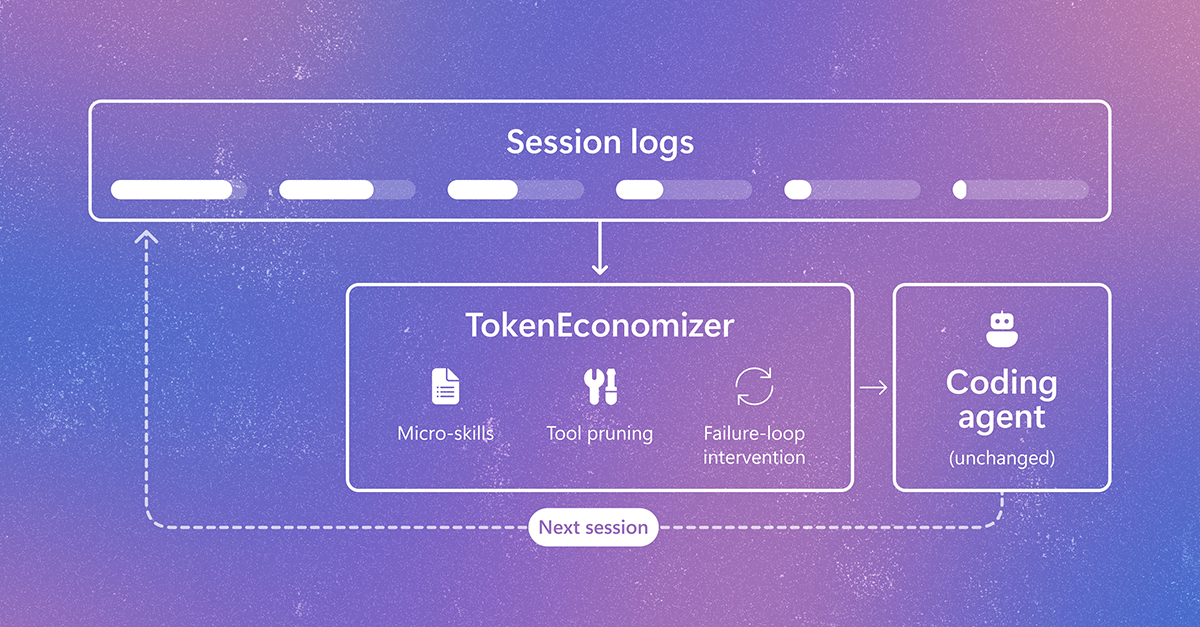
TokenEconomizer: Learning from Experience to Make AI Coding Agents More Efficient

AI coding agents are increasingly help developers fix bugs and build features largely on their own, but every interaction with their models consumes tokens. In each session, an agent sends instructions, tool descriptions, and session history to its model. Most efforts to reduce this cost focus on individual tasks. Yet developers return to the same […] The post TokenEconomizer: Learning from Experience to Make AI Coding Agents More Efficient appeared first on Microsoft Research.

We use cookies to run the site and, with your consent, for analytics and to show ads. See our Cookie Policy.