Skip to content

Subword Segmental BabyLMs: Learning to Tokenise for Sample-Efficient Pretraining

Sep 2026 · 0 citations · 38 references
Computer Science

TL;DR

The results show that learnable subword tokenisation can improve sample-efficiency for BabyLM pretraining and analyse the subword learning dynamics of the models and find that tokenisation gradually converges on subword units that balance morphological alignment and fine-grained segmentation.


Abstract

In the standard LM training pipeline, subword tokenisation is applied as a preprocessing step. Subword segmental language modelling is an alternative paradigm in which tokenisation is learned during training, allowing the model to discover subword units that optimise its training objective. In this paper, we present our submission to the 2026 BabyLM Challenge, for which we develop two new subword segmental LMs: SubSegGPT and SubSegDeBERTa. SubSegGPT is a decoder-only model that learns tokenisation during autoregressive pretraining. SubSegDeBERTa is an encoder-based model that jointly learns to generate and tokenise masked words. We train both for the Strict and Strict-small tracks. Our top submission to Strict is SubSegDeBERTa, which achieves notable gains in zero-shot evaluation. Our top submission to Strict-small is SubSegGPT, which outperforms tokenisation-based baselines. Our results show that learnable subword tokenisation can improve sample-efficiency for BabyLM pretraining. We analyse the subword learning dynamics of our models and find that tokenisation gradually converges on subword units that balance morphological alignment and fine-grained segmentation.
View source

Similar papers

Conference Open access Sep 2026

Subword Tokenization for Low- and Medium-Resource Languages: A Systematic Evaluation

Subword tokenization is a standard technique for pre-trained language models, mapping text into sequences of tokens from a fixed-size vocabulary. Despite its widespread use, the impact of tokenization algorithms and vocabulary sizes on downstream performance remains underexplored, particularly for low- and medium-resou...

J. Daðason, H. Loftsson · 0 citations

Babies Learn to Look Ahead: Multi-Token Prediction in Small LMs

The experimental results show that even 130M-parameter models benefit from including the MTP task in the pre-training objective, and hold even under severe data constraints, as demonstrated on both zero-shot benchmarks and downstream tasks.

Ansar Aynetdinov, Alan Akbik · 1 citation
#natural language process... Preprint Oct 2026

More Than Words: Compositional Tokenization for Efficient Language Models

Language models process and generate text sequentially in token units, and the tokenizer determines how much text each inference step covers. Under standard tokenization, a short English phrase such as"On the table."is usually produced as four separate predictions for the preposition (On), article (the), noun (table),...

Yuval Reif, Guy Kaplan, Roy Schwartz · 0 citations
#natural language process... Open access Sep 2026

To Each Language Its Tokenizer: Modular Tokenizers for Efficient Multilingual LLMs

Multilingual Large Language Models (LLMs) traditionally rely on a single vocabulary shared by all supported languages, which can lead to uneven compression across them. Moreover, their large embedding and output matrices increase memory usage and slow inference, notably for small-scale models. It is also wasteful as mo...

Franck Signe, Hippolyte Pilchen, François Yvon et al. · 0 citations
Preprint Aug 2026

What Tokens are Learned when Tokenization is Optimized Jointly with Language Modeling?

This work analyzes what tokens are learned when tokenization is jointly optimized with language modeling, and finds tokenizer-free approaches optimize for contextual and computational efficiency rather than strict morphological structure, resulting in fundamentally different yet effective vocabularies for downstream NL...

Saketh Reddy Vemula, Parameswari Krishnamurthy · 0 citations
Sep 2026

MythoBERT 1.0: A pre-trained language model for Hindu mythology

The combination of domain adaptation and architectural rigour establishes MythoBERT as a foundational model for computational mythology and opens new avenues in cultural heritage NLP research.

Apurba Paul, Dipankar Das · 0 citations

Related blog posts

Microsoft Research Blog Oct 22, 2026

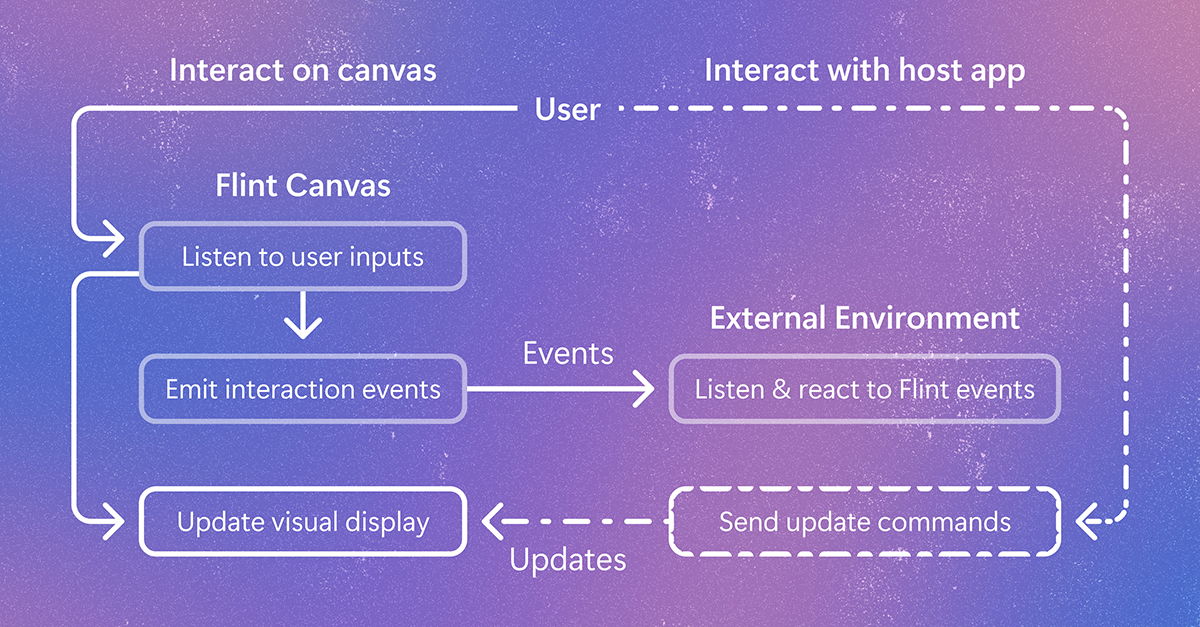
Flint-interactive: A language for creating interactive data visualizations

Flint-interactive gives AI agents a language for creating interactive visualizations. Click a chart, filter data, highlight related content, and explore beyond the view the author originally chose. The post Flint-interactive: A language for creating interactive data visualizations appeared first on Microsoft Research.

We use cookies to run the site and, with your consent, for analytics and to show ads. See our Cookie Policy.
