Skip to content
#edge computing Open access

A self-consistent hybrid global–2D model for SF 6 /Ar inductively coupled plasma etchers with neural-network surrogate acceleration

Aug 2026 · Journal of Physics D: Applied Physics · 0 citations

Abstract

We present a self-consistent hybrid global–2D model for reactor-scale simulation of SF 6 /Ar ICP etching. Unlike prior reactor-scale hybrids, which couple two spatial solvers, the framework couples a 0D global SF 6 /Ar chemistry solver to a 2D axisymmetric electromagnetic and species-transport solver through a shared masked-domain representation and a two-level Picard iteration. The 2D solver transports the nine neutrals with n e and T e , ion densities following from quasi-neutrality, while the full Lallement SF 6 /Ar chemistry and its coupled surface reactions are retained in the 0D model, at minutes of wall-clock time per operating point, far below a full multidimensional solve. The principal advance is that quantities ordinarily prescribed in reactor-scale 2D simulations, such as the power-coupling efficiency η, the electron-density profile n e (r,z), and the electron-temperature profile T e (r,z), are instead emergent outputs, so that the operating point determines the plasma state. Benchmarked against spatially resolved wafer-plane fluorine measurements, the model reproduces the absolute wafer-center fluorine density to within 6–20% on the calibration composition, over-predicts a blind composition by 1.5–2.1×, and under-predicts the measured center-to-edge [F] non-uniformity by roughly 15 percentage points. Both absolute-density residuals lie within the combined measurement and rate-coefficient uncertainty. A neural-network surrogate reproduces the wafer-relevant atomic-fluorine and SF 6 fields at sub-second inference, an 872× acceleration on a local workstation and 1750× on the NCSA Delta HPC system, each against the standalone chemistry–transport solve on that platform; a 21-channel extension emulating the reduced 2D state runs at 55–91×. An LXCat-based electron-kinetics analysis finds the dominant low-energy rates distribution-insensitive within roughly 20%, supporting the Maxwellian-averaged rates retained. Because the plasma state is computed rather than fitted, the converged model serves as a predictive instrument for testing physical hypotheses and operating scenarios. Together, the validated model and its surrogate form the predictive kernel of a reactor-scale SF 6 /Ar ICP digital twin for near-real-time recipe development.

Read PDF

Similar papers

#computer vision Review Sep 2017

Agile Software Development Methods: Review and Analysis

Agile - denoting "the quality of being agile, readiness for motion, nimbleness, activity, dexterity in motion" - software development methods are attempting to offer an answer to the eager business community asking for lighter weight along with faster and nimbler software development processes. This is especially the case with the rapidly growing and volatile Internet software industry as well as for the emerging mobile application environment. The new agile methods have evoked substantial amount of literature and debates. However, academic research on the subject is still scarce, as most of existing publications are written by practitioners or consultants. The aim of this publication is to begin filling this gap by systematically reviewing the existing literature on agile software development methodologies. This publication has three purposes. First, it proposes a definition and a classification of agile software development approaches. Second, it analyses ten software development methods that can be characterized as being "agile" against the defined criterion. Third, it compares these methods and highlights their similarities and differences. Based on this analysis, future research needs are identified and discussed.

P. Abrahamsson, O. Salo, Jussi Ronkainen et al. · 728 citations · ⚡54
#machine learning Review Open access Oct 2014

Software development in startup companies: A systematic mapping study

Context: Software startups are newly created companies with no operating history and fast in producing cutting-edge technologies. These companies develop software under highly uncertain conditions, tackling fast-growing markets under severe lack of resources. Therefore, software startups present a unique combination of characteristics which pose several challenges to software development activities. Objective: This study aims to structure and analyze the literature on software development in startup companies, determining thereby the potential for technology transfer and identifying software development work practices reported by practitioners and researchers. Method: We conducted a systematic mapping study, developing a classification schema, ranking the selected primary studies according their rigor and relevance, and analyzing reported software development work practices in startups. Results: A total of 43 primary studies were identified and mapped, synthesizing the available evidence on software development in startups. Only 16 studies are entirely dedicated to software development in startups, of which 10 result in a weak contribution (advice and implications (6); lesson learned (3); tool (1)). Nineteen studies focus on managerial and organizational factors. Moreover, only 9 studies exhibit high scientific rigor and relevance. From the reviewed primary studies, 213 software engineering work practices were extracted, categorized and analyzed. Conclusion: This mapping study provides the first systematic exploration of the state-of-art on software startup research. The existing body of knowledge is limited to a few high quality studies. Furthermore, the results indicate that software engineering work practices are chosen opportunistically, adapted and configured to provide value under the constrains imposed by the startup context.

Nicolò Paternoster, Carmine Giardino, M. Unterkalmsteiner et al. · 394 citations · ⚡54

Related blog posts

Microsoft Research Blog Aug 31, 2026

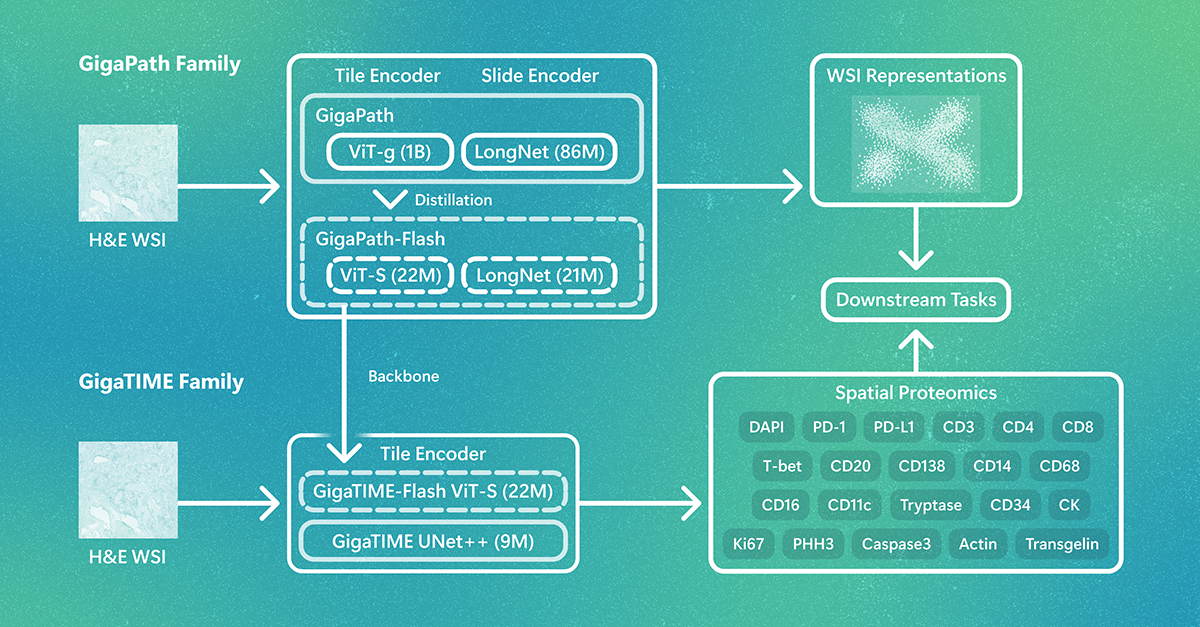
GigaPath-Flash and GigaTIME-Flash: Toward population-scale discovery with efficient pathology foundation models

What if pathology foundation models could do more with less? GigaPath-Flash and GigaTIME-Flash cut computational demands while maintaining strong performance, opening the door to larger studies and broader exploration. The post GigaPath-Flash and GigaTIME-Flash: Toward population-scale discovery with efficient pathology foundation models appeared first on Microsoft Research.

MIT News · Artificial Intelligence Aug 27, 2026

Looking beyond natural sequences

A new machine-learning framework aims to improve the success rate of computational protein design while moving away from results that reproduce sequences found in nature.
