Skip to content

FedCoRe: Target-Adaptive Completion for Missing Modalities in Healthcare Federated Learning

Aug 2026 · 0 citations · 20 references
Computer Science

TL;DR

Two distinct effects are reported: paired-example FedAvg partially recovers the missing-ECG gap, while validation-selected completion is a task-specific classifier-logit correction rather than literal ECG recovery.

Abstract

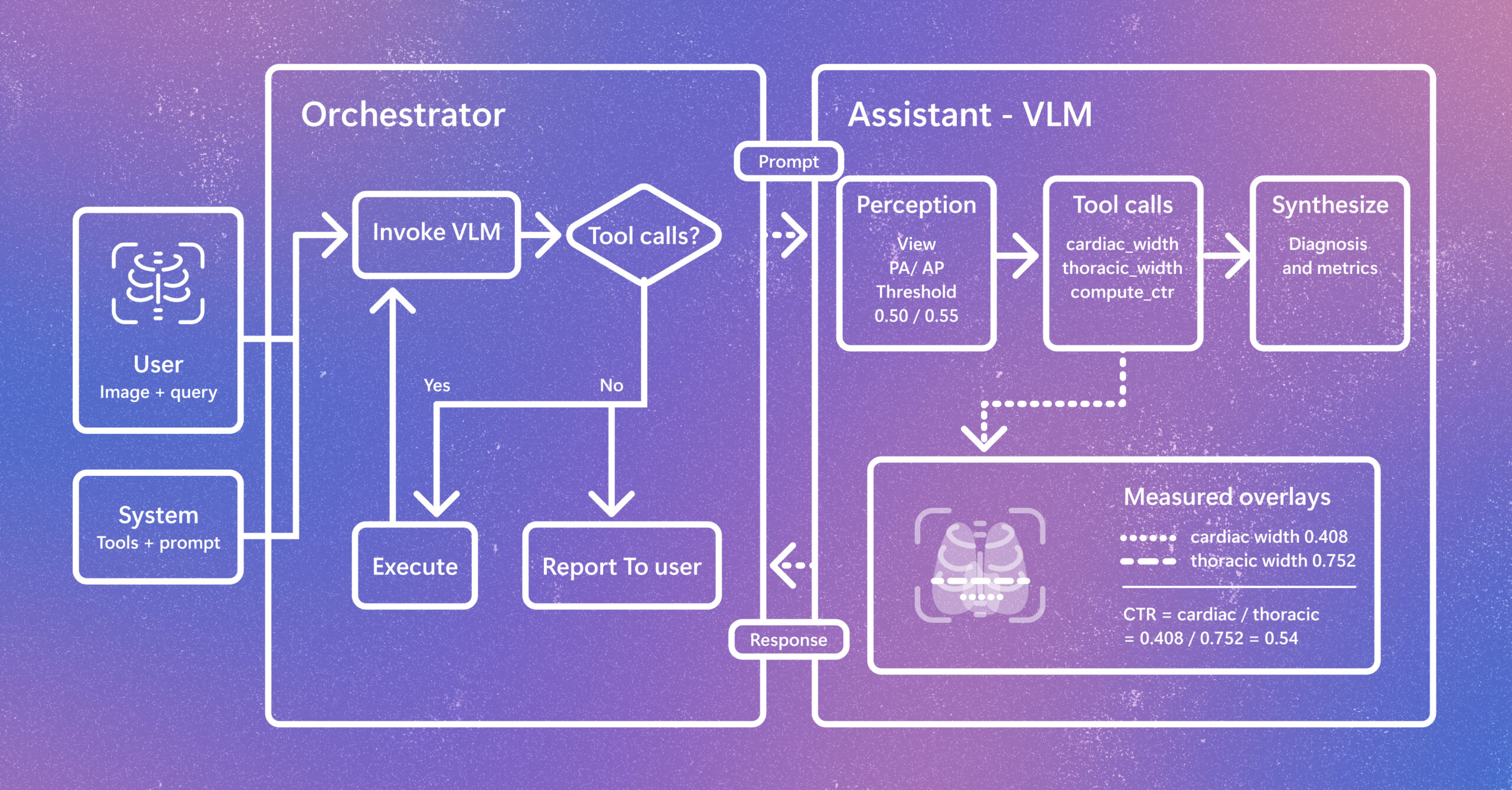
Federated multimodal models often assume every site has every modality, although hospitals differ in access to EHRs, chest radiographs, and ECGs. We study this setting on a MIMIC-derived respiratory deterioration task with simulated FL clients and introduce FedCoRe (Federated Cross-Modal Representation Completion). FedCoRe learns representation- or logit-space corrections rather than generating synthetic ECGs or CXR images. When a client observes a modality that may be missing at deployment, it evaluates the same example with and without that modality to obtain paired supervision. Only clients with such pairs update the completion module, and validation may retain the unchanged prediction. We freeze the trained multimodal predictor during evaluation so that measured differences come only from completion. Hiding ECG reduced AUROC by about 0.085; paired-example FedAvg restored 0.0415 AUROC, or 49.0% of the lost performance. We therefore report two distinct effects: paired-example FedAvg partially recovers the missing-ECG gap, while validation-selected completion is a task-specific classifier-logit correction rather than literal ECG recovery. For CXR, effect-aware completion recovers 52.8% of the loss in a controlled test where CXR is hidden. Paired-example FedAvg transfers part of this effect, but validation keeps the no-completion baseline for deployment cases whose inputs lack CXR. Thus, FedCoRe should be read as a validation-gated completion/correction framework: it can recover missing-modality signal in supported settings, but it should be deployed only when paired examples and validation evidence support that modality.


View source

Similar papers

Preprint Aug 2026

Multimodal Federated Learning under Dual-Axis Modality Missingness

Flux is proposed, a multimodal federated learning framework built around two complementary components, modality-aware confidence tempering and gradient-decoupled private adaptation, that enables sample-specific, client-local confidence adaptation without allowing confidence-dependent gradients to perturb shared representation learning.

Adiba Orzikulova, Jaehyun Kwak, Jaemin Shin et al. · 0 citations
#artificial intelligence Preprint Sep 2026

Federated LoRA Adaptation of BiomedCLIP Across Four International Chest X-Ray Cohorts

Federated learning (FL) lets institutions train a shared model without exchanging data, and Low-Rank Adaptation (LoRA) makes this practical at scale by communicating only compact low-rank updates. Biomedical imaging is a compelling setting for this combination: patient data are archived behind privacy regulations, and institutions differ widely in scanners, protocols, and compute. Such heterogeneity raises the question of how federated LoRA updates should be aggregated, increasingly pressing as multimodal vision-language models become central to medical image analysis. We benchmark federated Parameter-efficient fine-tuning (PEFT) of BiomedCLIP for chest radiograph classification across four public cohorts on three continents (USA, Vietnam, Spain). Federated LoRA adaptation improves shared-class AUC on all four cohorts over the unadapted BiomedCLIP backbone (mean 0.687 to 0.802), showing that the gains come from federated adaptation rather than from the pretrained model's zero-shot ability. Relative to isolated single-cohort training, federation improves the weaker cohorts while largely preserving the strongest and approaches a centralized reference (0.812) that pools all data. The singular value decomposition (SVD)-based product-space aggregation introduced by FlexLoRA is essential to this gain (naive factor averaging drops mean AUC by 0.097), whereas a drift-correcting optimizer (FedProx) shows no benefit over FedAvg in our single-seed runs, consistent with LoRA's low-rank updates already limiting client drift. Biomedical vision-language models can thus be adapted collaboratively across heterogeneous, geographically distributed institutions without centralizing data.

Sanjaya Poudel, Nirajan Kunwor, Manish Dhakal et al. · 0 citations
Open access Aug 2026

FedSCF: sensitivity-aware collaborative fusion for personalized federated learning in medical image classification

A PFL framework, FedSCF, which models client heterogeneity at the parameter level, including a relative perturbation-based sensitivity evaluation is designed to identify critical parameters for personalized modeling, while the remaining parameters participate in cross-client sharing.

Mingjun Wei, Rongyang Xu, Qian Zhang et al. · 0 citations

One-Shot Federated Class-Incremental Learning for Medical Imaging via Variational Feature Transfer

A novel class-incremental continual learning model for a one-shot FL paradigm, in which each task introduces new classes, clients observe heterogeneous and evolving class distributions, and communication with the server occurs only once, substantially mitigates catastrophic forgetting while consistently enhancing recognition of newly introduced classes.

Pedro H. Barros, Omid Orang, Giulia Zanon de Castro et al. · 0 citations
Aug 2026

STPFL: Stable teacher-guided personalized federated learning for heterogeneous multi-institution medical imaging

STPFL builds an EMA-based aggregated teacher to accumulate historical global knowledge and provide consistent guidance and improves global accuracy and F1-score, while personalized models improve by 4–25% and 4–32%, respectively.

R. Semwal, Imlimaong Aier, P. Varadwaj · 0 citations

Related blog posts