Skip to content
#edge computing Open access

Gray Langurs Optimizer-Optimized Feature Mode Decomposition for Adaptive Denoising of Multi-Source Monitoring Data from Floating Offshore Wind Turbines

Sep 2026 · Journal of Marine Science and Engineering · 34 references

Abstract

Feature Mode Decomposition (FMD) adaptively decomposes signals into band-limited modes through an adaptive finite impulse response (FIR) filter bank optimized via correlated kurtosis (CK) maximization, yet its denoising performance is highly sensitive to four hyperparameters—the number of decomposition modes nm, the filter length L, the CK shift order M, and the characteristic-period scaling Tscale—whose manual tuning is impractical for multi-channel floating offshore wind turbine monitoring deployments. We propose GLO-FMD, an adaptive denoising framework coupling the Gray Langurs Optimizer (GLO) with FMD. GLO autonomously optimizes the FMD parameters, thereby aligning the CK objective with structural modal periods rather than impulsive fault periods. Although the search space spans (nm,L,M,Tscale), the CK shift order M is fixed at 2 and Tscale is estimated automatically from the dominant autocorrelation peak; consequently, only (nm,L) are actively optimized. The optimized FMD decomposes multi-axis tower-base signals into band-limited modes through iterative CK-maximizing FIR filter optimization; each mode identifies a dominant periodic component, and the original signal is zero-phase band-pass filtered around the identified frequencies to preserve physical phase during reconstruction. Validation employs (i) semi-synthetic signals reproducing the measured tower-base structure (a smooth 0.15 Hz structural mode plus an impulse-excited 3.77 Hz resonance) with exactly known ground truth—a best-case benchmark by construction that isolates denoising capability from reference uncertainty—and (ii) real strapdown inertial sensor data acquired at 8 Hz from the tower-base interface of a floating offshore wind turbine at an operational site in Chinese coastal waters, over a six-day measurement campaign (18–23 April 2023). Six kinematic channels spanning triaxial acceleration (north, up, east) and triaxial velocity (north, up, east) are analyzed, with 200-s (1600-sample) continuous windows extracted for algorithmic evaluation. On the semi-synthetic data, GLO-FMD achieves a 9.6–10.2 dB SNR improvement over default wavelet thresholding against the known ground truth, and the GLO optimization is essential for reliability—the default FMD configuration is unstable across noise realizations, whereas the optimized parameters recover the clean components consistently. GLO-FMD also achieves pseudo-reference-relative SNR gains of 5.3–7.8 dB over default wavelet thresholding across all six real-data channels. Bootstrap resampling over 12 independent segments confirms statistical significance (p<0.001, Cohen’s d>8), and a no-reference smoothness index provides complementary evaluation independent of the pseudo-reference assumption. Multi-day consistency analysis yields coefficients of variation below 5%, demonstrating short-term consistency across the environmental conditions represented in the six-day dataset. The online denoising stage requires approximately 1.5 s per channel, supporting potential deployment on edge-computing hardware at the turbine controller level.

View source

Similar papers

#computer vision Review Sep 2017

Agile Software Development Methods: Review and Analysis

Agile - denoting "the quality of being agile, readiness for motion, nimbleness, activity, dexterity in motion" - software development methods are attempting to offer an answer to the eager business community asking for lighter weight along with faster and nimbler software development processes. This is especially the case with the rapidly growing and volatile Internet software industry as well as for the emerging mobile application environment. The new agile methods have evoked substantial amount of literature and debates. However, academic research on the subject is still scarce, as most of existing publications are written by practitioners or consultants. The aim of this publication is to begin filling this gap by systematically reviewing the existing literature on agile software development methodologies. This publication has three purposes. First, it proposes a definition and a classification of agile software development approaches. Second, it analyses ten software development methods that can be characterized as being "agile" against the defined criterion. Third, it compares these methods and highlights their similarities and differences. Based on this analysis, future research needs are identified and discussed.

P. Abrahamsson, O. Salo, Jussi Ronkainen et al. · 728 citations · ⚡54
#machine learning Review Open access Oct 2014

Software development in startup companies: A systematic mapping study

Context: Software startups are newly created companies with no operating history and fast in producing cutting-edge technologies. These companies develop software under highly uncertain conditions, tackling fast-growing markets under severe lack of resources. Therefore, software startups present a unique combination of characteristics which pose several challenges to software development activities. Objective: This study aims to structure and analyze the literature on software development in startup companies, determining thereby the potential for technology transfer and identifying software development work practices reported by practitioners and researchers. Method: We conducted a systematic mapping study, developing a classification schema, ranking the selected primary studies according their rigor and relevance, and analyzing reported software development work practices in startups. Results: A total of 43 primary studies were identified and mapped, synthesizing the available evidence on software development in startups. Only 16 studies are entirely dedicated to software development in startups, of which 10 result in a weak contribution (advice and implications (6); lesson learned (3); tool (1)). Nineteen studies focus on managerial and organizational factors. Moreover, only 9 studies exhibit high scientific rigor and relevance. From the reviewed primary studies, 213 software engineering work practices were extracted, categorized and analyzed. Conclusion: This mapping study provides the first systematic exploration of the state-of-art on software startup research. The existing body of knowledge is limited to a few high quality studies. Furthermore, the results indicate that software engineering work practices are chosen opportunistically, adapted and configured to provide value under the constrains imposed by the startup context.

Nicolò Paternoster, Carmine Giardino, M. Unterkalmsteiner et al. · 394 citations · ⚡54

Related blog posts

Microsoft Research Blog Aug 31, 2026

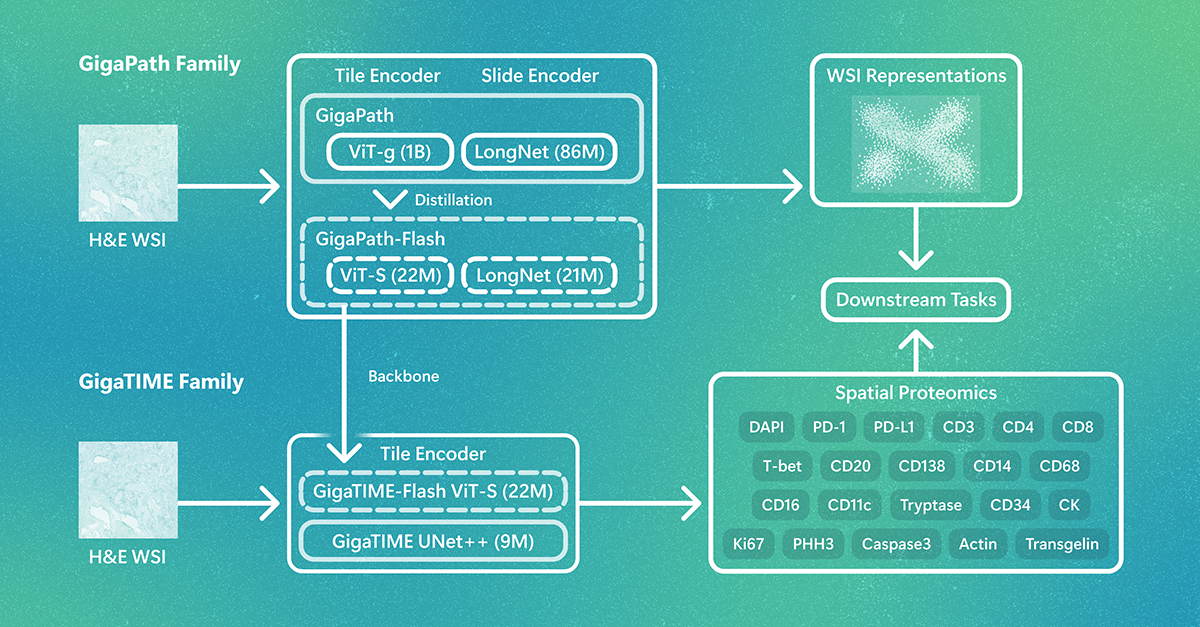
GigaPath-Flash and GigaTIME-Flash: Toward population-scale discovery with efficient pathology foundation models

What if pathology foundation models could do more with less? GigaPath-Flash and GigaTIME-Flash cut computational demands while maintaining strong performance, opening the door to larger studies and broader exploration. The post GigaPath-Flash and GigaTIME-Flash: Toward population-scale discovery with efficient pathology foundation models appeared first on Microsoft Research.

MIT News · Artificial Intelligence Aug 27, 2026

Looking beyond natural sequences

A new machine-learning framework aims to improve the success rate of computational protein design while moving away from results that reproduce sequences found in nature.
