Skip to content
#edge computing Open access

Hardware-accelerated network slicing in multi-tenant 5G networks and beyond

Sep 2026 · Zenodo (CERN European Organization for Nuclear Research)
Software-Defined Networks and 5G

Abstract

Fifth-Generation Mobile Networks (5G), as the most recent generation of networks, presentsdiverging requirements imposed by different vertical industries and mainly by Mobile NetworkOperator (MNO)s which aim to reduce both Capital Expenditures (CAPEX) and OperationalExpenditures (OPEX) using novel technologies based on Mobile Edge Computing(MEC), Network Functions Virtualisation (NFV) and multi-tenancy. These technologies allowto share physical infrastructures between different MNOs. However, this novel paradigmwill incur a downgrade system performance with a direct impact in the competitiveness andproductivity achieved. In order to adapt the current networking infrastructures to these heterogeneous5G scenarios, an evolution in the different components of the network is required,adapting current data planes to become more complex to cope with the multi-tenant 5G traffic.Also, the demanding requirements imposed by the generic 5G services, Enhanced MobileBroadband (eMBB), Massive Machine Type Communications (mMTC) and Ultra-Reliableand Low-Latency Communications (URLLC) associated with different use cases, imply thestudying of new network slicing solutions to provide network isolation support betweenMNOs who share the same physical infrastructure.To address the need that currently exists in network slicing implementations in the edgeto-core network segment of a 5G multi-tenant architecture, this research has designed andprototyped a hardware-based 5G data plane. This data plane provides the ability to control 5Gmulti-tenant traffic and also contains network slicing capabilities which allow the isolation ofthe traffic from different MNOs while using the same physical machine. The network slicingmechanisms achievable with this programmable data plane provide support for multiplecommunication services and also a mechanism to programme the user and the control planes. It allows the creation of 5G slices composed of a collection of Network Function (NF)s forspecific use cases. In the control plane, an Application Programming Interface (API), whichprovides full control of the network data path and the network slicing solution, has beenimplemented.This prototype has been applied to different use cases, such as security, Ultra-High-Definition (UHD) video streaming and URLLC, where the feasibility of this solution hasbeen tested. The security use case prototyped is based on a 5G firewall responsible for theprotection of the edge and core network segments of a 5G scenario, where large quantitiesof network traffic should be processed simultaneously. These considerable quantities oftraffic received by the 5G networks will incur several security problems, such as massiveDistributed Denial of Service (DDoS) attacks, which will have to be mitigated to protect thenetwork components, and therefore avoiding network disruption. The UHD video streaminguse case prototyped includes the generic eMBB service proposed by 5G communications,requiring high data rates across a wide coverage area, complemented by moderate latency.And finally, the network slicing solution has been tested with a URLLC use case, where anovel hardware-based queuing algorithm has been implemented to guarantee End-to-End(E2E) latency in critical 5G communications. These solutions have been empirically validatedin the edge-to-core network segment of a 5G multi-tenant architecture fulfilling the strict5G Key Performance Indicators (KPI)s. Furthermore, the impact of this research has beenapplied in a real testbed in the context of the H2020 5G-PPP Phase II SliceNet project.

View source

Similar papers

#computer vision Review Sep 2017

Agile Software Development Methods: Review and Analysis

Agile - denoting "the quality of being agile, readiness for motion, nimbleness, activity, dexterity in motion" - software development methods are attempting to offer an answer to the eager business community asking for lighter weight along with faster and nimbler software development processes. This is especially the case with the rapidly growing and volatile Internet software industry as well as for the emerging mobile application environment. The new agile methods have evoked substantial amount of literature and debates. However, academic research on the subject is still scarce, as most of existing publications are written by practitioners or consultants. The aim of this publication is to begin filling this gap by systematically reviewing the existing literature on agile software development methodologies. This publication has three purposes. First, it proposes a definition and a classification of agile software development approaches. Second, it analyses ten software development methods that can be characterized as being "agile" against the defined criterion. Third, it compares these methods and highlights their similarities and differences. Based on this analysis, future research needs are identified and discussed.

P. Abrahamsson, O. Salo, Jussi Ronkainen et al. · 728 citations · ⚡54
#machine learning Review Open access Oct 2014

Software development in startup companies: A systematic mapping study

Context: Software startups are newly created companies with no operating history and fast in producing cutting-edge technologies. These companies develop software under highly uncertain conditions, tackling fast-growing markets under severe lack of resources. Therefore, software startups present a unique combination of characteristics which pose several challenges to software development activities. Objective: This study aims to structure and analyze the literature on software development in startup companies, determining thereby the potential for technology transfer and identifying software development work practices reported by practitioners and researchers. Method: We conducted a systematic mapping study, developing a classification schema, ranking the selected primary studies according their rigor and relevance, and analyzing reported software development work practices in startups. Results: A total of 43 primary studies were identified and mapped, synthesizing the available evidence on software development in startups. Only 16 studies are entirely dedicated to software development in startups, of which 10 result in a weak contribution (advice and implications (6); lesson learned (3); tool (1)). Nineteen studies focus on managerial and organizational factors. Moreover, only 9 studies exhibit high scientific rigor and relevance. From the reviewed primary studies, 213 software engineering work practices were extracted, categorized and analyzed. Conclusion: This mapping study provides the first systematic exploration of the state-of-art on software startup research. The existing body of knowledge is limited to a few high quality studies. Furthermore, the results indicate that software engineering work practices are chosen opportunistically, adapted and configured to provide value under the constrains imposed by the startup context.

Nicolò Paternoster, Carmine Giardino, M. Unterkalmsteiner et al. · 394 citations · ⚡54

Related blog posts

Microsoft Research Blog Aug 31, 2026

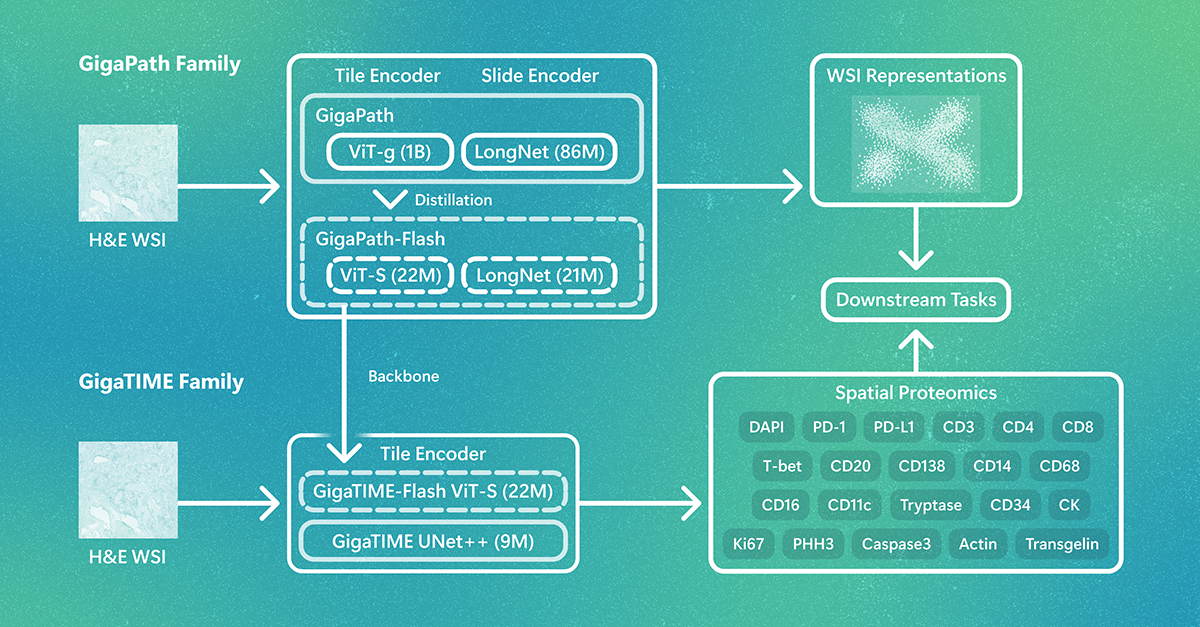
GigaPath-Flash and GigaTIME-Flash: Toward population-scale discovery with efficient pathology foundation models

What if pathology foundation models could do more with less? GigaPath-Flash and GigaTIME-Flash cut computational demands while maintaining strong performance, opening the door to larger studies and broader exploration. The post GigaPath-Flash and GigaTIME-Flash: Toward population-scale discovery with efficient pathology foundation models appeared first on Microsoft Research.

MIT News · Artificial Intelligence Aug 27, 2026

Looking beyond natural sequences

A new machine-learning framework aims to improve the success rate of computational protein design while moving away from results that reproduce sequences found in nature.
