Skip to content
#software testing Open access

Code and dataset for DeepThermo-Meta-assisted autonomous design of dynamic thermal meta-regulators

Sep 2026 · Zenodo (CERN European Organization for Nuclear Research)
Adaptive optics and wavefront sensing

Abstract

Code and dataset for DeepThermo-Meta-assisted inverse design of dynamic meta-regulators Description System requirements Dependencies Python 3.11 PyTorch 2.5.1+cu121 torchvision 0.20.1+cu121 Pydantic >= 2.6, < 3 Loguru >= 0.7, < 1 FastAPI >= 0.115, < 1 Uvicorn >= 0.34, < 1 Ollama Python package >= 0.5, < 1 Tested environments DeepThermo-Meta Agent: Windows, Python 3.11, CPU devices Ollama with the qwen3.6 local model tag (optional; model not included in this archive) Inverse-design computation: WSL2 Ubuntu 20.04, Python 3.11, PyTorch 2.5.1+cu121, CUDA 12.1, NVIDIA GeForce RTX 4070 Ti MATLAB: MATLAB (version compatible with RETICOLO V10) - RETICOLO V10 (third-party MATLAB package for RCWA; required for patterned-structure optical simulations and not included in this archive) Other software CST Studio Suite 2025 and a compatible MATLAB environment for joint simulation and validation screening Installation Miniconda conda create -n deepthermo-meta python=3.11 conda activate deepthermo-meta python -m pip install torch==2.5.1 torchvision==0.20.1 --index-url https://download.pytorch.org/whl/cu121 DeepThermo-Meta Agent installation: cd agent python -m pip install -r requirements.txt DeepThermo-Meta Agent operation Path: agent 1. Start the Web Interface python -m uvicorn app.webapp.backend.main:app --host 127.0.0.1 --port 8000 Open http://127.0.0.1:8000 in a Web browser 2. Environment Selection - Selects Arbitrary spectral selection, Temperature resistance, Mechanical flexibility, Corrosion resistance, or Space survivability before entering the design request - Locks the corresponding material preset for an environment-constrained request - Uses preset 3 (colorful) for DMR-1 to DMR-12 under Arbitrary spectral selection when no material is specified 3. Requirement Analysis and Clarification - Parses the natural-language request and extracts the visible and infrared spectral objectives - Requests only the unresolved spectral information and accepts free-form user answers 4. DMR and Material Mapping - Maps the confirmed spectral requirement to one of twelve DMR tasks - Confirms the environment-authorized or project-approved material preset 5. Downstream Input - Generates a structured DMR and material-preset contract for the inverse-design backend - The publication Web interface reports the resolved contract without automatically starting the scientific backend Command-line demonstration (optional) python -m app.interactive_clarify_main "Use DMR-10." --environment arbitrary To enable the optional local LLM, set PUBLICATION_USE_OLLAMA=true and OLLAMA_MODEL=qwen3.6 before running the Agent. Instructions and demo Dataset collection (~15 mins per model) 1. Generate Turing Pattern Database Run TULINpattern.m in MATLAB 2. DMR Generation and Spectral Analysis Run DMR_runing.m in MATLAB - Generates DMR structure modes - Obtains IR spectral responses 3. Optical Analysis Run RCWA_optical_simulation.m in MATLAB with RETICOLO V10 installed. - Calculates reflectivity and transmittance of patterned DMR structures 4. Data Integration and Preprocessing Run data_integrate.m in MATLAB - Integrates DMR results - Normalizes spectral data - Exports processed data for further analysis Dimensional reduction (~1 hour) Path: Dimensional reduction 1. Spectral Data Dimensionality Reduction Run AE_DR.py in Python - Compresses high-dimensional IR spectral data into a low-dimensional latent representation 2. Graphic Parameter Data Dimensionality Reduction Run VAE-main2.py in Python - Compresses high-dimensional DMR graphic parameters into a low-dimensional latent vector that follows a probabilistic distribution This combined latent representation serves as the input for subsequent MCGAN training and generation. Prediction (~1 hour) Path: Prediction Run Simulator_VIS_ref.py - Trains and saves the visible reflectivity prediction module. Run Simulator_VIS_trans.py - Trains and saves the visible transmittance prediction module. Run Simulator_IR.py - Trains and saves the IR emissivity prediction module. Inverse design (~8 hours) Path: MCGAN Run General_GAN_con_VIS_IR.py - Loads the concatenated low-dimensional data and pre-trained prediction modules (Simulators) - Trains the Multi-Conditional Generative Adversarial Network (MCGAN) - Uses TensorBoard to monitor training progress - Saves the trained generator and discriminator models Run General_GAN_con_VIS_IR_test.py - Loads the trained generator model - Performs inverse design for specific targets (DMR-1 to DMR-12) - Outputs the designed DMR parameters and their predicted optical performance Simulation and Validation Path: Validation Run the supplied MATLAB validation scripts - Screens inverse-designed DMR candidates - Performs RCWA optical analysis of patterned DMR structures - Uses CST Studio Suite for high-fidelity electromagnetic validation when the licensed local environment is configured
View source

Similar papers

#computer vision Review Sep 2017

Agile Software Development Methods: Review and Analysis

Agile - denoting "the quality of being agile, readiness for motion, nimbleness, activity, dexterity in motion" - software development methods are attempting to offer an answer to the eager business community asking for lighter weight along with faster and nimbler software development processes. This is especially the case with the rapidly growing and volatile Internet software industry as well as for the emerging mobile application environment. The new agile methods have evoked substantial amount of literature and debates. However, academic research on the subject is still scarce, as most of existing publications are written by practitioners or consultants. The aim of this publication is to begin filling this gap by systematically reviewing the existing literature on agile software development methodologies. This publication has three purposes. First, it proposes a definition and a classification of agile software development approaches. Second, it analyses ten software development methods that can be characterized as being "agile" against the defined criterion. Third, it compares these methods and highlights their similarities and differences. Based on this analysis, future research needs are identified and discussed.

P. Abrahamsson, O. Salo, Jussi Ronkainen et al. · 728 citations · ⚡54
#machine learning Review Open access Oct 2014

Software development in startup companies: A systematic mapping study

Context: Software startups are newly created companies with no operating history and fast in producing cutting-edge technologies. These companies develop software under highly uncertain conditions, tackling fast-growing markets under severe lack of resources. Therefore, software startups present a unique combination of characteristics which pose several challenges to software development activities. Objective: This study aims to structure and analyze the literature on software development in startup companies, determining thereby the potential for technology transfer and identifying software development work practices reported by practitioners and researchers. Method: We conducted a systematic mapping study, developing a classification schema, ranking the selected primary studies according their rigor and relevance, and analyzing reported software development work practices in startups. Results: A total of 43 primary studies were identified and mapped, synthesizing the available evidence on software development in startups. Only 16 studies are entirely dedicated to software development in startups, of which 10 result in a weak contribution (advice and implications (6); lesson learned (3); tool (1)). Nineteen studies focus on managerial and organizational factors. Moreover, only 9 studies exhibit high scientific rigor and relevance. From the reviewed primary studies, 213 software engineering work practices were extracted, categorized and analyzed. Conclusion: This mapping study provides the first systematic exploration of the state-of-art on software startup research. The existing body of knowledge is limited to a few high quality studies. Furthermore, the results indicate that software engineering work practices are chosen opportunistically, adapted and configured to provide value under the constrains imposed by the startup context.

Nicolò Paternoster, Carmine Giardino, M. Unterkalmsteiner et al. · 394 citations · ⚡54
#computer vision Open access Jul 2017

What happens when software developers are (un)happy

The growing literature on affect among software developers mostly reports on the linkage between happiness, software quality, and developer productivity. Understanding happiness and unhappiness in all its components -- positive and negative emotions and moods -- is an attractive and important endeavor. Scholars in industrial and organizational psychology have suggested that understanding happiness and unhappiness could lead to cost-effective ways of enhancing working conditions, job performance, and to limiting the occurrence of psychological disorders. Our comprehension of the consequences of (un)happiness among developers is still too shallow, being mainly expressed in terms of development productivity and software quality. In this paper, we study what happens when developers are happy and unhappy while developing software. Qualitative data analysis of responses given by 317 questionnaire participants identified 42 consequences of unhappiness and 32 of happiness. We found consequences of happiness and unhappiness that are beneficial and detrimental for developers' mental well-being, the software development process, and the produced artifacts. Our classification scheme, available as open data enables new happiness research opportunities of cause-effect type, and it can act as a guideline for practitioners for identifying damaging effects of unhappiness and for fostering happiness on the job.

D. Graziotin, Fabian Fagerholm, Xiaofeng Wang et al. · 236 citations · ⚡13
#computer vision Open access Oct 2004

Mobile-D: an agile approach for mobile application development

Mobile phones have been closed environments until recent years. The change brought by open platform technologies such as the Symbian operating system and Java technologies has opened up a significant business opportunity for anyone to develop application software such as games for mobile terminals. However, developing mobile applications is currently a challenging task due to the specific demands and technical constraints of mobile development. Furthermore, at the moment very little is known about the suitability of the different development processes for mobile application development. Due to these issues, we have developed an agile development approach called Mobile-D. The Mobile-D approach is briefly outlined here and the experiences gained from four case studies are discussed.

P. Abrahamsson, Antti Hanhineva, H. Hulkko et al. · 225 citations · ⚡18

Related blog posts

MIT News · Artificial Intelligence Aug 17, 2026

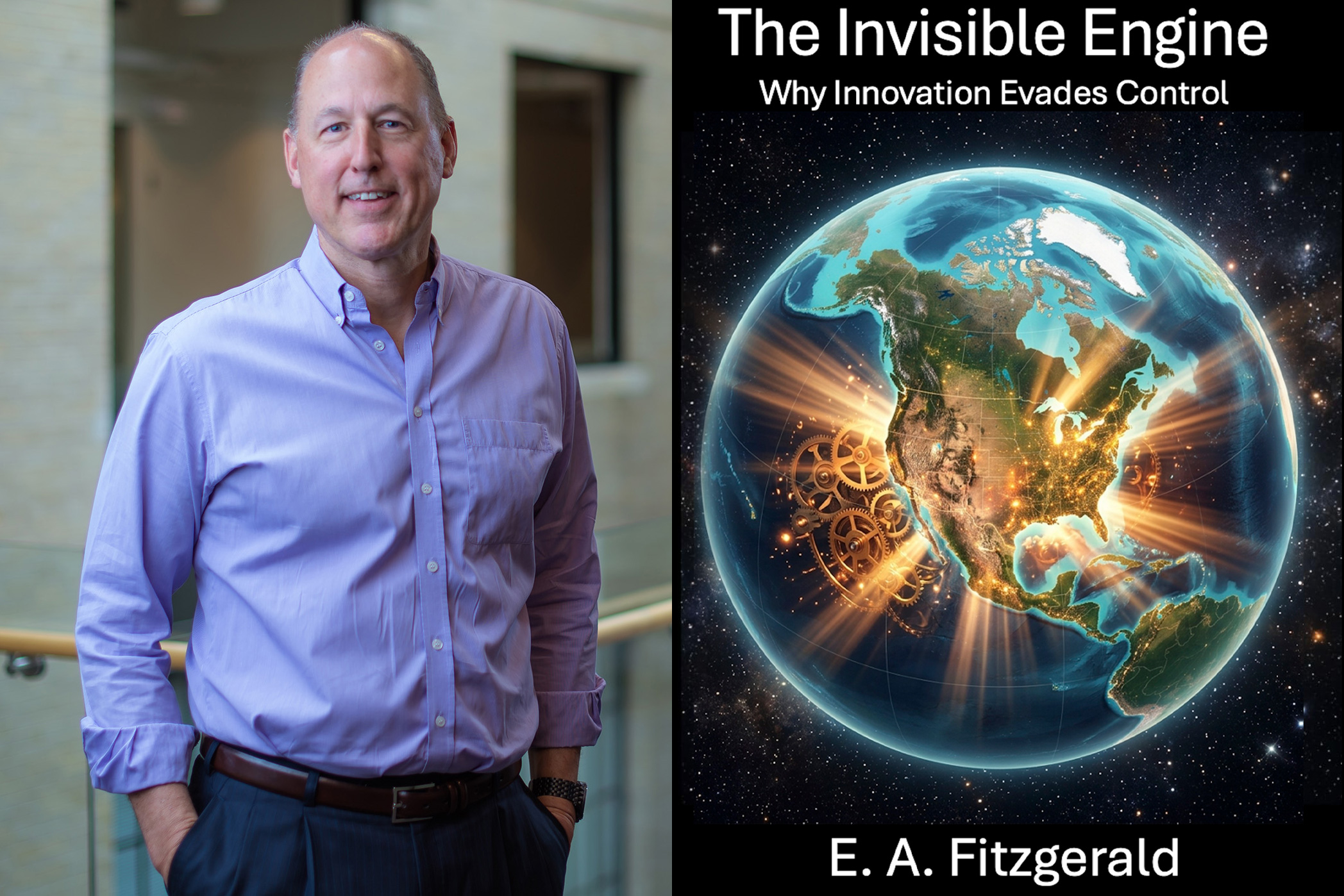
Q&A: Rethinking how innovation happens

In his latest book, Professor Eugene Fitzgerald examines the forces that turn breakthroughs into value — and why innovation resists simple formulas.