Skip to content
#edge computing Open access

Il Principio di Risonanza di Olografia Bidimensionale: Geometria Pura, Fisica dei Buchi Neri e Limiti dei Computer Quantistici

Sep 2026 · Zenodo (CERN European Organization for Nuclear Research)

Abstract

Esiste un punto d'incontro perfetto in cui la successione di Fibonacci annulla l'attrito dei decimali, trasformando l'area bidimensionale del passato nel rapporto lineare del futuro (Shift-2). Questo saggio dimostra matematicamente il Principio Olografico e isola sperimentalmente il "punto di rottura" fisico dello standard IEEE 754 alla 20ª iterazione massiva: il confine esatto dove la pura geometria computazionale si scontra con i limiti fisici dei moderni processori al silicio. ABSTRACT (ITALIANO) Questo studio presenta un'indagine formale geometrico-computazionale sull'invarianza di scala di strutture bidimensionali sottoposte a progressione geometrica esponenziale. Attraverso lo studio sistematico del rapporto dinamico tra l'Area di un rettangolo e la Somma dei suoi lati contigui (R = Area/Somma), l'algoritmo sviluppato identifica un punto latente di risonanza armonica attivato esclusivamente dalle sequenze di Fibonacci. I risultati estendono i propri confini applicativi a tre domini fondamentali: 1. **Fisica dei Buchi Neri:** La relazione Shift-2 (Area_n = Rapporto_n+2) quantifica matematicamente lo sfasamento olografico, offrendo un modello puro per descrivere come l'entropia e l'informazione interna di un volume quantistico possano essere archiviate interamente sul proprio orizzonte degli eventi perimetrale. 2. **Computazione Quantistica e Chip 3D:** L'eliminazione totale del rumore decimale in presenza di crescita esponenziale offre un paradigma matematico esente da errori di arrotondamento floating-point, ottimizzando la conduttività termica nei microchip microscopici tridimensionali. 3. **Limiti Hardware Silicio:** L'opera documenta i limiti fisici delle CPU riscontrati alla ventesima iterazione massiva, isolando una deviazione decimale microscopica (.0156) derivante dall'esaurimento dei registri di memoria dello standard IEEE 754. --- ### ABSTRACT (ENGLISH) This paper presents a formal computational and geometric investigation into the scale invariance of 2D structures under geometric progression. By analyzing the dynamic ratio between a rectangle's area and the sum of its contiguous sides (R = Area/Sum) via an iterative simulation loop, we identify a latent harmonic resonance point triggered exclusively by Fibonacci sequences. The mathematical framework offers critical insights into three cutting-edge domains: 1. **Black Hole Physics:** The Shift-2 relation provides a pure algebraic model for the Holographic Principle, describing how the internal entropy of a quantum volume maps directly to its boundary event horizon. 2. **Quantum Computing Architectures:** The absolute collapse of micro-decimal noise allows for the design of fault-tolerant geometric microchips, optimizing thermal dissipation without floating-point registry overhead. 3. **Silicon Hardware Boundaries:** We document the exact binary breaking point at the 20th massive iteration, isolating a predictable micro-decimal error (.0156) stemming from IEEE 754 floating-point standard limits in modern CPUs.

View source

Similar papers

#computer vision Review Sep 2017

Agile Software Development Methods: Review and Analysis

Agile - denoting "the quality of being agile, readiness for motion, nimbleness, activity, dexterity in motion" - software development methods are attempting to offer an answer to the eager business community asking for lighter weight along with faster and nimbler software development processes. This is especially the case with the rapidly growing and volatile Internet software industry as well as for the emerging mobile application environment. The new agile methods have evoked substantial amount of literature and debates. However, academic research on the subject is still scarce, as most of existing publications are written by practitioners or consultants. The aim of this publication is to begin filling this gap by systematically reviewing the existing literature on agile software development methodologies. This publication has three purposes. First, it proposes a definition and a classification of agile software development approaches. Second, it analyses ten software development methods that can be characterized as being "agile" against the defined criterion. Third, it compares these methods and highlights their similarities and differences. Based on this analysis, future research needs are identified and discussed.

P. Abrahamsson, O. Salo, Jussi Ronkainen et al. · 728 citations · ⚡54
#machine learning Review Open access Oct 2014

Software development in startup companies: A systematic mapping study

Context: Software startups are newly created companies with no operating history and fast in producing cutting-edge technologies. These companies develop software under highly uncertain conditions, tackling fast-growing markets under severe lack of resources. Therefore, software startups present a unique combination of characteristics which pose several challenges to software development activities. Objective: This study aims to structure and analyze the literature on software development in startup companies, determining thereby the potential for technology transfer and identifying software development work practices reported by practitioners and researchers. Method: We conducted a systematic mapping study, developing a classification schema, ranking the selected primary studies according their rigor and relevance, and analyzing reported software development work practices in startups. Results: A total of 43 primary studies were identified and mapped, synthesizing the available evidence on software development in startups. Only 16 studies are entirely dedicated to software development in startups, of which 10 result in a weak contribution (advice and implications (6); lesson learned (3); tool (1)). Nineteen studies focus on managerial and organizational factors. Moreover, only 9 studies exhibit high scientific rigor and relevance. From the reviewed primary studies, 213 software engineering work practices were extracted, categorized and analyzed. Conclusion: This mapping study provides the first systematic exploration of the state-of-art on software startup research. The existing body of knowledge is limited to a few high quality studies. Furthermore, the results indicate that software engineering work practices are chosen opportunistically, adapted and configured to provide value under the constrains imposed by the startup context.

Nicolò Paternoster, Carmine Giardino, M. Unterkalmsteiner et al. · 394 citations · ⚡54

Related blog posts

Microsoft Research Blog Aug 31, 2026

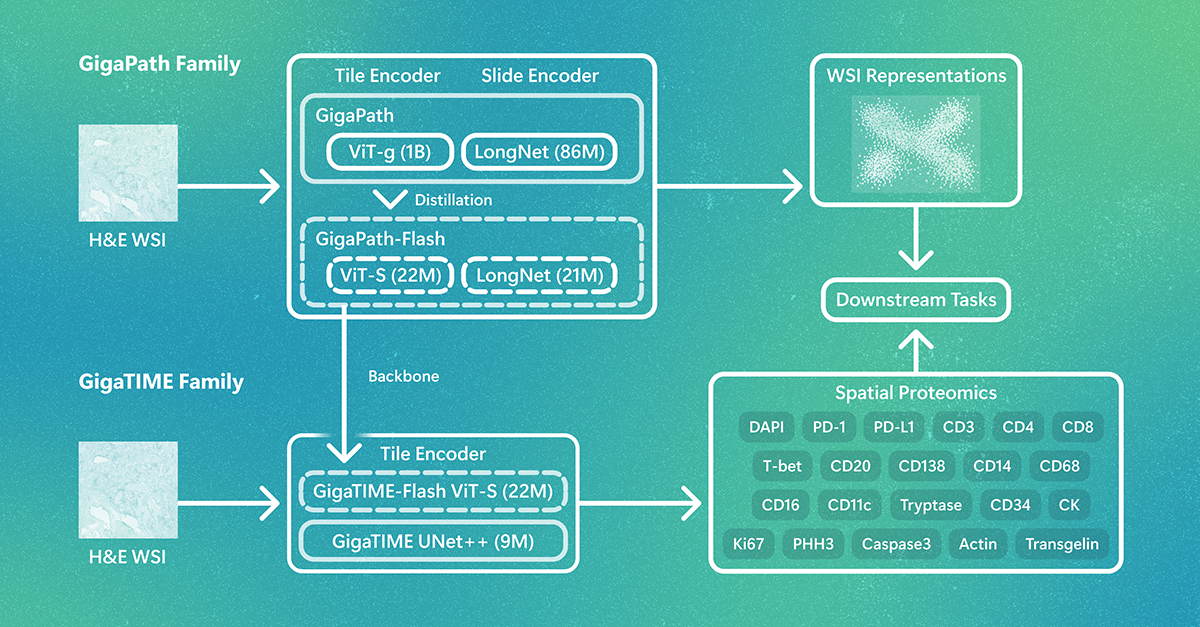
GigaPath-Flash and GigaTIME-Flash: Toward population-scale discovery with efficient pathology foundation models

What if pathology foundation models could do more with less? GigaPath-Flash and GigaTIME-Flash cut computational demands while maintaining strong performance, opening the door to larger studies and broader exploration. The post GigaPath-Flash and GigaTIME-Flash: Toward population-scale discovery with efficient pathology foundation models appeared first on Microsoft Research.

MIT News · Artificial Intelligence Aug 27, 2026

Looking beyond natural sequences

A new machine-learning framework aims to improve the success rate of computational protein design while moving away from results that reproduce sequences found in nature.
