A Unified Finitist Indefinite-Hermitian Framework for 3+1D Spacetime: Clifford Simplex Dynamics, Quadratic Character Identities, and a Conjectural Finitist-to-Continuum Program
Sep 2026· Zenodo (CERN European Organization for Nuclear Research)
Algebraic and Geometric Analysis
Abstract
This research paper establishes a limit-free, finite-dimensional algebraic framework for discrete spacetime geometry and quantum kinematics in (3+1) dimensions. Operating over the finite Galois field F_p (with prime characteristic p > 5 and p = 3 mod 4) and its quadratic extension F_p[delta] (isomorphic to the field of order p^2), the paper bridges Universal Hyperbolic Geometry (UHG) in projective 3-space P^3(F_p) with finite-state indefinite-Hermitian dynamics. The framework serves as the foundational master paper for an integrated finitist theory of spacetime and fundamental interactions, supplying the algebraic substrate for companion models of U(1) electromagnetism, SU(2) x SU(3) non-abelian gauge fields, and emergent gravitational dynamics. Key Mathematical Results and Contributions Witt-Index Incompatibility and 4x4 Clifford Engine:The paper proves via finite-field quadratic form classification that the (3+1)D Lorentzian form on 4D vector space has elliptic (minus) Witt type over F_p when p = 3 mod 4. This establishes a structural obstruction precluding linear quadratic-form isometries into 2x2 real matrix determinant spaces (which are split/hyperbolic). The paper resolves this obstruction by constructing an explicit minimal 4x4 Clifford algebra over F_p. Bivector edge anchors satisfy an exact quadratic polynomial identity, generating rational Cayley spinor transports whose induced adjoint action on vector space is proven algebraically to be special orthogonal (SO(3,1) transformations). The Parity-Quadrume Character Theorem:For every non-degenerate projective tetrahedron in P^3(F_p), the paper proves the exact finite-field theorem:chi_p(V) = -epsilon,where V is the Projective Quadrume (the normalized 4x4 Gram determinant), chi_p is the Legendre quadratic character, and epsilon is a Z_2 parity grading computed from the product of the vertex quadratic norms. This identity algebraically locks the geometric orientation and volume opening of the tetrahedron to the metric discriminant of the Lorentzian signature (-1). Finite-State Indefinite-Hermitian (Krein-Type) Dynamics:The state space is spanned by Cyclic Oriented Polygonal Splines (COPS) of non-degenerate tetrahedra modulo dihedral D_4 loop symmetries. Using a parity-preserving mutation graph, the paper defines an effective Hamiltonian with a reference-configuration potential that measures deviations from standard orthonormal cells. The resulting rational Cayley evolution operator satisfies exact Galois-Hermitian unitarity (U_dag U = I), Krein-type isometry (U_dag G U = G), and exact parity-sector decoupling. Exact Finite Path Expansion:The paper derives an exact finite matrix-product expansion for transition amplitudes, expressing discrete time evolution as an algebraic sum over mutation paths without invoking continuous path integrals. Conjectural Finitist-to-Continuum Program:The paper rigorously separates proved finite-field theorems from open continuum questions, laying out a structured six-step research program to investigate how discrete quadrume dynamics, additive character partition sums, and simplicial refinement limits may connect to higher-derivative Regge calculus and classical General Relativity (G_uv + Lambda g_uv = 0). Computational Verification and Reproducibility All algebraic identities, point-count distributions, Clifford matrix relations, Cayley unitarities, and path expansions are fully verified symbolically and numerically in Python (SymPy) over F_7 and F_7[delta] (field order 49). Complete automated verification scripts, state-space generators, and raw dataset tables are included and openly accessible in the accompanying software-and-data archive (Zenodo DOI: 10.5281/zenodo.21998225).
Agile - denoting "the quality of being agile, readiness for motion, nimbleness, activity, dexterity in motion" - software development methods are attempting to offer an answer to the eager business community asking for lighter weight along with faster and nimbler software development processes. This is especially the case with the rapidly growing and volatile Internet software industry as well as for the emerging mobile application environment. The new agile methods have evoked substantial amount of literature and debates. However, academic research on the subject is still scarce, as most of existing publications are written by practitioners or consultants. The aim of this publication is to begin filling this gap by systematically reviewing the existing literature on agile software development methodologies. This publication has three purposes. First, it proposes a definition and a classification of agile software development approaches. Second, it analyses ten software development methods that can be characterized as being "agile" against the defined criterion. Third, it compares these methods and highlights their similarities and differences. Based on this analysis, future research needs are identified and discussed.
P. Abrahamsson, O. Salo, Jussi Ronkainen et al.· arXiv.org· 728 citations· ⚡54
Context: Software startups are newly created companies with no operating history and fast in producing cutting-edge technologies. These companies develop software under highly uncertain conditions, tackling fast-growing markets under severe lack of resources. Therefore, software startups present a unique combination of characteristics which pose several challenges to software development activities. Objective: This study aims to structure and analyze the literature on software development in startup companies, determining thereby the potential for technology transfer and identifying software development work practices reported by practitioners and researchers. Method: We conducted a systematic mapping study, developing a classification schema, ranking the selected primary studies according their rigor and relevance, and analyzing reported software development work practices in startups. Results: A total of 43 primary studies were identified and mapped, synthesizing the available evidence on software development in startups. Only 16 studies are entirely dedicated to software development in startups, of which 10 result in a weak contribution (advice and implications (6); lesson learned (3); tool (1)). Nineteen studies focus on managerial and organizational factors. Moreover, only 9 studies exhibit high scientific rigor and relevance. From the reviewed primary studies, 213 software engineering work practices were extracted, categorized and analyzed. Conclusion: This mapping study provides the first systematic exploration of the state-of-art on software startup research. The existing body of knowledge is limited to a few high quality studies. Furthermore, the results indicate that software engineering work practices are chosen opportunistically, adapted and configured to provide value under the constrains imposed by the startup context.
Nicolò Paternoster, Carmine Giardino, M. Unterkalmsteiner et al.· Information and Software Tec...· 394 citations· ⚡54
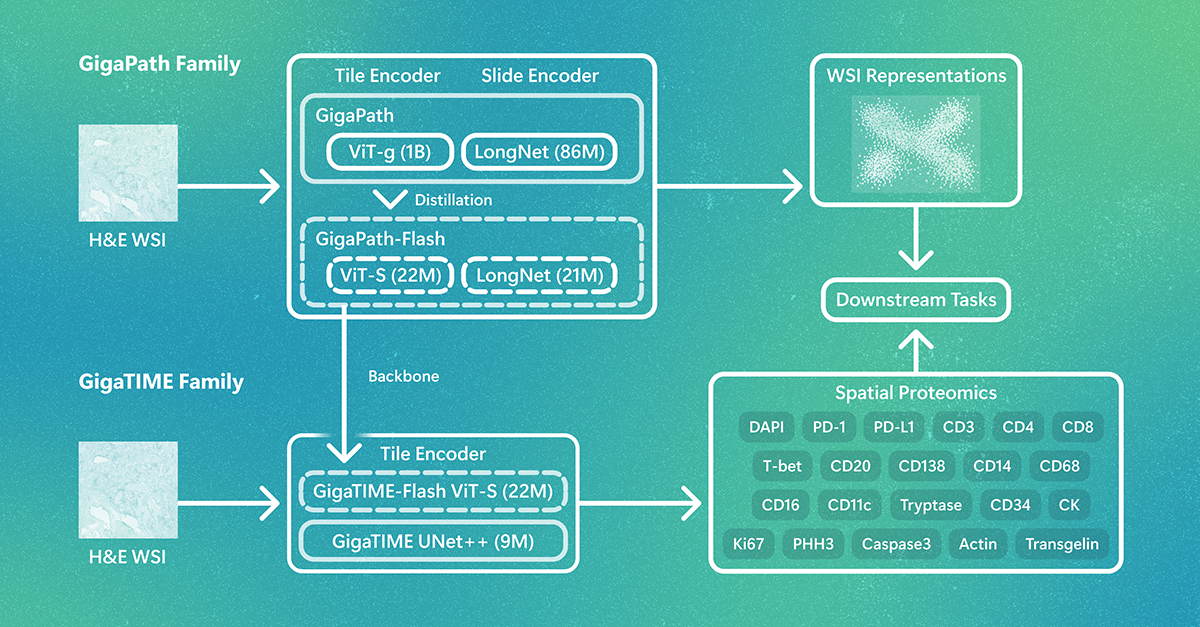
What if pathology foundation models could do more with less? GigaPath-Flash and GigaTIME-Flash cut computational demands while maintaining strong performance, opening the door to larger studies and broader exploration. The post GigaPath-Flash and GigaTIME-Flash: Toward population-scale discovery with efficient pathology foundation models appeared first on Microsoft Research.
MIT News · Artificial Intelligence· news.mit.eduAug 31, 2026
With millions of users across the world, Julia has been used to conduct cutting-edge research and to design new drugs, jet engines, heat pumps, and more.
MIT News · Artificial Intelligence· news.mit.eduAug 27, 2026
A new machine-learning framework aims to improve the success rate of computational protein design while moving away from results that reproduce sequences found in nature.