Sep 2026· Zenodo (CERN European Organization for Nuclear Research)
Abstract
The 2026 Formula One regulations introduce two coupled changes that matter for lap time: movable wings that let the car choose a low drag mode on the straights and a high downforce mode in the corners, and a larger 350~kW electric motor whose deployable power is reduced by a speed dependent rampdown. The two are coupled because choosing low drag raises speed and pushes the car into the band where its own electric deploy is taken away. This paper develops a reusable minimum lap time optimal control tool that schedules the aerodynamic mode and the electric deploy and harvest together, and anchors the result to real 2026 data. Three vehicle models of increasing fidelity are used: a point mass, a dynamic model that resolves load transfer onto four individual tyres, and a transient single track model that carries the yaw rate and the body sideslip as states so that corner entry rotation is computed rather than assumed. The racing line is not prescribed; it is derived as a free state across the true width of each track, bounded by the real track limits rather than the painted edge. The problem is solved by direct collocation in curvilinear coordinates using CasADi and IPOPT, with the numerical error held below 0.1 percent. Rather than tuning grip so the lap matches the pole, the car is calibrated to its demonstrated capability: drag from the real top speed, grip from the real corner speed, power fixed at the regulation values. The calibrated model matches real 2026 qualifying poles to within 0.17 percent. The optimal lap sits within a few percent of the pole but several seconds under median race pace, the value of the electric system is strongly circuit dependent because of the rampdown, and the quasi steady assumption is found to be optimistic by two to nine percent.
Agile - denoting "the quality of being agile, readiness for motion, nimbleness, activity, dexterity in motion" - software development methods are attempting to offer an answer to the eager business community asking for lighter weight along with faster and nimbler software development processes. This is especially the case with the rapidly growing and volatile Internet software industry as well as for the emerging mobile application environment. The new agile methods have evoked substantial amount of literature and debates. However, academic research on the subject is still scarce, as most of existing publications are written by practitioners or consultants. The aim of this publication is to begin filling this gap by systematically reviewing the existing literature on agile software development methodologies. This publication has three purposes. First, it proposes a definition and a classification of agile software development approaches. Second, it analyses ten software development methods that can be characterized as being "agile" against the defined criterion. Third, it compares these methods and highlights their similarities and differences. Based on this analysis, future research needs are identified and discussed.
P. Abrahamsson, O. Salo, Jussi Ronkainen et al.· arXiv.org· 728 citations· ⚡54
Context: Software startups are newly created companies with no operating history and fast in producing cutting-edge technologies. These companies develop software under highly uncertain conditions, tackling fast-growing markets under severe lack of resources. Therefore, software startups present a unique combination of characteristics which pose several challenges to software development activities. Objective: This study aims to structure and analyze the literature on software development in startup companies, determining thereby the potential for technology transfer and identifying software development work practices reported by practitioners and researchers. Method: We conducted a systematic mapping study, developing a classification schema, ranking the selected primary studies according their rigor and relevance, and analyzing reported software development work practices in startups. Results: A total of 43 primary studies were identified and mapped, synthesizing the available evidence on software development in startups. Only 16 studies are entirely dedicated to software development in startups, of which 10 result in a weak contribution (advice and implications (6); lesson learned (3); tool (1)). Nineteen studies focus on managerial and organizational factors. Moreover, only 9 studies exhibit high scientific rigor and relevance. From the reviewed primary studies, 213 software engineering work practices were extracted, categorized and analyzed. Conclusion: This mapping study provides the first systematic exploration of the state-of-art on software startup research. The existing body of knowledge is limited to a few high quality studies. Furthermore, the results indicate that software engineering work practices are chosen opportunistically, adapted and configured to provide value under the constrains imposed by the startup context.
Nicolò Paternoster, Carmine Giardino, M. Unterkalmsteiner et al.· Information and Software Tec...· 394 citations· ⚡54
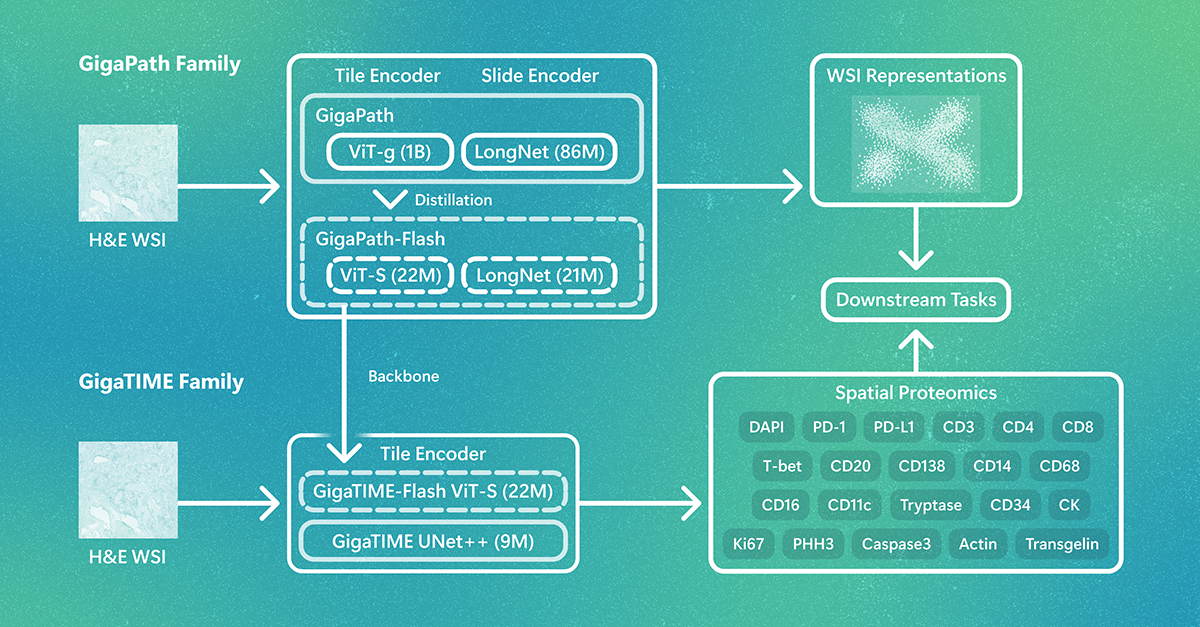
What if pathology foundation models could do more with less? GigaPath-Flash and GigaTIME-Flash cut computational demands while maintaining strong performance, opening the door to larger studies and broader exploration. The post GigaPath-Flash and GigaTIME-Flash: Toward population-scale discovery with efficient pathology foundation models appeared first on Microsoft Research.
MIT News · Artificial Intelligence· news.mit.eduAug 31, 2026
With millions of users across the world, Julia has been used to conduct cutting-edge research and to design new drugs, jet engines, heat pumps, and more.
MIT News · Artificial Intelligence· news.mit.eduAug 27, 2026
A new machine-learning framework aims to improve the success rate of computational protein design while moving away from results that reproduce sequences found in nature.