Skip to content
#edge computing Dataset Open access

100k-Core 5D Architecture: Catching AlphaFold's 4.143 Å Tether Violations - RJW

Sep 2026 · Zenodo (CERN European Organization for Nuclear Research)

Abstract

Macromolecular structure prediction remains limited by the $O(N^2)$ scaling of non-bonded interaction evaluations and the absence of strict physical boundary conditions in purely statistical deep-learning models. In the published SARS-CoV-2 spike glycoprotein protomer model (AF-P0DTC2), sequential $C\alpha$ distances reach $4.143\text{ \AA}$, exceeding the physical peptide bond tether constraint of $\delta_{\mathrm{tether}} \le 4.10\text{ \AA}$ by $0.043\text{ \AA}$. To address these scaling and fidelity constraints, we report a distributed 5-dimensional biophysical tensor architecture that unifies Euclidean backbone coordinates $(\mathbb{D}_1\text{--}\mathbb{D}_3)$ with continuous volumetric fields for Debye-screened electrostatics $(\mathbb{D}_4)$ and Kyte–Doolittle hydration $(\mathbb{D}_5)$. Thermodynamic feasibility is evaluated locally on edge compute nodes prior to network transmission, rejecting 53.8% of unviable proposals for ubiquitin ($N=76$) and 55.0% for the full spike protomer ($N=1{,}273$). For large targets ($N > 2{,}000$), the pairwise invariant calculation is dynamically chunked ($B=1{,}000$) and paged across a 477.5 GiB Host-RAM pool, eliminating GPU VRAM exhaustion while maintaining a block compute velocity of $56.9\text{ ms}$ with zero relative error in float64 accumulation against fully materialized distance matrices. An adversarial multi-agent review (Agents Alpha, Beta, Gamma) details the distinction between structural preservation ($\text{TM-score } 0.9998$ on accepted $0.03\text{--}0.20\text{ \AA}$ jitter) and ab initio prediction, rationalizes the operational Debye screening parameter ($\lambda_D = 9.0\text{ \AA}$), and documents host/GPU memory collisions during concurrent runtime execution. Complete coordinate streams, benchmark telemetry, and distributed orchestration routines are provided for independent verification.Author’s Note: To the Wet Lab Scientists and Researchers I am Robert J. Weber, and I built the system that generated the results shown here. My goal is simple: I am trying to help. Not for my sake or yours, but to help those afflicted by this horrible disease. I offer my work without worrying about profit, which is why I have posted everything openly. Humanity, and the families watching their loved ones suffer, are utterly worthy of this help. If we can create a treatment—or even a preventative measure that slows the progression—it would mean everything. To allow a husband or a wife to smile, to embrace, and to retain the functional love and recognition of the person they built a life with... who could ask for a better payment? RJW

View source

Similar papers

#computer vision Review Sep 2017

Agile Software Development Methods: Review and Analysis

Agile - denoting "the quality of being agile, readiness for motion, nimbleness, activity, dexterity in motion" - software development methods are attempting to offer an answer to the eager business community asking for lighter weight along with faster and nimbler software development processes. This is especially the case with the rapidly growing and volatile Internet software industry as well as for the emerging mobile application environment. The new agile methods have evoked substantial amount of literature and debates. However, academic research on the subject is still scarce, as most of existing publications are written by practitioners or consultants. The aim of this publication is to begin filling this gap by systematically reviewing the existing literature on agile software development methodologies. This publication has three purposes. First, it proposes a definition and a classification of agile software development approaches. Second, it analyses ten software development methods that can be characterized as being "agile" against the defined criterion. Third, it compares these methods and highlights their similarities and differences. Based on this analysis, future research needs are identified and discussed.

P. Abrahamsson, O. Salo, Jussi Ronkainen et al. · 728 citations · ⚡54
#machine learning Review Open access Oct 2014

Software development in startup companies: A systematic mapping study

Context: Software startups are newly created companies with no operating history and fast in producing cutting-edge technologies. These companies develop software under highly uncertain conditions, tackling fast-growing markets under severe lack of resources. Therefore, software startups present a unique combination of characteristics which pose several challenges to software development activities. Objective: This study aims to structure and analyze the literature on software development in startup companies, determining thereby the potential for technology transfer and identifying software development work practices reported by practitioners and researchers. Method: We conducted a systematic mapping study, developing a classification schema, ranking the selected primary studies according their rigor and relevance, and analyzing reported software development work practices in startups. Results: A total of 43 primary studies were identified and mapped, synthesizing the available evidence on software development in startups. Only 16 studies are entirely dedicated to software development in startups, of which 10 result in a weak contribution (advice and implications (6); lesson learned (3); tool (1)). Nineteen studies focus on managerial and organizational factors. Moreover, only 9 studies exhibit high scientific rigor and relevance. From the reviewed primary studies, 213 software engineering work practices were extracted, categorized and analyzed. Conclusion: This mapping study provides the first systematic exploration of the state-of-art on software startup research. The existing body of knowledge is limited to a few high quality studies. Furthermore, the results indicate that software engineering work practices are chosen opportunistically, adapted and configured to provide value under the constrains imposed by the startup context.

Nicolò Paternoster, Carmine Giardino, M. Unterkalmsteiner et al. · 394 citations · ⚡54

Related blog posts

Microsoft Research Blog Aug 31, 2026

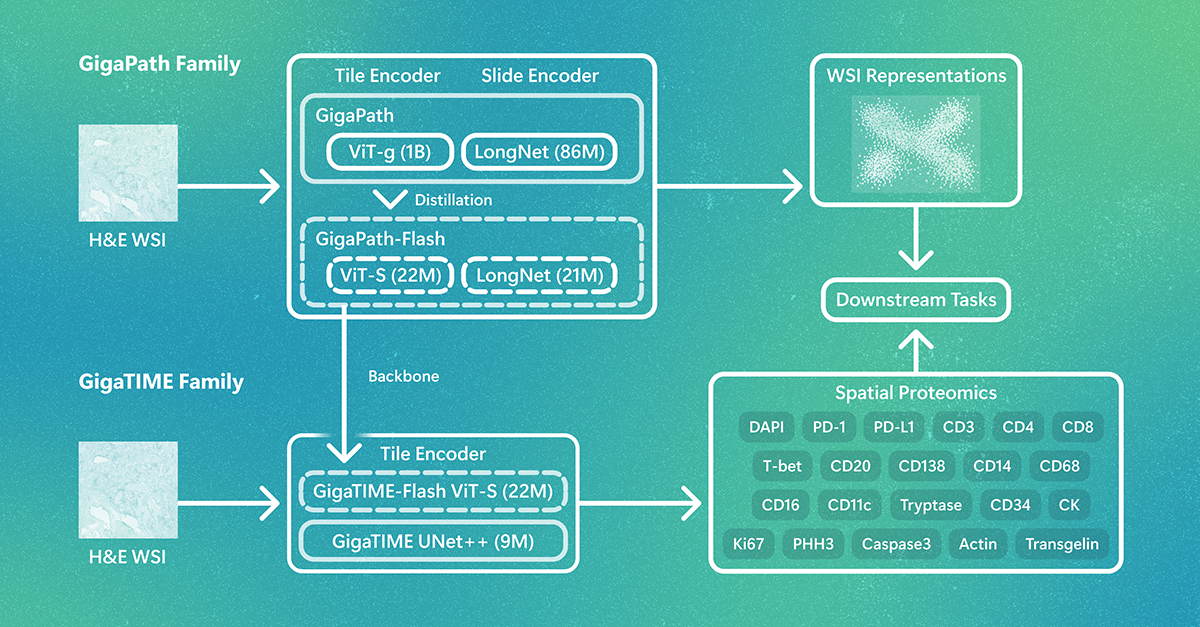
GigaPath-Flash and GigaTIME-Flash: Toward population-scale discovery with efficient pathology foundation models

What if pathology foundation models could do more with less? GigaPath-Flash and GigaTIME-Flash cut computational demands while maintaining strong performance, opening the door to larger studies and broader exploration. The post GigaPath-Flash and GigaTIME-Flash: Toward population-scale discovery with efficient pathology foundation models appeared first on Microsoft Research.

MIT News · Artificial Intelligence Aug 27, 2026

Looking beyond natural sequences

A new machine-learning framework aims to improve the success rate of computational protein design while moving away from results that reproduce sequences found in nature.
