A Feature-Major Codebook for Memory-Efficient Sparse-Binary Self-Organizing Maps: Scaling a MEDLINE Atlas to 1.05 Million Neurons on a Single Consumer GPU
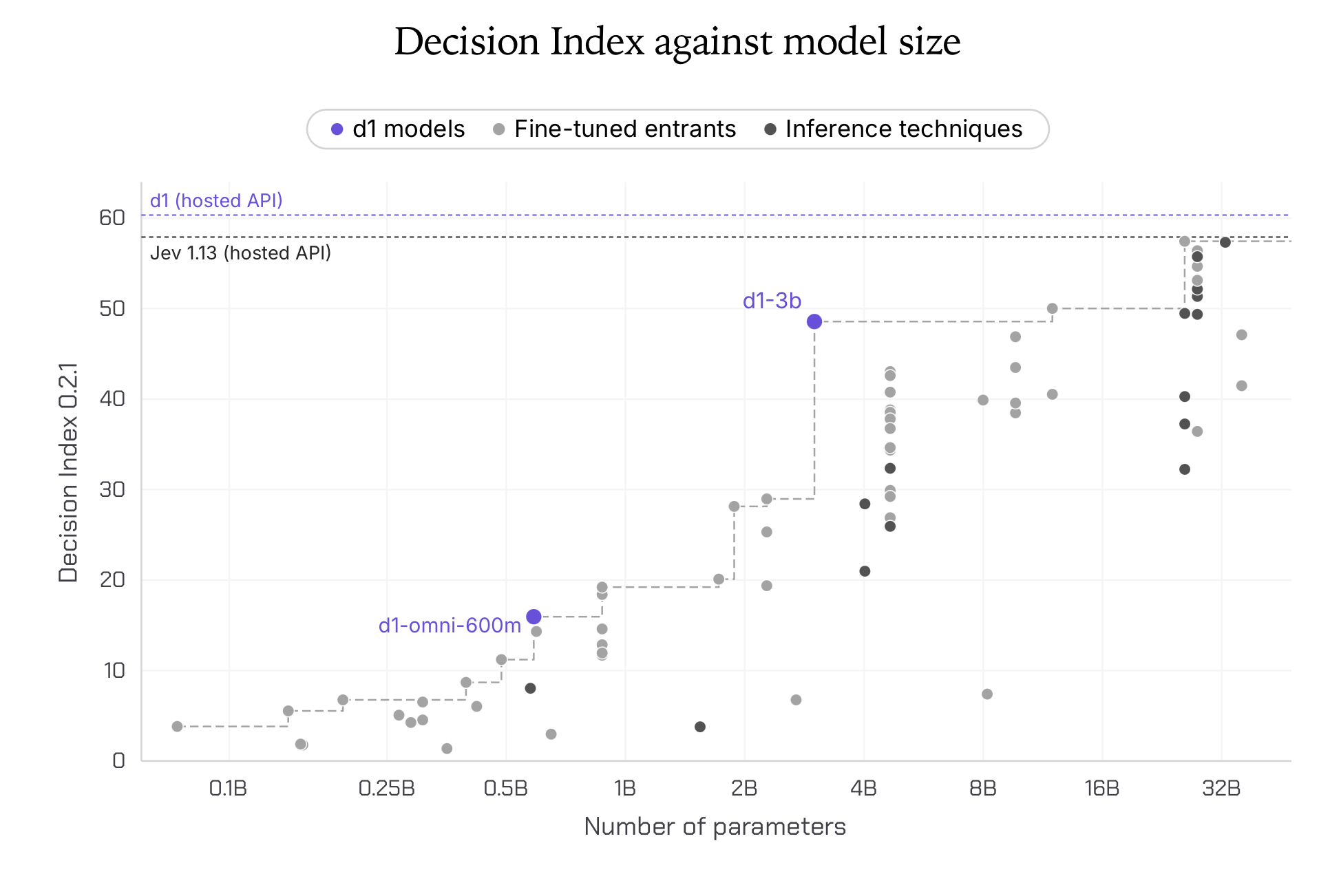
The design is ~82x faster than MedSOM, the CUDA implementation behind the authors' earlier MEDLINE atlases and, at 128x128, 621x faster than the best available multicore-CPU library.
Abstract
A self-organising map turns a large corpus into a browsable two-dimensional atlas, but building one at MEDLINE scale has been impractical: the best-matching-unit (BMU) search that dominates training is bound by the bandwidth needed to read the codebook every epoch. I show that this bottleneck is largely an artefact of codebook layout. Storing it feature-major with each feature's weights contiguous, W[v.M+i], recasts the search as a tiled sparse-dense product in which every loaded weight column is reused across a tile of samples. Varying only the layout, with implementation, precision and update rule held fixed, accelerates the BMU search by 4.5-8.5x. Because an exact-argmin BMU is invariant to how the codebook is stored, this gain costs nothing: held-out quantisation error agrees with a cuSPARSE baseline to within 0.5% at every map size. Against that baseline the advantage is a crossover rather than a constant: cuSPARSE.SOM is faster at small maps, SparseBin.SOM is 1.5x faster at 128x128 and 2.6x at 256x256, and at 512x512 it is the only one that runs at all on 24 GB. Paired with a radius-independent box-blur update and a convergence-based stopping rule, it trains a converged map over 29.9 million MEDLINE articles in about 72 s at 64x64 on one 24 GB GPU, and accommodates 262,144 neurons (512x512 edges) where every alternative algorithm I tested exceeds memory constraints. On a 141 GB H200 it reaches 1,048,576 neurons (1024x1024 edges) - to my knowledge the largest self-organising map yet reported. Held-out error follows a smooth power law with no elbow across three decades of map size, so the limit on resolution is compute rather than any breakpoint in the data. At matched work the design is ~82x faster than MedSOM, the CUDA implementation behind our earlier MEDLINE atlases and, at 128x128, 621x faster than the best available multicore-CPU library.
Open-vocabulary 3D scene understanding is commonly achieved by embedding 2D vision-language features such as CLIP into a 3D Gaussian Splatting scene, turning it into a text-queryable semantic field. However, attaching a high-dimensional feature to each of millions of Gaussians inflates a single scene to gigabytes, which makes storage and deployment the real bottleneck of these fields. Existing compact methods each learn and ship a per-scene codec, an autoencoder, a quantized codebook, or a distilled feature field, entangling field construction with field storage and never compressing the per-Gaussian assignment that holds the bulk of the cost. We argue that construction and storage should be decoupled, and that storage is a rate-distortion problem over the per-Gaussian binding to a small anchor table, a structure no prior open-vocabulary method compresses. We present CoSAG, which constructs the field without any per-scene training through a closed-form transmittance-weighted lift, spatially grounded semantic anchors, and multi-view denoising, and stores it with a spatially predictive entropy coder that ships no decoder. Because the anchors are spatially grounded, the binding is predictable and therefore highly compressible. The transmittance-weighted lift and multi-view denoising yield a clean, view-consistent assignment, so the entropy coder spends almost no rate on correcting noise and instead codes only the residual against its spatial prediction. CoSAG reaches sub-megabyte storage while matching or exceeding the state of the art across the 2D-rendered, 3D-selection, and dense-LSeg protocols, reducing field size by 37 to 76x relative to LangSplatV2 at higher accuracy.
Yuang Jia, Jinlong Wang, Junhong Lin et al.· 0 citations
Most competitive 4-bit LLM research pipelines now open the same way: apply a linear, function-preserving transform (rotation, scaling, permutation, non-orthogonal affine) so the outlier mass sits more favorably against the group scales, and only then round. Yet we are aware of no survey dedicated to this transform stage, and its literature is quietly re-deriving an older theory. We identify and formalize the principle that organizes it, the Great Inversion: allocation-flexible coding rewards energy concentration, whereas the grouped shared-scale quantization a deployed matrix instruction performs rewards within-group flattening. Classical transform coding (1963: decorrelate, allocate bits, quantize) spends different bits per coordinate at a fixed total rate; for a Gaussian source at high rate the Karhunen-Loeve transform's concentration minimizes distortion. A deployed operand tile instead carries one absolute-maximum scale per group and equal bits everywhere, with no allocation; on a uniform grid that objective rewards flattening, approached by Hadamard incoherence. We prove that opposition under within-group majorization: the prescriptions point in opposite directions, each backed by a proof against its own objective, and for a generic spectrum no optimality guarantee transfers. A second axis is the number format: the non-uniform FP4 grid makes flattening buy less, MXFP4's power-of-two block scale still rewards a rotation confined to that block, and NVFP4's mantissa-carrying scale largely removes that pull, so the target pole depends jointly on allocation regime and format. We survey 200 works to a June 2026 cutoff; classify 43 transform methods by structure, data-awareness, searched-versus-constructed, and runtime cost; record, where reported, how they compose with GPTQ rounding; distill a first-choice guide by deployment regime; and close with the open problems it exposes.
Weight quantization for large-language-model inference must balance adaptive reconstruction levels with representations regular enough for efficient GPU execution. Uniform integers constrain each group to a linear grid. Low-bit floating-point formats use a fixed exponent-mantissa structure, while learned codebooks gain flexibility at the cost of irregular decoding and additional metadata. We introduce CubicQuant, a parametric non-uniform scalar format that preserves a dense integer code stream while adapting reconstruction levels within each weight group. A monotonic cubic curve, specified by two shape parameters and one scale, maps uniformly spaced magnitude codes to non-uniform levels. The family spans 1-8-bit weight payloads, contains symmetric uniform integer quantization as an exact special case, and has effective width B + 64/G bits per weight for payload width B and group size G. We derive population distortion under Uniform, Gaussian, and Laplace distributions, formulate continuous and Dynamic-A8-carrier-aware fitting objectives, and describe direct packed-weight GPU execution. For finite groups of G=128 with 15,360 samples per distribution, W4 CubicQuant reduced reconstruction RMSE relative to optimally clipped four-bit uniform integer quantization by 3.90% on Uniform, 13.49% on Gaussian, and 28.14% on Laplace samples. Relative to the best enumerated four-bit finite floating-point format, the reductions were 3.90%, 9.44%, and 6.27%. Preliminary H200 kernel measurements show a workload-dependent crossover: model-dtype execution is faster for narrow GEMV, while Dynamic A8 becomes favorable as row count grows. The results establish the format's representational promise and direct executability; downstream model quality and cross-device end-to-end performance remain open evaluation questions.
Large language models (LLMs) are increasingly constrained by memory capacity, weight bandwidth, and checkpoint storage during deployment. Existing low-bit compression methods mainly follow two directions. Scalar or group-wise quantization is simple and compatible with efficient low-precision kernels, but its representation capacity becomes limited when the target budget approaches 2 bits per weight. Vector-quantized weight compression provides a richer block-level representation, but usually introduces explicit codebooks, index lookup, and additional storage accounting. This paper presents BiSCo-LLM, a codebook-free binary spherical coding framework for extreme low-bit LLM weight compression. The core pipeline is built on three components. First, local weight chunks are mapped onto a unit hypersphere and binarized into compact spherical codes, so that the main payload is a bit-packed sign stream rather than explicit VQ centroids. Second, a residual BSQ stage encodes the reconstruction error left by the base spherical codec, providing an explicit rate-distortion path without stored codebooks. Third, category-wise recovery distillation is performed after replacing each Transformer module category, reducing the mismatch between local weight reconstruction and assembled model behavior. A small 8-bit protected-channel path is used as an auxiliary stabilization mechanism for sensitive channels and is counted separately from the BSQ payload. The reported storage budget includes binary codes, neural decoders, protected-channel payloads, LoRA adapters, and metadata.
Yuantian Shao, Peisong Wang, Zhilei Liu et al.· 0 citations
Retrieval-Augmented Generation (RAG) systems increasingly power enterprise LLM applications, yet the vector retrieval layer introduces two underexplored challenges: (1) trained codebook quantizers may expose corpus statistics during index construction, creating a leakage channel in multi-tenant deployments, and (2) post-hoc filtering for tenant isolation degrades recall on selective queries. We study TurboVec, an open-source vector index built on TurboQuant - a codebook-oblivious scalar quantizer requiring no corpus-dependent training. On the DBpedia OpenAI embeddings benchmark (d=1536, 100K-999K vectors), TurboQuant 4-bit outperforms trained FAISS Product Quantization at the same memory budget by 8.5-8.9 percentage points in Recall@5 across all scales. Compared to HNSW (R@5=0.991) and IVF-PQ (R@5=0.840), TurboQuant occupies a distinct design point: higher recall than IVF-PQ without training, at 4-8x less memory than HNSW. Deployed on Snowpark Container Services, TurboVec achieves 11ms median query latency at 100K vectors versus 707ms for warehouse brute-force scan. Kernel-level allowlist filtering maintains 0.86-0.93 Recall@10 across 10-1000 tenant workloads versus 0.09-0.19 for post-filter baselines. Codebook-oblivious design reduces membership inference accuracy to near-random (50.0%) versus 57.3% for PQ codebooks. Limitations include single dataset evaluation, uncompressed HNSW comparison, and privacy evaluation on synthetic data only.
Navnit Shukla, Kamal Pandey, Omsankar Tiwari· 1 citation
TERINT-GEMV is designed, a multiplier-free bit-serial accelerator that ingests the 6-bit indices directly through an on-chip lookup table, computing ternary × INT8 dot products with dynamic zero-skipping.
T. Pereira, Ikenna Nwozo, Sharon Hu et al.· Proceedings of the ACM/IEEE...· 0 citations
Related blog posts
MIT News · Artificial Intelligence· news.mit.eduSep 2, 2026
What if pathology foundation models could do more with less? GigaPath-Flash and GigaTIME-Flash cut computational demands while maintaining strong performance, opening the door to larger studies and broader exploration. The post GigaPath-Flash and GigaTIME-Flash: Toward population-scale discovery with efficient pathology foundation models appeared first on Microsoft Research.
MIT News · Artificial Intelligence· news.mit.eduAug 31, 2026
With millions of users across the world, Julia has been used to conduct cutting-edge research and to design new drugs, jet engines, heat pumps, and more.
MIT News · Artificial Intelligence· news.mit.eduAug 27, 2026
A new machine-learning framework aims to improve the success rate of computational protein design while moving away from results that reproduce sequences found in nature.