The notion of a pseudo e-net is introduced, which decomposes the surface into e-thin cylinders together with a Delaunay triangulation over an e-net of the remaining thick part of the hyperbolic surface.
Abstract
Hyperbolic surfaces are a fundamental object in mathematics and play an increasingly important role in computational geometry and topology. A key ingredient in the design of efficient algorithms on such surfaces is the availability of a geometric discretization of controlled complexity. In this paper, we present the first algorithm for constructing e-nets on hyperbolic surfaces starting from a fundamental polygon representation. Our approach is based on Delaunay refinement and relies on maintaining Delaunay triangulations through edge flips. The size of an e-net cannot be bounded solely as a function of the genus because of the presence of arbitrarily long collars around short geodesics. To overcome this difficulty, we introduce the notion of a pseudo e-net, which decomposes the surface into e-thin cylinders together with a Delaunay triangulation over an e-net of the remaining thick part. As applications, we obtain algorithms for computing the length spectrum of an e-thick hyperbolic surface and for computing the systole from a pseudo log(sqrt(2))-net. These results demonstrate that Delaunay-based discretizations provide a practical and versatile framework for algorithmic computations on hyperbolic surfaces.
We study the extension of the conformal structure of a Riemann surface, obtained as a submanifold of $\mathbf R^n$, across an isolated singular point, under hypotheses that are metric rather than analytic. The main result (1989) is that an isolated singularity is $\textbf{conformally point-like}$ (conformal to a punctured disc) whenever it is $\textbf{$M$-regular}$: the pair (surface minus the point, the point) satisfies a Whitney condition, and the length of the spherical slice $S(0,r)\cap E$ decreases at most linearly in $r$, a condition described as ``metric decay''. This is proved via a modulus-of-rings (extremal-length) argument, generalizing the classical planar technique to submanifolds of $\mathbf R^n$. Two classes of examples are treated: surfaces of revolution generated by a single curve, and subanalytic surfaces, for which $M$-regularity is verified directly from Hironaka's structure theory, giving as a corollary that every isolated singularity of an orientable subanalytic surface is conformally point-like. A further original result is a $C^\infty$ counterexample showing that a strict Whitney condition alone does $\textbf{not}$ imply the linear length bound: the two hypotheses in the definition of $M$-regularity are independent.
Geodesic flows on closed hyperbolic surfaces are a quintessential example of chaotic dynamics, i.e., systems whose long term behavior is very sensitive to initial conditions. The speed of such chaos is controlled by the spectral gap of the Laplace-Beltrami operator of the underlying hyperbolic surface. In this paper we give an overview of recent breakthroughs of Anantharaman and Monk showing that large genus closed hyperbolic surfaces have optimal spectral gap in a probabilistic sense. On the way we introduce and discuss the foundational works of many authors, from Selberg to Mirzakhani, that play a crucial role in the tour de force proof of Anantharaman and Monk.
We present a method for constructing intrinsic triangulations of closed discrete surfaces, in which edges correspond to shortest geodesic paths and faces decompose into geometric primitives inherited from the underlying mesh. Starting from a watertight input triangulation, the method progressively builds an intrinsic mesh through local optimization operations -- edge swaps, edge splits, edge collapses, and triangle splits -- performed directly on the surface without modifying the original geometry. Element size is controlled via a characteristic length field, and quality is enforced through angle-based criteria derived from intrinsic distances. Geodesic distances are computed exactly using a continuous Dijkstra approach, accelerated by an A* search strategy that reduces computation to roughly $3\%$ of the cost of standard propagation. The framework supports both refinement and coarsening, overcoming a key limitation of prior intrinsic methods based on developable triangles. As a by-product, the intrinsic triangulation provides a natural foundation for direct high-order mesh generation, bypassing the classical pipeline of first constructing a linear mesh and subsequently curving it. The method is validated on the Thingi10K dataset across nearly 5,000 geometrically complex models.
Immersed surfaces in hyperbolic three-space carry several natural Gauss-type maps with distinct geometric roles. The hyperbolic Gauss maps record the ideal endpoints of oriented normal geodesics; the Legendre Gauss lift retains the position-normal data and its contact structure; adjusted Gauss maps arise from gauge normalization and Iwasawa splitting in Weierstrass--Kenmotsu representations; and the conformal Gauss map encodes the mean-curvature sphere congruence in M\"obius geometry. We present these constructions in a common framework, emphasizing their target spaces, analytic properties, and mutual relations. Particular attention is given to the generalized DPW method, the necessity of flatness in adjusted rank-one data, and the harmonic-map characterization of Willmore surfaces. The resulting viewpoint distinguishes the asymptotic, contact, integrable, and conformal information carried by an immersed surface in \(\mathbb{H}^{3}(-1)\).
We study the variance of a local Weyl law over a fixed smooth energy window, when averaged over large Weil--Petersson hyperbolic surfaces. Our results are consistent with the predictions of Berry's random wave model. Our approach allows to explicitly integrate certain test functions which depend on lengths of based geodesic loops, and relate them to the associated lengths of the closed geodesics in their free-homotopy class. We thus utilise the work of Mirzakhani, with exact stationary phase arguments, to identify correct main and error terms, making explicit the asymptotic behaviour of the variance of the local Weyl law. Furthermore, we introduce the geometric notion of length-minimising geodesic loops and sequences, based at a point. We prove a complete characterisation of the topology of these, namely that they are simple. This forms a key ingredient in our study, and yields a new streamlined argument to bound the contributions of remainder terms which depend on lengths of pairs of different short primitive geodesic loops. To illustrate the generality of our results, we further introduce a family of"exploring"loops based at a point, which might be of independent interest.
Generically the rigidity of bar-joint structures admits combinatorial characterisations in the Euclidean plane and, more generally, for frameworks on the sphere and the torus. The remaining case of compact surfaces of genus at least two has remained open. Using the hyperbolic geometry of their universal covers, we develop a theory of infinitesimal rigidity for frameworks on compact surfaces of genus at least two. By the uniformisation theorem, every such surface is a quotient of the hyperbolic plane by a surface group, allowing frameworks on the surface to be represented as infinite symmetric frameworks in the hyperbolic plane. Encoding the symmetry through gain graphs, we prove that infinitesimal rigidity is determined entirely by finite combinatorial data. Specifically, a framework is generically rigid if and only if its associated gain graph contains a spanning (2,3,1,0)-gain tight subgraph. This yields the first combinatorial characterisation of generic rigidity for frameworks on compact surfaces of genus at least two.
Sean Dewar, Alison La Porta, R. Monks et al.· 0 citations
Related blog posts
MIT News · Artificial Intelligence· news.mit.eduSep 2, 2026
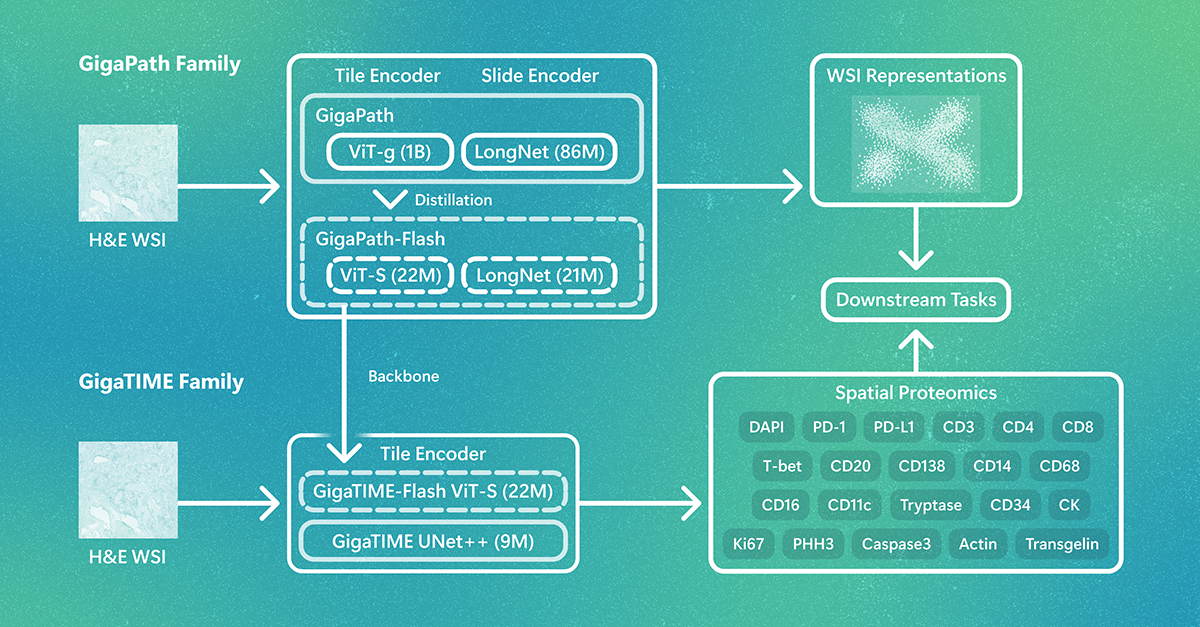
What if pathology foundation models could do more with less? GigaPath-Flash and GigaTIME-Flash cut computational demands while maintaining strong performance, opening the door to larger studies and broader exploration. The post GigaPath-Flash and GigaTIME-Flash: Toward population-scale discovery with efficient pathology foundation models appeared first on Microsoft Research.
MIT News · Artificial Intelligence· news.mit.eduAug 31, 2026
With millions of users across the world, Julia has been used to conduct cutting-edge research and to design new drugs, jet engines, heat pumps, and more.
MIT News · Artificial Intelligence· news.mit.eduAug 27, 2026
A new machine-learning framework aims to improve the success rate of computational protein design while moving away from results that reproduce sequences found in nature.