Skip to content

Beyond Pairwise Preferences: Listwise Reward-Aware Alignment for Diffusion Models

May 2026 · arXiv.org · Vol abs/2605.26491 · 1 citation · 55 references
Computer Science

TL;DR

Diffusion LAIR is proposed, a reward-aware listwise preference optimization method for diffusion models that outperforms strong preference optimization baselines on SD1.5 and SDXL across text-to-image generation, compositional generation, and image editing benchmarks.


Abstract

Preference optimization has emerged as an efficient alternative to online reinforcement learning from human feedback (RLHF) for aligning text-to-image diffusion models. However, existing methods largely reduce supervision to binary pairwise comparisons. This pairwise reduction is limiting when training data naturally contains multiple candidate images for the same prompt, and when continuous reward scores can provide richer information than a single winner-loser label. To address these limitations, we propose Diffusion LAIR, a reward-aware listwise preference optimization method for diffusion models. For each prompt, LAIR converts reward scores across a group of candidate images into centered advantage weights, then optimizes an advantage-weighted regression objective on the implicit reward, defined as the denoising-loss improvement of the current model over a fixed reference model, with a quadratic penalty that regularizes the magnitude of the implicit reward. The resulting objective uses all candidates simultaneously rather than selecting pairs, and remains conservative by explicitly controlling the magnitude of the implicit reward. The LAIR objective admits a bounded closed-form optimum in implicit-reward space, clarifying how the regularization strength controls the magnitude of the preference update. Experiments show that Diffusion LAIR outperforms strong preference optimization baselines on SD1.5 and SDXL across text-to-image generation, compositional generation, and image editing benchmarks.

View source

Similar papers

Diffusion Reward Models

Downstream RLHF experiments additionally show that using DRM as the training-time reward leads to improved policy performance, directly validating the practical benefit of diffusion-based reward modeling for RLHF training.

Xiang-Yang Wang, Bing-Xiang He, Ze-Yuan Liu et al. · 0 citations
Preprint Nov 2026

ReAlign: Reward-Guided Preference Alignment for Generative Re-Ranking

Re-ranking refines the upstream ranked list to maximize listwise user utility. Existing two-stage generator-evaluator methods decouple list generation from list evaluation, leaving the generator without direct access to the listwise utility signal, while scoring-based one-stage methods score items under a fixed upstrea...

Ya-Chen Yan, Liu-Bo Li · 0 citations
Open access 2026

Hodge-Guided Active Preference Elicitation for Efficient Pairwise Ranking

Findings show that Hodge-theoretic structure is informative not only for aggregating collected preferences, but also for deciding which preferences to collect.

Eskander Bejaoui, M. O. Aoueileyine, R. Bouallègue · 0 citations
Preprint Oct 2026

When Pairwise Preferences Cycle: A Reliability-Anchored Preference Walk for Video GRPO

Pairwise preference feedback has become a widely adopted supervision signal for reinforcement learning in video generation models, as pairwise comparisons provide a more reliable alternative than pointwise scalar ratings for evaluating the quality of generated videos. Specifically, we define a preference graph for each...

Xin-Rui Lin, Fan Li, Shu-Min Wang et al. · 0 citations
#artificial intelligence Preprint Oct 2026

Traversing the Satisfaction-Diversity Frontier in Text-to-Image Diffusion

Text-to-image generation enables users to explore several images generated from the same prompt. For these generated images to be useful, each one must reflect the user's preferences, measured by a learned reward, and differ visually from the others to maintain diversity. Existing methods are limited: they either addre...

Ke Zhai, Siva Rajesh Kasa, Soumya Roy et al. · 0 citations
Preprint Nov 2026

Objective-Conditioned Active Preference Learning for Multi-Objective Alignment

Aligning large language models (LLMs) with several objectives, such as helpfulness, harmlessness, and honesty, typically relies on preference judgment for each objective, growing the annotation cost linearly with the number of objectives. Active preference learning can reduce this cost by selecting the comparisons whos...

Duc Anh Vu, T. Nguyen, Hoang Pham et al. · 0 citations

Related blog posts

MIT News · Artificial Intelligence Oct 28, 2026

Making machines that can listen

Professor Paris Smaragdis develops computers with superhuman hearing for applications like speech recognition, music understanding, and environmental monitoring.

Microsoft Research Blog Aug 11, 2026

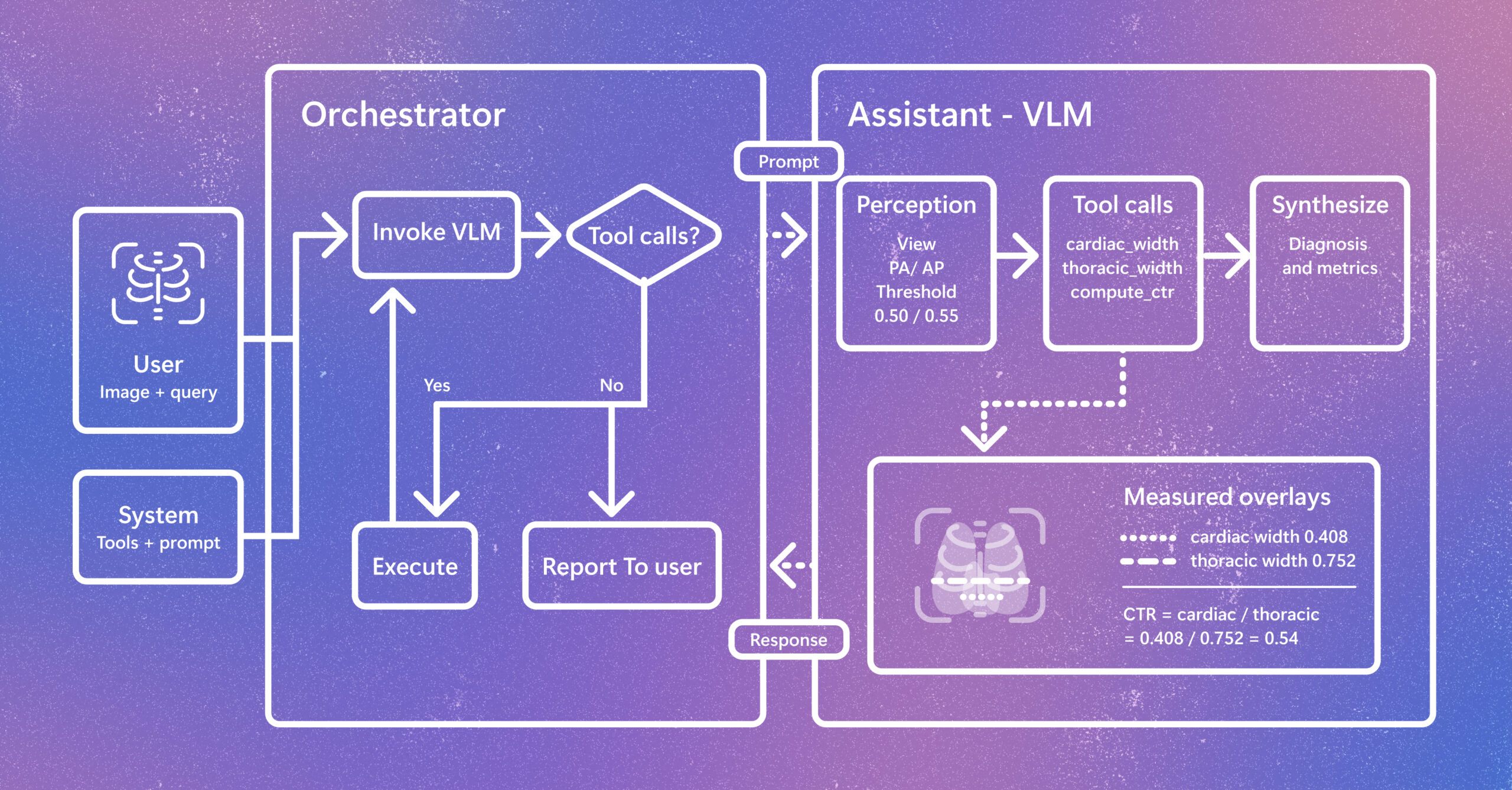
Introducing CARE-X: Towards Clinically Useful Radiology VLMs with Auxiliary Supervision, Reward-Aligned Learning, and Tool-Augmented Measurement

Radiology AI is evolving beyond report generation. CARE-X explores a unified approach that combines flexible reasoning, calibrated predictions, and measurement-based tools for chest X-ray interpretation. The post Introducing CARE-X: Towards Clinically Useful Radiology VLMs with Auxiliary Supervision, Reward-Aligned Learning, and Tool-Augmented Measurement appeared first on Microsoft Research.

We use cookies to run the site and, with your consent, for analytics and to show ads. See our Cookie Policy.