Skip to content
#small language model Open access

Baseline Gustave Roussy Immune Score and Survival in Extensive-Stage Small-Cell Lung Cancer Treated with First-Line Chemoimmunotherapy

Sep 2026 · Cancer Management and Research · Vol 18 · 0 citations · 31 references
Medicine

TL;DR

Baseline Gustave Roussy Immune Score (GRIm) was the most consistent candidate prognostic marker in this real-world ES-SCLC cohort and was identified markedly shorter overall and progression-free survival.

Abstract

Background First-line chemoimmunotherapy has improved outcomes in extensive-stage small-cell lung cancer (ES-SCLC), but survival remains heterogeneous and routine-care prognostic tools are limited. Patients and Methods We retrospectively analyzed consecutive adults with stage IV ES-SCLC treated with platinum-etoposide plus a programmed death-ligand 1 inhibitor at three Spanish hospitals from August 2021 to December 2024. Outcomes included overall survival (OS), progression-free survival (PFS), objective response, and immune-related toxicity. Baseline Gustave Roussy Immune Score (GRIm) was defined as high-risk when at least two of albumin <35 g/L, lactate dehydrogenase above the upper limit of normal, and neutrophil-to-lymphocyte ratio >6 were present. Baseline Cox models included high-risk GRIm, platelet-to-lymphocyte ratio >180, and Eastern Cooperative Oncology Group performance status ≥2; maintenance exposure was assessed in a 3-month OS landmark analysis. Analyses were exploratory. Results Among 51 patients, mean age was 64.2 years, 72.5% were men, and 82.3% had ECOG performance status 0–1. During follow-up, 43 deaths and 50 PFS events occurred. Objective response rate was 70.6%, median OS was 11.9 months, and median PFS was 5.7 months. Median OS was 14.2 months with low-risk GRIm and 5.4 months with high-risk GRIm. High-risk GRIm was independently associated with worse OS (hazard ratio [HR] 5.59) and PFS (HR 3.50), while PLR >180 was associated with worse OS (HR 2.37). In the 3-month landmark cohort (n=47), maintenance exposure remained associated with longer OS (HR 0.21), although this analysis remained vulnerable to residual selection bias. Conclusion Baseline GRIm was the most consistent candidate prognostic marker in this real-world ES-SCLC cohort. The study did not assess prediction of immunotherapy benefit, and prospective validation is warranted before treatment decisions are guided by GRIm.

Read PDF

Similar papers

#small language model Dataset Open access Oct 2026

Socratic guiding questions in synthetic arithmetic data: matched LoRA runs (revision v2)

Supporting data, adapters, predictions and code for the article *Low-Cost LoRA Fine-Tuning of Small Language Models for Multi-Step Arithmetic Reasoning* by Jake O'Grady, Asena Isik Gürhan, Chee Fong Ting and Effirul Ramlan (University of Galway). We generated 20,000 GSM8K-derived arithmetic problems with step-by-step s...

O'Grady, Jake, Gürhan, Asena Isik, Chee, Fong Ting et al. · 465 citations
#computer vision Open access Jun 2016

Software Development in Startup Companies: The Greenfield Startup Model

The results are packaged in the Greenfield Startup Model (GSM), which explains the priority of startups to release the product as quickly as possible, and the need to shorten time-to-market, by speeding up the development through low-precision engineering activities.

Carmine Giardino, Nicolò Paternoster, M. Unterkalmsteiner et al. · 178 citations · ⚡14
#computer vision Open access Oct 2016

Software Startups - A Research Agenda

Software startup companies develop innovative, software-intensive products within limited timeframes and with few resources, searching for sustainable and scalable business models.

M. Unterkalmsteiner, P. Abrahamsson, Xiaofeng Wang et al. · 157 citations · ⚡17
#machine learning Review Open access Oct 2016

“Failures” to be celebrated: an analysis of major pivots of software startups

This study conducts a case survey study based on the secondary data of the major pivots happened in 49 software startups, and demonstrates that customer need pivot is the most common among all pivot types.

Sohaib Shahid Bajwa, Xiaofeng Wang, Anh Nguyen-Duc et al. · 127 citations · ⚡15
#computer vision Review Open access May 2015

A survey study on major technical barriers affecting the decision to adopt cloud services

The comparison of adopter and non-adopter sample reveals three potential adoption inhibitor, security, data privacy, and portability, which underlines the importance of the technical and security perspectives for research investigating the adoption of technology.

Nattakarn Phaphoom, Xiaofeng Wang, S. Samuel et al. · 111 citations · ⚡8
#large language models Review Open access Nov 2020

Status of the WHO recommended timing and frequency of antenatal care visits in Northern Bangladesh

Objective There is dearth of information on the timeliness of antenatal care (ANC) uptake. This study aimed to determine the timely ANC uptake by a medically trained provider (MTP) as per the World Health Organization (WHO) recommendations and the country guideline. Methods Cross-sectional survey was done with 2,731 wo...

B. Sarker, Musfikur Rahman, T. Rahman et al. · 89 citations · ⚡7

Related blog posts

Microsoft Research Blog Nov 16, 2026

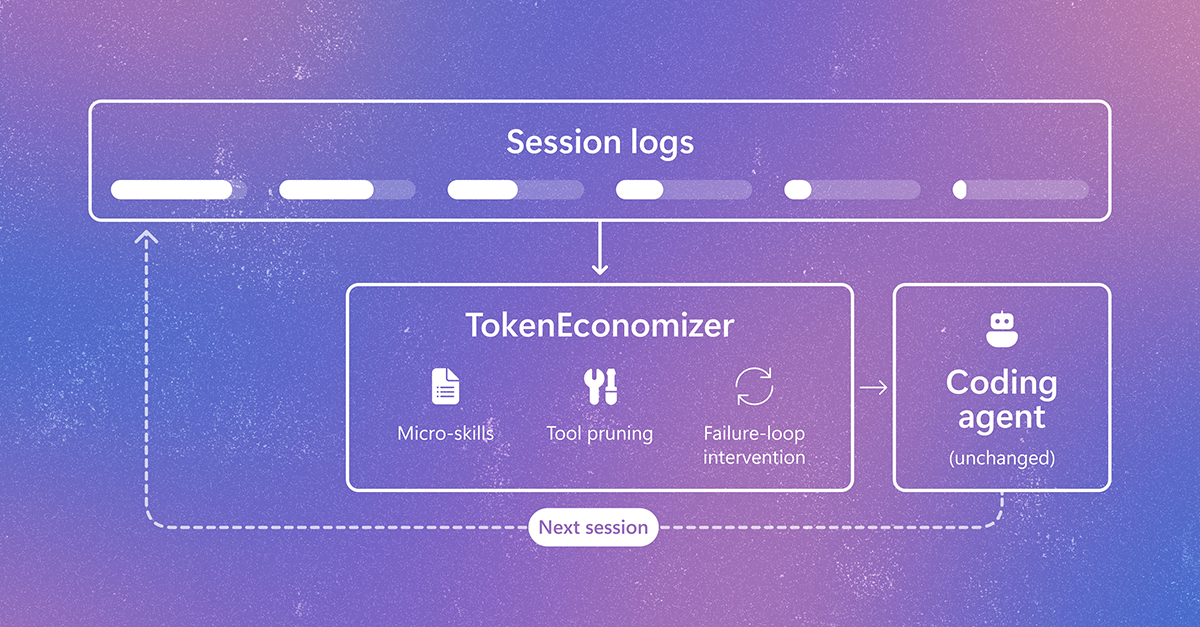
TokenEconomizer: Learning from Experience to Make AI Coding Agents More Efficient

AI coding agents are increasingly help developers fix bugs and build features largely on their own, but every interaction with their models consumes tokens. In each session, an agent sends instructions, tool descriptions, and session history to its model. Most efforts to reduce this cost focus on individual tasks. Yet developers return to the same […] The post TokenEconomizer: Learning from Experience to Make AI Coding Agents More Efficient appeared first on Microsoft Research.

We use cookies to run the site and, with your consent, for analytics and to show ads. See our Cookie Policy.