Sep 2026· Applied and Computational Engineering· Vol 255, pp. None-None· 0 citations
Advanced Graph Neural NetworksTopic Modeling
TL;DR
This paper adopts a literature review approach to survey knowledge graph-enhanced GraphRAG, and analyzes the indexing, retrieval, and generation workflows, as well as key techniques including graph traversal, community summarization, hybrid retrieval, and graph-augmented generation.
Abstract
Large language models (LLMs) are developing rapidly and have been widely applied in intelligent question answering, knowledge retrieval, education, healthcare, enterprise services, and other fields. However, LLMs still exhibit limitations in knowledge updating, understanding complex relationships, and tracing answer sources. This paper adopts a literature review approach to survey knowledge graph-enhanced GraphRAG. It analyzes the indexing, retrieval, and generation workflows, as well as key techniques including graph traversal, community summarization, hybrid retrieval, and graph-augmented generation, and discusses applications in medical question answering and enterprise knowledge base question answering. Existing studies indicate that GraphRAG can use entity relations and hierarchical summaries to mitigate the fragmented context, limited multi-hop reasoning, and insufficient global information coverage of conventional RAG. Nevertheless, challenges remain in dynamic graph maintenance, semantic alignment, cost, and governance for trustworthiness.
Knowledge graph question answering (KGQA) aims to answer natural language questions by grounding them in structured knowledge graphs (KGs). Current KGQA systems still face three linked challenges: representing complex and compositional questions, providing transparent multi-hop reasoning traces, and using complete...
This paper addresses the challenges of identifying instability and the lack of explicit reasoning grounds in the processing of complex engineering texts by proposing an intelligent algorithm system tailored for review tasks. Existing methods primarily rely on pure text semantic modeling and struggle to effectively util...
Wen-Shun Chen, Lei Zou, Yan-Hu Cui et al.· The International Conference...· 0 citations
Textual graph question answering (GraphQA) and graph-based retrieval-augmented generation (GraphRAG) have gained increasing attention as a way to ground large language models (LLMs) on structured knowledge. Despite extensive efforts, existing methods still face two key gaps. The first is an architectural gap: existing...
Kai-Feng Jin, Yu-Chen Yan, Zhichen Zeng et al.· 0 citations
A decision-support QA framework that integrates structured retrieval over a diabetes knowledge graph with retrieval-augmented generation (RAG) and large language model (LLM)-based answer synthesis and achieves disease entity recognition, drug entity recognition, and intent classification accuracy.
Large language models (LLMs) can produce inaccurate answers even when relevant facts are supplied in the prompt. This study examines how graph data serialization, entity identifiers, and context selection affect factual question answering in knowledge-augmented prompting. Four synthetic knowledge graph datasets contain...
Marko Horvat, Sven Leo Kupres, Marko Delimar· Applied Sciences· 0 citations
PoP-RAG is proposed, which features a passage-on-edge (PoE) graph that links the passages with graph edges to resolve the one-to-many entity-passage mapping problem and enables targeted retrieval for each sub-query and ensures transparent response derivation logic, thus enhancing explainability.
Xin-Tong Hu, Qi-Ming Zeng, Yu-Hao Lin et al.· Transactions on Graph Intell...· 1 citation
Related blog posts
Microsoft Research Blog· microsoft.comNov 16, 2026
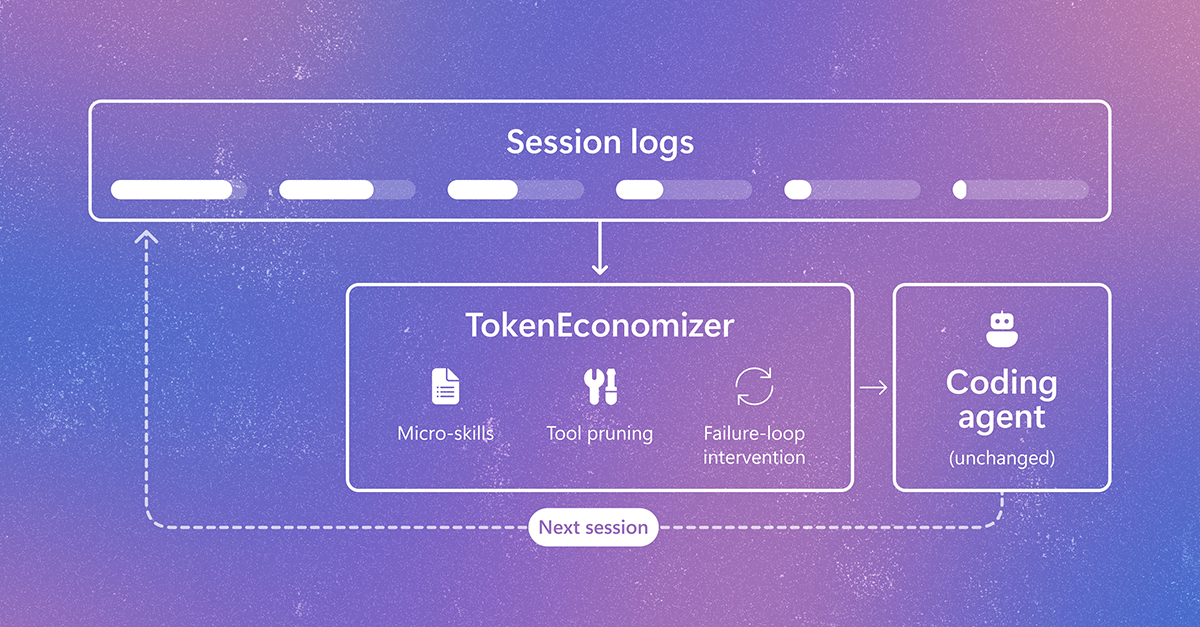
AI coding agents are increasingly help developers fix bugs and build features largely on their own, but every interaction with their models consumes tokens. In each session, an agent sends instructions, tool descriptions, and session history to its model. Most efforts to reduce this cost focus on individual tasks. Yet developers return to the same […] The post TokenEconomizer: Learning from Experience to Make AI Coding Agents More Efficient appeared first on Microsoft Research.
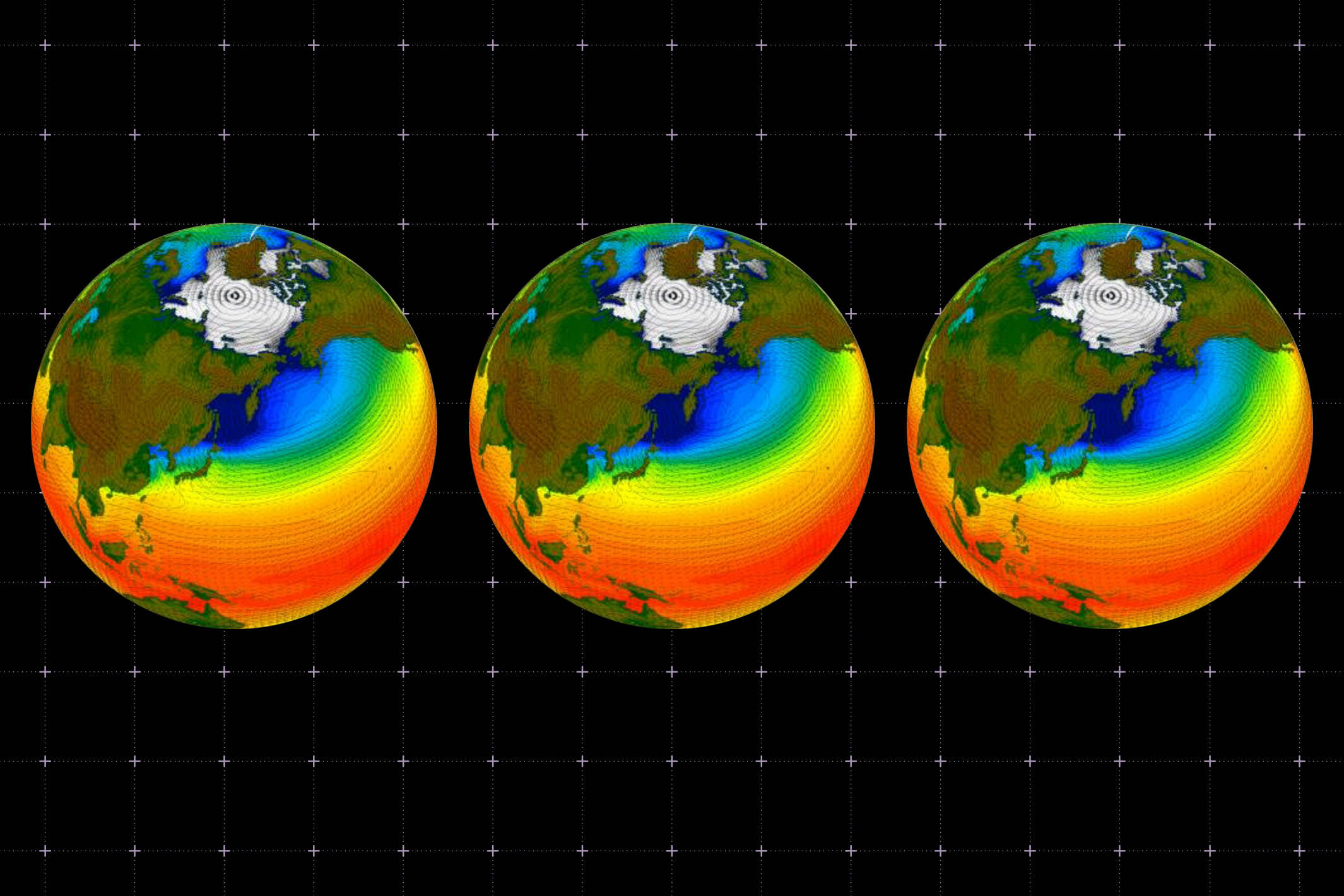
MIT scientists developed a training method to generate models that simulate the effects of human activities on climate much more quickly than other approaches.
We use cookies to run the site and, with your consent, for analytics and to show ads.
See our Cookie Policy.