Skip to content

Fine-tuning small reasoning models for quantum field theory

Sep 2026 · Machine Learning Science and Technology · Vol 7, pp. 055029

Abstract

Abstract Despite the growing application of large language models (LLMs) to theoretical physics, there has been little academic exploration of how domain-specific physics reasoning ability develops during training. To investigate this, we perform the first academic comparison of reinforcement learning and supervised fine-tuning for LLMs on verifiable problem-solving tasks in theoretical physics. Because the open-source verifiable training data required to develop such capabilities is scarce, we built a robust data generation pipeline that can both create synthetic problems and make existing human-authored problems suitable for model training. Selecting quantum field theory (QFT) as our primary domain, we generated over 2,500 synthetic problems alongside a curated collection of human-adapted problems sourced from arXiv and standard pedagogical resources. We conduct both reinforcement learning (RL) and supervised fine-tuning (SFT) experiments, benchmarking performance gains as well as generalization to other physics domains. Although both methods improve over the base model on every dataset, SFT gains are concentrated on in-distribution synthetic tasks, while RL generalizes better, outperforming SFT on the human-adapted datasets and TPBench. We perform an extensive analysis of model chain-of-thought (CoT) reasoning before and after fine-tuning to understand how reasoning errors evolve during RL and SFT. Finally, we publicly release our data pipeline, verifiable QFT training data, and ~200M tokens of QFT reasoning traces.

View source

Similar papers

#small language model Dataset Open access Oct 2026

Socratic guiding questions in synthetic arithmetic data: matched LoRA runs (revision v2)

Supporting data, adapters, predictions and code for the article *Low-Cost LoRA Fine-Tuning of Small Language Models for Multi-Step Arithmetic Reasoning* by Jake O'Grady, Asena Isik Gürhan, Chee Fong Ting and Effirul Ramlan (University of Galway). We generated 20,000 GSM8K-derived arithmetic problems with step-by-step s...

O'Grady, Jake, Gürhan, Asena Isik, Chee, Fong Ting et al. · 465 citations
#machine learning Review Open access Oct 2014

Software development in startup companies: A systematic mapping study

The results indicate that software engineering work practices are chosen opportunistically, adapted and configured to provide value under the constrains imposed by the startup context.

Nicolò Paternoster, Carmine Giardino, M. Unterkalmsteiner et al. · 394 citations · ⚡54
#computer vision Open access Jun 2016

Software Development in Startup Companies: The Greenfield Startup Model

The results are packaged in the Greenfield Startup Model (GSM), which explains the priority of startups to release the product as quickly as possible, and the need to shorten time-to-market, by speeding up the development through low-precision engineering activities.

Carmine Giardino, Nicolò Paternoster, M. Unterkalmsteiner et al. · 178 citations · ⚡14
#machine learning Review Open access Jun 2014

Why Early-Stage Software Startups Fail: A Behavioral Framework

This state-of-practice investigation was performed using a literature review followed by a multiple-case study approach and presents how inconsistency between managerial strategies and execution can lead to failure by means of a behavioral framework.

Carmine Giardino, Xiaofeng Wang, P. Abrahamsson · 175 citations · ⚡19
#computer vision Open access Oct 2016

Software Startups - A Research Agenda

Software startup companies develop innovative, software-intensive products within limited timeframes and with few resources, searching for sustainable and scalable business models.

M. Unterkalmsteiner, P. Abrahamsson, Xiaofeng Wang et al. · 157 citations · ⚡17
#machine learning Review Open access Oct 2016

“Failures” to be celebrated: an analysis of major pivots of software startups

This study conducts a case survey study based on the secondary data of the major pivots happened in 49 software startups, and demonstrates that customer need pivot is the most common among all pivot types.

Sohaib Shahid Bajwa, Xiaofeng Wang, Anh Nguyen-Duc et al. · 127 citations · ⚡15

Related blog posts

MIT News · Artificial Intelligence Oct 23, 2026

Q&A: How AI came to model the “messy” human mind

Assistant Professor Benjamin Lindquist studies how engineers deliberately injected randomness into early AI, giving rise to deep-learning models that sometimes hallucinate.

Microsoft Research Blog Oct 12, 2026

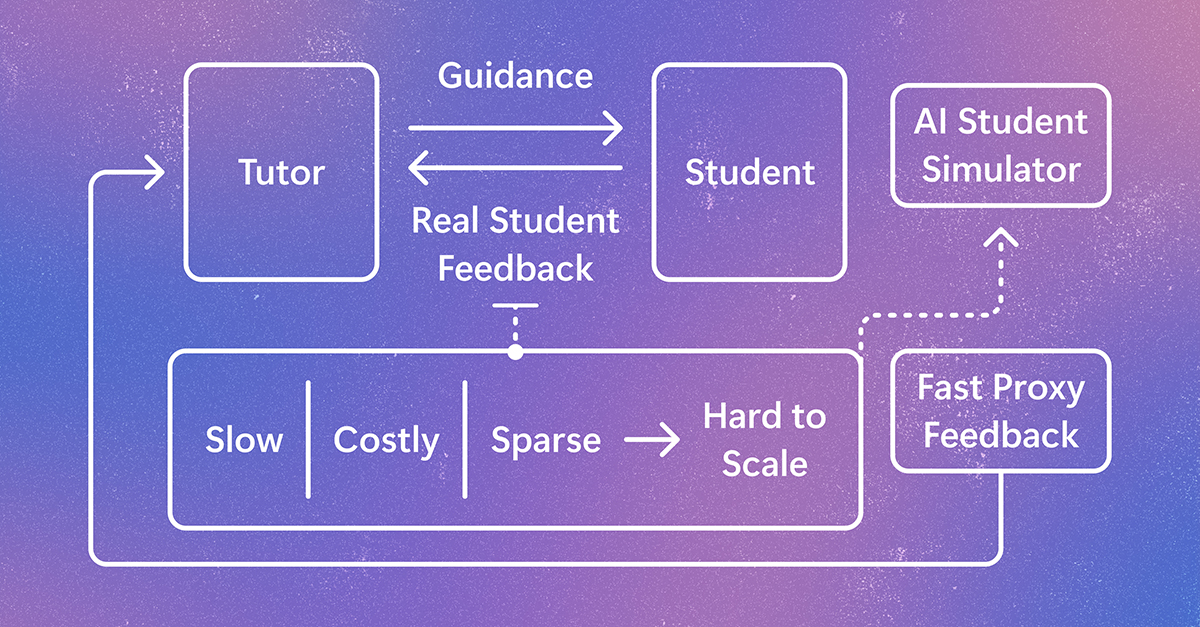
Simulating student learning for better AI tutoring

StudentSim is a research system for evaluating and improving AI tutoring tools before they are tested with learners. It models how individuals may engage with tutors, giving feedback to improve tutor performance across subjects like chess, writing, and mathematics. The post Simulating student learning for better AI tutoring appeared first on Microsoft Research.

We use cookies to run the site and, with your consent, for analytics and to show ads. See our Cookie Policy.