Sep 2026· International Journal of Innovative Research in Engineering· 0 citations
Digital Media Forensic Detection
Abstract
The rapid development of generative artificial intelligence has made it increasingly difficult to distinguish AI-generated images from authentic photographs. Generative adversarial networks, diffusion models, and text-to-image systems can produce highly realistic visual content, creating challenges for digital forensics, misinformation control, and content authentication. Existing detectors frequently depend on generator-specific artifacts and may lose effectiveness when images originate from unseen generators or undergo resizing, compression, or blur. This study proposes a spatial–frequency feature-fusion framework for binary detection of real and AI-generated images. A convolutional neural network extracts spatial and structural representations from RGB images, while a second branch analyzes frequency-domain characteristics obtained through a two-dimensional Fourier transform. The resulting representations are fused before classification. Data augmentation is incorporated to improve robustness against common image transformations. The framework is designed for evaluation using the GenImage benchmark, which contains more than one million real/fake image pairs and explicitly supports cross-generator and degraded-image evaluation [10]. Performance is assessed using accuracy, precision, recall, F1-score, and AUROC. The experimental design emphasizes generalization rather than relying only on in-distribution accuracy.
The results are packaged in the Greenfield Startup Model (GSM), which explains the priority of startups to release the product as quickly as possible, and the need to shorten time-to-market, by speeding up the development through low-precision engineering activities.
Carmine Giardino, Nicolò Paternoster, M. Unterkalmsteiner et al.· IEEE Transactions on Softwar...· 178 citations· ⚡14
Software startup companies develop innovative, software-intensive products within limited timeframes and with few resources, searching for sustainable and scalable business models.
M. Unterkalmsteiner, P. Abrahamsson, Xiaofeng Wang et al.· e-Informatica Software Engin...· 157 citations· ⚡17
This study conducts a case survey study based on the secondary data of the major pivots happened in 49 software startups, and demonstrates that customer need pivot is the most common among all pivot types.
Sohaib Shahid Bajwa, Xiaofeng Wang, Anh Nguyen-Duc et al.· Empirical Software Engineeri...· 127 citations· ⚡15
The comparison of adopter and non-adopter sample reveals three potential adoption inhibitor, security, data privacy, and portability, which underlines the importance of the technical and security perspectives for research investigating the adoption of technology.
Nattakarn Phaphoom, Xiaofeng Wang, S. Samuel et al.· Journal of Systems and Softw...· 111 citations· ⚡8
This study investigates how Lean internal startup facilitates software product innovation in large companies and identifies its enablers and inhibitors, and shows the potential of the method-in-action framework to investigate the Lean startup approach in non-startup context.
Henry Edison, Nina M. Smørsgård, Xiaofeng Wang et al.· Journal of Systems and Softw...· 78 citations· ⚡6
The application of agile software methods and more recently the integration of Lean practices contribute to the trend of continuous improvement in the software industry. One such area warranting proper empirical evidence is a project’s operational efficiency when using the Kanban method. This short paper takes a new an...
Marko Ikonen, Petri Kettunen, Nilay V. Oza et al.· EUROMICRO Conference on Soft...· 67 citations· ⚡9
Related blog posts
MIT News · Artificial Intelligence· news.mit.eduOct 23, 2026
Assistant Professor Benjamin Lindquist studies how engineers deliberately injected randomness into early AI, giving rise to deep-learning models that sometimes hallucinate.
MIT News · Artificial Intelligence· news.mit.eduOct 19, 2026
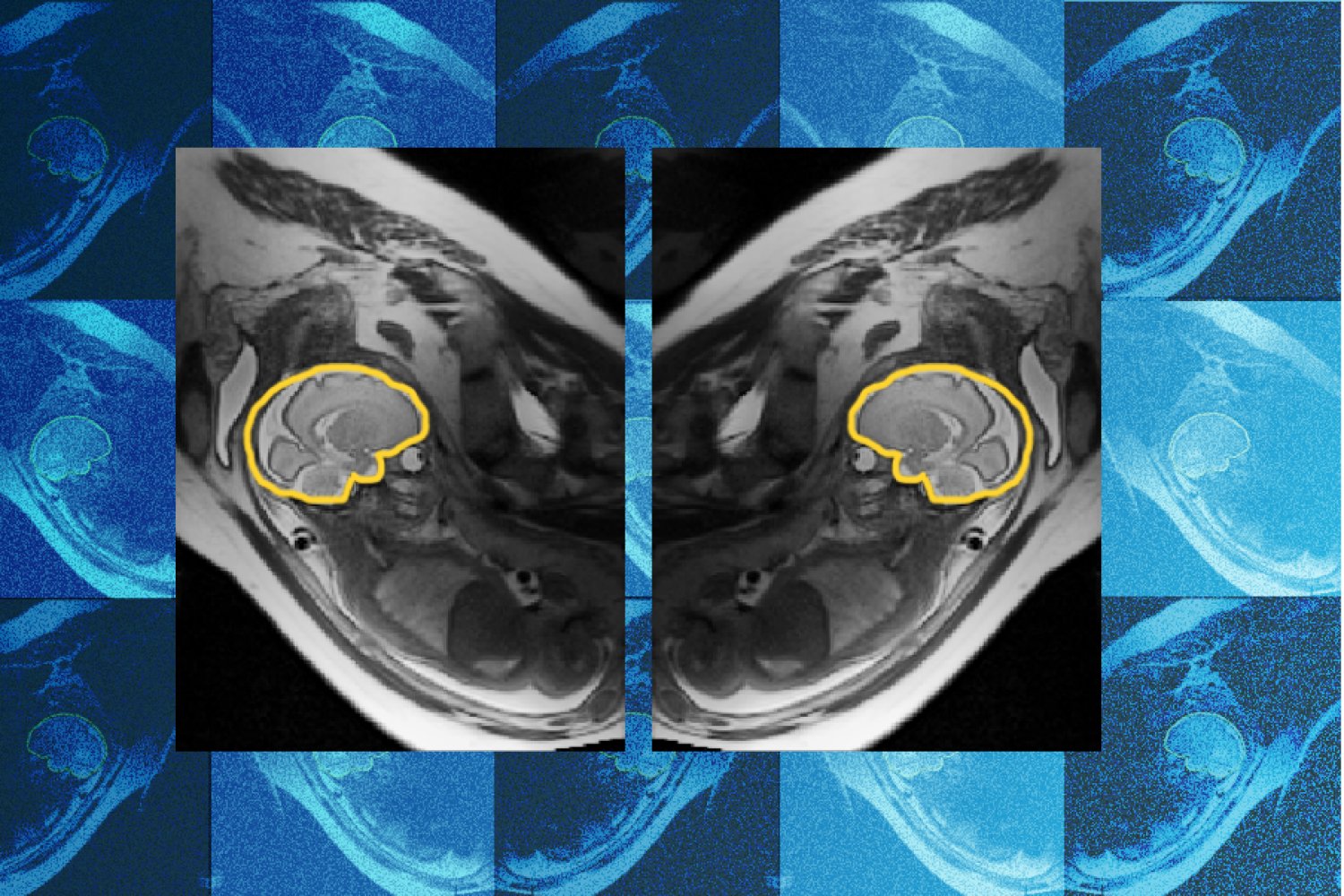
A model developed by researchers at MIT and Boston Children's Hospital adjusts scans on the fly to track fetal movement, potentially sparing families repeat hospital visits.
MIT News · Artificial Intelligence· news.mit.eduOct 18, 2026
A new computational approach reveals how cells communicate to assemble into tissues. This could accelerate stem cell engineering, improve disease models, and inform therapies.
We use cookies to run the site and, with your consent, for analytics and to show ads.
See our Cookie Policy.
