Sep 2026· Applied and Computational Engineering· 0 citations
Privacy-Preserving Technologies in Data
TL;DR
A co-optimization research framework is proposed, incorporating pruning rate, quantization bit width, and aggregation weights into a unified optimization space, to strike a balance among global model accuracy, training energy consumption, and convergence speed under device resource constraints.
Abstract
With the development of 5G and the widespread adoption of home IoT devices and wearable smart devices, home edge IoT devices generate a large amount of data. This data contains sensitive personal privacy and cannot be uploaded to public servers for training. Distributed machine learning technology, specifically federated training, is designed to protect data privacy, ensuring that data does not leave the local environment while multiple parties collaboratively train and share the model. However, home IoT devices differ significantly from industrial-grade IoT devices, exhibiting substantial heterogeneity, primarily in computing power, memory, power consumption, network connectivity, and in user data distribution, which makes it impossible to deploy federated training directly. This paper systematically reviews lightweight federated learning techniques for home edge IoT, analyzing two technical approaches: "device-aware adaptive lightweight training" and "data distribution-aware weighted aggregation." This paper proposes a co-optimization research framework, incorporating pruning rate, quantization bit width, and aggregation weights into a unified optimization space. The goal is to strike a balance among global model accuracy, training energy consumption, and convergence speed under device resource constraints, thereby providing a theoretical reference for future research.

This work investigates combining Federated Learning with TinyML-based model compression for intrusion detection in IoT environments and preliminary results show that training stability plays a critical role in federated TinyML systems.
Younsoo Park, Seokhyoen Bae, Shasi Kumar Ramachandran Prabhu et al.· 1 citation
This work introduces a federated learning framework on campus that provides a resource-conscious multi-layer federating strategy that controls the number of devices taking part in the process as well as the frequency at which aggregation is done based on each device’s capability.
C. Reddy, S. Bhargav, G. Thirupathi et al.· International Journal of Ele...· 0 citations
With the increasing deployment of IoT, the data is spread across the network, which is difficult to centralize because of privacy concerns, communication cost, and energy consumption. This paper is a systematic literature review of distributed machine learning (DML) for sustainable IoT, which includes architectures, pr...
Harshita Pandey, Rajiv Kumar Gill, Sarita Negi et al.· International Conference Inn...· 0 citations
This study demonstrates the efficacy of the synergy between federated learning and edge computing in IoT security contexts, providing a scalable and privacy-centric solution for anomaly detection across large-scale distributed devices.
Quan Liu, Yuanyuan Feng· Discover Artificial Intellig...· 0 citations
Federated learning (FL) enables multiple devices to collaboratively train machine learning models without sharing raw data, making it well-suited for Internet of Things (IoT) applications. However, this approach is not fully secure, as the exchanged gradients can still leak sensitive information. Attacks such as Deep L...
The results show that the suggested federated strategy can reduce per-round communication volume by an order of magnitude, eliminate the need to transmit raw sensor data, and approach centralized-training accuracy within a narrow margin.
Firoza Sultana, Atiqur Rahman Laskar, Shamim Ahmed Shamim Khan Barbhuiya et al.· International Journal of Mod...· 0 citations
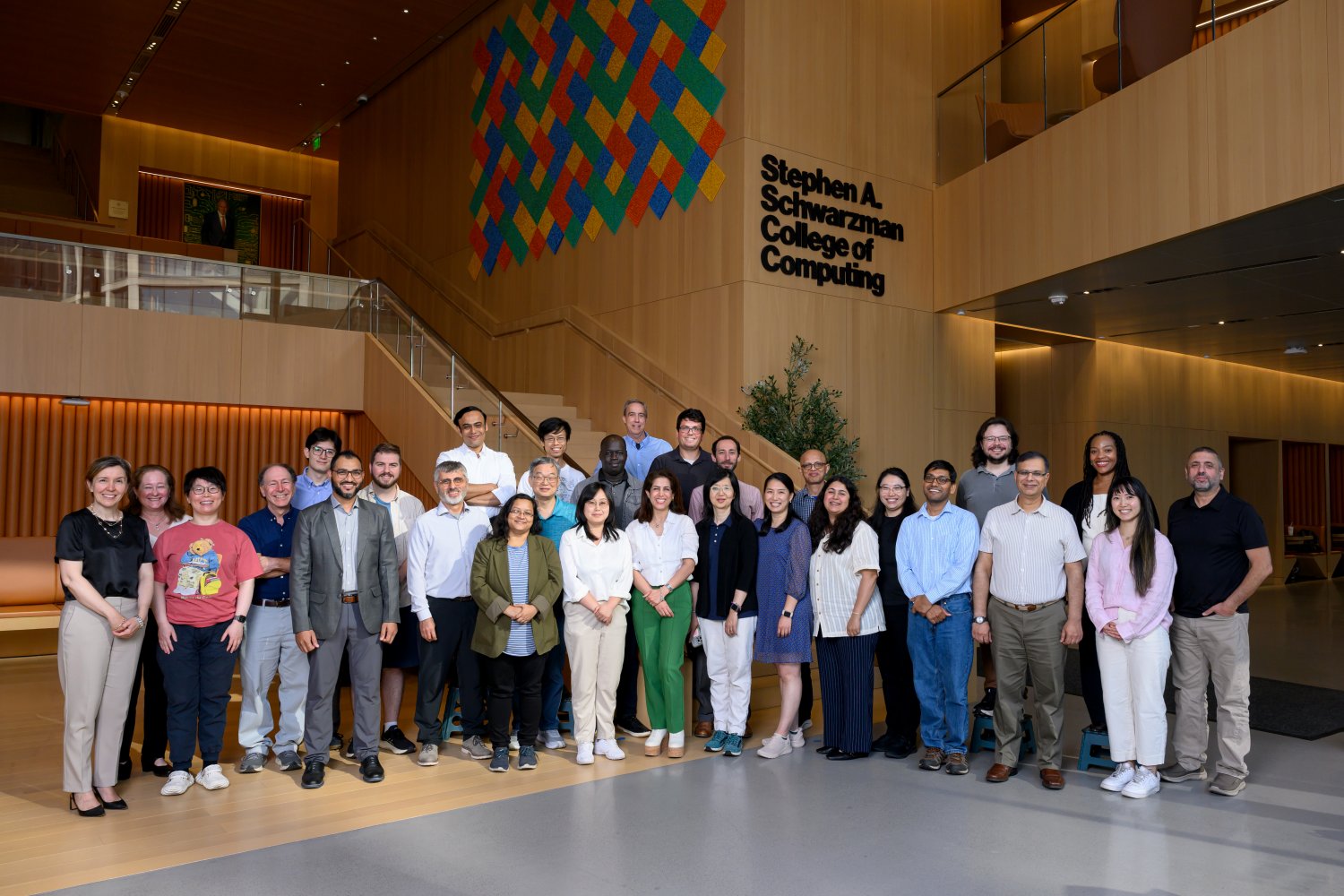
A weeklong summer workshop brought higher education faculty to campus to explore how AI and machine learning materials can be adapted for their classrooms.
MIT News · Artificial Intelligence· news.mit.eduAug 27, 2026
A new machine-learning framework aims to improve the success rate of computational protein design while moving away from results that reproduce sequences found in nature.
We use cookies to run the site and, with your consent, for analytics and to show ads.
See our Cookie Policy.