Sep 2026· International Journal of Studies in Education· 0 citations
TL;DR
A bibliometric analysis of research at the intersection of Arabic language teaching and educational technology to characterize the structural configuration and thematic evolution of the field is conducted, revealing a pronounced under-development of speech-technology and diglossia-aware research.
Abstract
This study conducts a bibliometric analysis of research at the intersection of Arabic language teaching and educational technology to characterize the structural configuration and thematic evolution of the field. Data were retrieved from Scopus and Web of Science and screened following the PRISMA 2020 protocol, yielding a final corpus of 174 documents published between 2003 and 2026. Performance analysis, scientific-law analyses (Lotka and Bradford), keyword and co-occurrence analysis, co-authorship and co-citation network analyses, and Latent Dirichlet Allocation (LDA) topic modeling were conducted through the srlengine.com academic analysis platform. The corpus comprises 762 authors and a total of 802 citations (mean 4.61 per document; h-index 14, g-index 23, i10-index 20). Author productivity conforms to a Lotka distribution with an exponent of 3.65 — substantially above the classical value of 2.0 — indicating an early-stage field with a narrow productive core. Bradford analysis identified 11 core journals with a multiplier of 4.09, confirming high source concentration. Output is regionally concentrated in Malaysia, Indonesia, and Saudi Arabia, while China emerges as a citation outlier, producing only 24 publications but attracting 1,376 citations through integration with the broader AI-in-language-education literature. All collaboration and co-citation networks return low density values (0.028–0.063), depicting a fragmented intellectual structure. LDA analysis reveals that two AI-oriented topics jointly account for 44% of the corpus, whereas pronunciation and speech constitute only 1%, signaling a pronounced under-development of speech-technology and diglossia-aware research. The field is expanding rapidly under the post-2022 generative AI wave but remains structurally immature, geographically concentrated, and thematically uneven.

The study utilizes VosViewer, a bibliometric analysis software tool, to visually represent co-occurrence relationships among authors, keywords, and publications, and reveals the research hot-spots in this field.
Yan Wang, Qing-yi Wang, Lin He· English Language Teaching· 0 citations
A significant increase in publications is revealed from 2024 to 2026, with the highest number of articles published in 2025 (57 documents), with the highest number of articles published in 2025 (57 documents).
A. Yuliani, Arini Dwi Cahyani, E. Ellianawati et al.· PIONIR: JURNAL PENDIDIKAN· 0 citations
Beyond describing the field, the study contributes a fully reproducible bibliometric protocol and a critical reading of the field’s ChatGPT-centrism, its collaboration deficit and its early signs of thematic saturation.
Şener Balat· Black Sea Journal of Enginee...· 0 citations
A bibliometric analysis on Artificial Intelligence for Inclusive Education as an emerging research trend particularly in between the years of 2021–2025 suggests integration of AI technologies in education systems through providing valuable insights for educators, researchers and policymakers.
The findings suggest that future research and practice should focus on how generative AI can be used effectively, responsibly, and sustainably in authentic higher education settings, with attention to learning quality, long-term effects, fairness, data ethics, and governance.
This study presents a bibliometric mapping of the global landscape of artificial intelligence (AI) research in science education over the 2020–2026 period. A corpus of 140 articles was retrieved from the Web of Science Core Collection following PRISMA 2020 guidelines and analyzed using Bibliometrix, VOSviewer, and Bibl...
Hacı Mehmet Yeşiltaş· Ordu üniversitesi bilim ve t...· 0 citations
Enforcing physics-based constraints prevents AI models from generating unreliable predictions for complex nonlinear systems in weather, climate, and turbulent flows.
MIT News · Artificial Intelligence· news.mit.eduNov 20, 2026
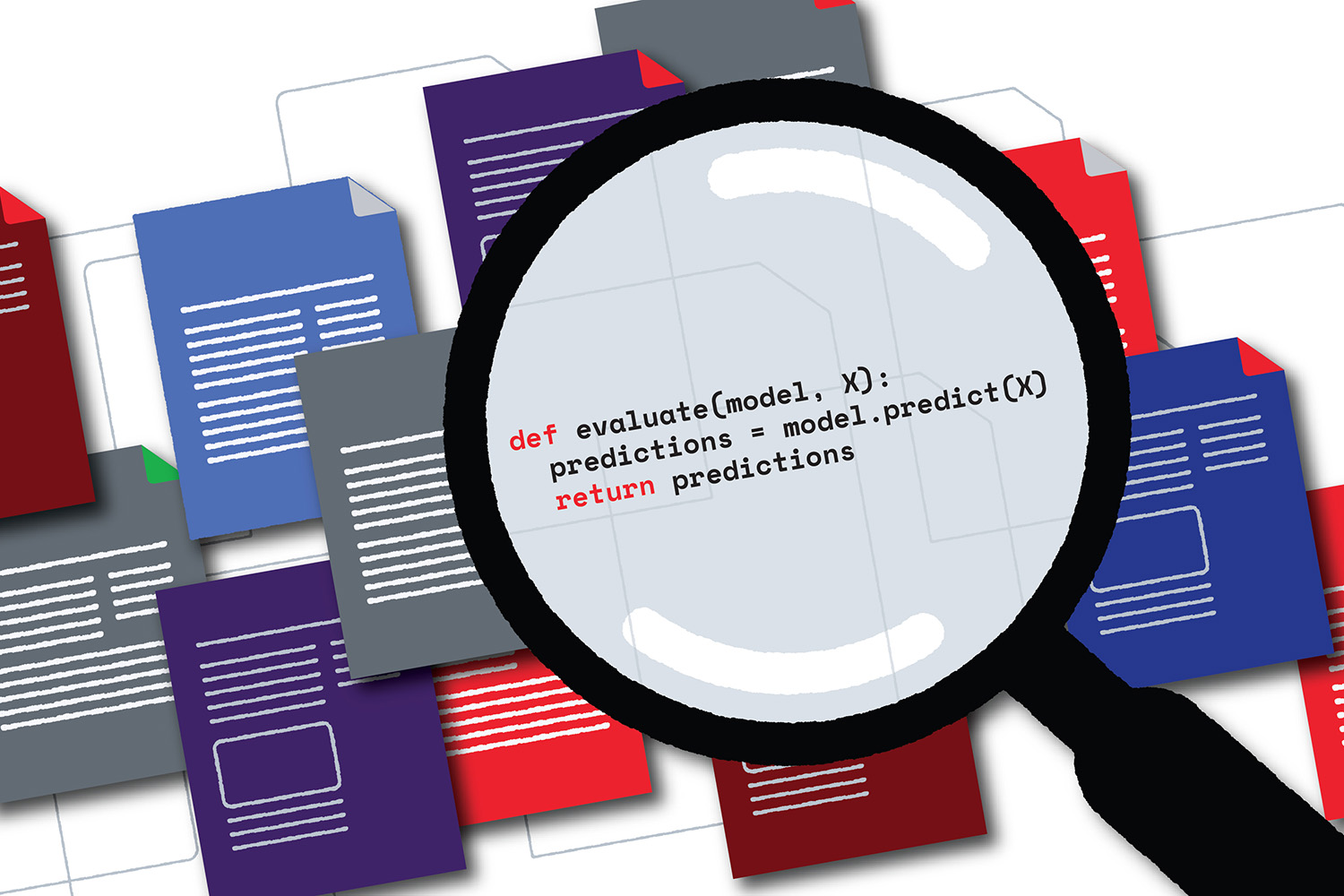
An MIT and Dana-Farber Institute-led team used large language models to examine nearly 4,000 studies and hundreds of code repositories, revealing gaps in the information needed to scrutinize and reuse published research.
We use cookies to run the site and, with your consent, for analytics and to show ads.
See our Cookie Policy.