A methodological framework for autonomous, AI-based harvesting of cultural knowledge from the open web, designed to expand corpus coverage while intensifying per-entry data depth is presented, including the architectural guarantee that the machine never overwrites human contributions.
Abstract
The Indonesian Digital Library of Culture (Perpustakaan Digital Budaya Indonesia, PDBI; budaya-indonesia.org) is a participatory platform that has collected tens of thousands of entries on Nusantara cultural heritage through public contribution since 2007. Manual contribution faces three structural barriers: coverage (knowledge is scattered across languages and sites), integrity (open sources mix authentic documentation with noise), and completeness (subjects are recorded but their data remain shallow). This paper presents a methodological framework for autonomous, AI-based harvesting of cultural knowledge from the open web, designed to expand corpus coverage while intensifying per-entry data depth. The methodology is organised as a five-stage economic funnel: focused crawling, multilingual extraction and canonicalisation, vector encoding with blocking, agentic decision-making, and idempotent publication, under the principle of deterministic orchestration, agentic decisions. Each stage is formalised: funnel economics and optimal filter ordering; crawl-frontier dynamics as a subcritical branching process that explains the necessity of recurrent re-seeding; fact-level novelty via a containment measure; Bayesian multi-source evidence fusion with elevated publication thresholds for sacred categories; exactly-once effects via idempotent upserts and the transactional outbox; sliding-window inference budgeting with a reservation protocol; statistical quality auditing; and seed selection as submodular coverage maximisation. The framework retains four high-value human roles: curator of direction, escalation approver, quality auditor, and guardian of meaning, while machine autonomy is raised in stages. Ethical, legal, and cultural-sensitivity implications are discussed, including the architectural guarantee that the machine never overwrites human contributions.
Forty-four Chinese United Nations Educational, Scientific and Cultural Organization (UNESCO)-inscribed intangible cultural heritage (ICH) elements were examined against three very different systems: Wikidata, Library of Congress Subject Headings (LCSH), and the Getty Art & Architecture Thesaurus (Getty AAT). The issue...
Digital protection of traditional culture is shifting from physical archiving to semantic computing. Aiming at the problems of existing data islands and content distortion, this paper puts forward a cooperative mechanism of generative protection and man-machine co-creation which is suitable for local cultural narrative...
Er-Can Guo, Ya-Ya Wu· International Journal of Kno...· 0 citations
The study argues that the question is not whether AI can preserve African heritage, but whether preservation through AI serves communities or reproduces colonial extraction, and contributes the Decolonial AI Heritage Framework, a three-stage governance model integrating assessment, community engagement, and reflexive g...
Okechukwu Joshua Mba· Social Science and Humanitie...· 0 citations
Generative artificial intelligence (AI) is reshaping the production, organization, dissemination, and use of knowledge. In this context, the traditional positioning of academic libraries as knowledge repositories is increasingly challenged by commercial AI platforms, while growing disintermediation raises questions...
The article develops an integrative, process-oriented framework for studying how cultural assets become documentary objects within public knowledge systems and specifies analytical questions and evidence that can support cross-institutional, cross-platform and cross-cultural comparison.
Pei-Chun Lee, Wan-Ting Chang· Journal of Librarianship and...· 0 citations
Artificial intelligence should be understood not simply as a technological tool but as a socio-cultural intervention whose deployment requires collaboration among technologists, heritage professionals, researchers, governments, and source communities.
Morgan Roberts· International Journal of Cul...· 0 citations
Related blog posts
MIT News · Artificial Intelligence· news.mit.eduJul 7, 2026
The professor of physics and inaugural director of the NSF AI Institute for Artificial Intelligence and Fundamental Interactions will lead LNS and continue his research in particle physics.
Assistant Professor Benjamin Lindquist studies how engineers deliberately injected randomness into early AI, giving rise to deep-learning models that sometimes hallucinate.
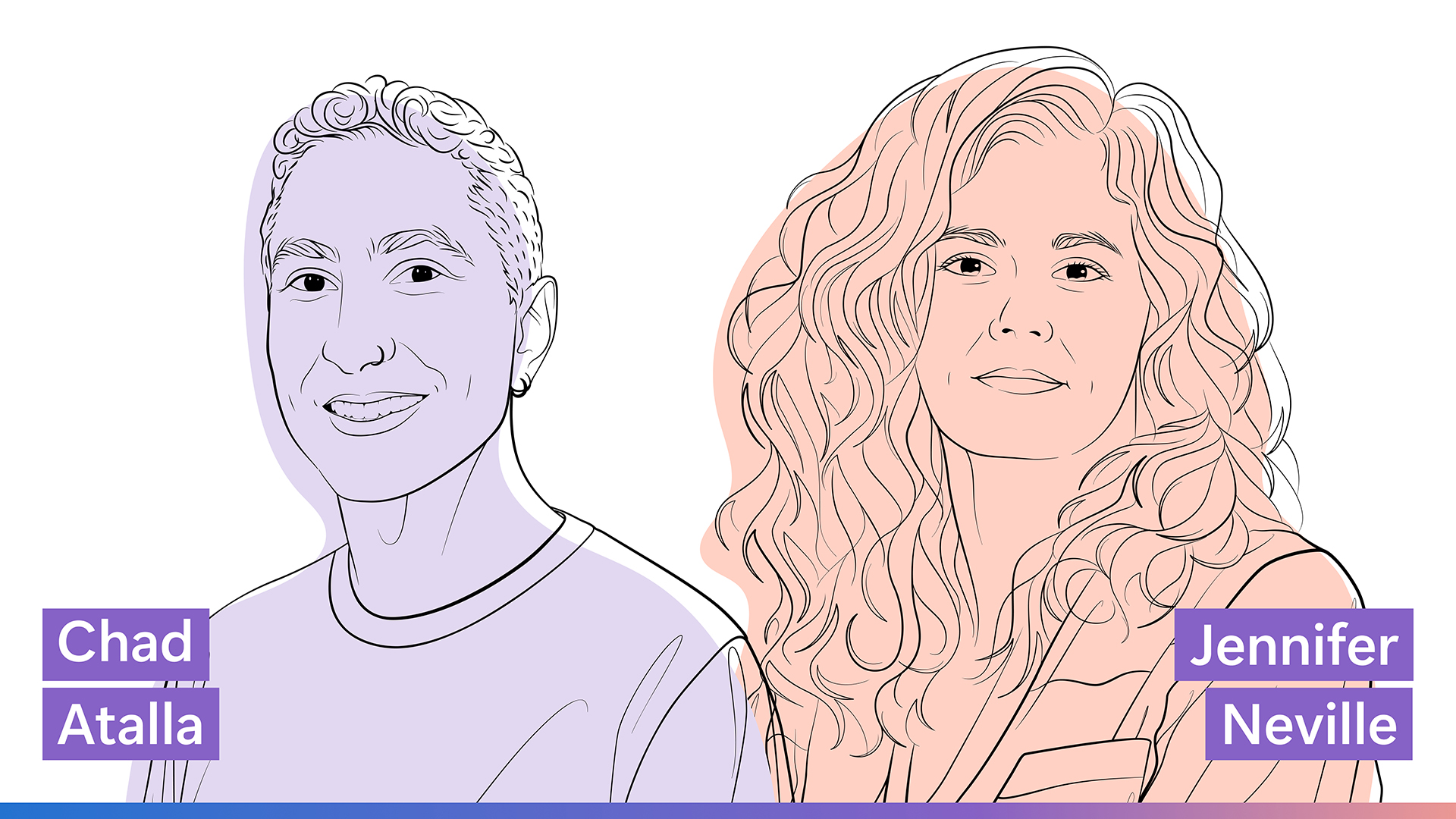
Jennifer Neville did not want to go into computer science—but that’s exactly where she landed. Neville discusses the starts and stops that led to her professional sweet spot and her work identifying “surprising failures” making it hard for AI to handle complexity. The post What AI gets wrong and what failure teaches us appeared first on Microsoft Research.
We use cookies to run the site and, with your consent, for analytics and to show ads.
See our Cookie Policy.