Skip to content

Federated Binary Gating with Server-Side Vision-Language Inference for Surveillance Anomaly Classification

Sep 2026 · 0 citations · 15 references
Computer Science

TL;DR

A hybrid two-stage architecture that combines a federated binary convolutional neural network (CNN) gate with server-side zero-shot VLM inference and routing rules can be adjusted to trade server-side VLM usage for higher anomaly sensitivity is proposed.

Abstract

Privacy-sensitive surveillance systems could benefit from large vision-language models (VLMs), but such models typically require centralized access to raw video. In federated learning settings, this challenge is amplified by non-independent and identically distributed (non-IID) client data, which can make direct multiclass anomaly classification unstable, especially for rare categories. We propose a hybrid two-stage architecture that combines a federated binary convolutional neural network (CNN) gate with server-side zero-shot VLM inference. The lightweight LiteCNN3D gate performs local anomaly screening and forwards only flagged videos to Qwen3-VL-8B, which assigns them to four anomaly metaclasses. We evaluate this design on UCF-Crime grouped into five coarse metaclasses and implement the federated stage in a real three-node heterogeneous deployment. In the studied setting, direct federated multiclass training collapses, whereas the proposed decomposition yields a better trade-off between classification quality and raw-video transmission. With fixed-threshold routing, the federated hybrid pipeline preserves nearly the same macro-averaged F1 score (F1-macro) as its centralized CNN+VLM counterpart while reducing the fraction of transmitted videos to 51.4%, although with a lower proxy macro receiver operating characteristic area under the curve (ROC AUC) than the centralized hybrid system. A complementary sensitivity-oriented routing operating point increases macro ROC AUC from 0.673 to 0.692 and reduces the false negative rate from 29.3% to 22.9%, but decreases F1-macro from 0.503 to 0.485 while increasing transmission from 51.4% to 57.9%. These results suggest that federation is better suited to coarse local screening, while routing rules can be adjusted to trade server-side VLM usage for higher anomaly sensitivity.


View source

Similar papers

#federated learning Open access Sep 2026

FedLC-Trans: privacy-preserving CNN–Transformer fusion for resilient IoMT intrusion detection

The present findings demonstrate reduced centralized raw-data exposure and promising computational characteristics, while edge-device validation and stronger privacy-preserving mechanisms remain important directions for future work.

Zhi Gong, Nai-Xue Xiong, Cheng-Lin Zhao et al. · 0 citations
Open access Aug 2026

Unsupervised deep learning for IoT botnet detection in a surveillance VLAN via multi-source traffic, threat intelligence and honeypot corroboration

An unsupervised deep-learning detection system using autoencoder (AE)-family models that learn normal traffic behaviors and identify anomalies through reconstruction error (MSE) and provides a transparent, reproducible methodology for proactive, scalable, and interpretable botnet detection.

Özkan Zeybek, Hasan Güler · 0 citations
#federated learning Open access Oct 2026

PRIVACY-PRESERVING FEDERATED DEEP LEARNING FOR ZERO-DAY ATTACK DETECTION USING HYBRID CNN–LSTM NETWORKS

The expanding deployment of Internet of Things (IoT) and Industrial Internet of Things (IIoT) devices increases exposure to previously unseen cyberattacks, while centralized intrusion-detection training requires network records from different sites to be pooled. This paper presents a federated convolutional long short-...

Hashir Aliyu Mohammed, K. Umar, Abdulsalam Ya 'u Gital · 0 citations

Related blog posts

Microsoft Research Blog Aug 11, 2026

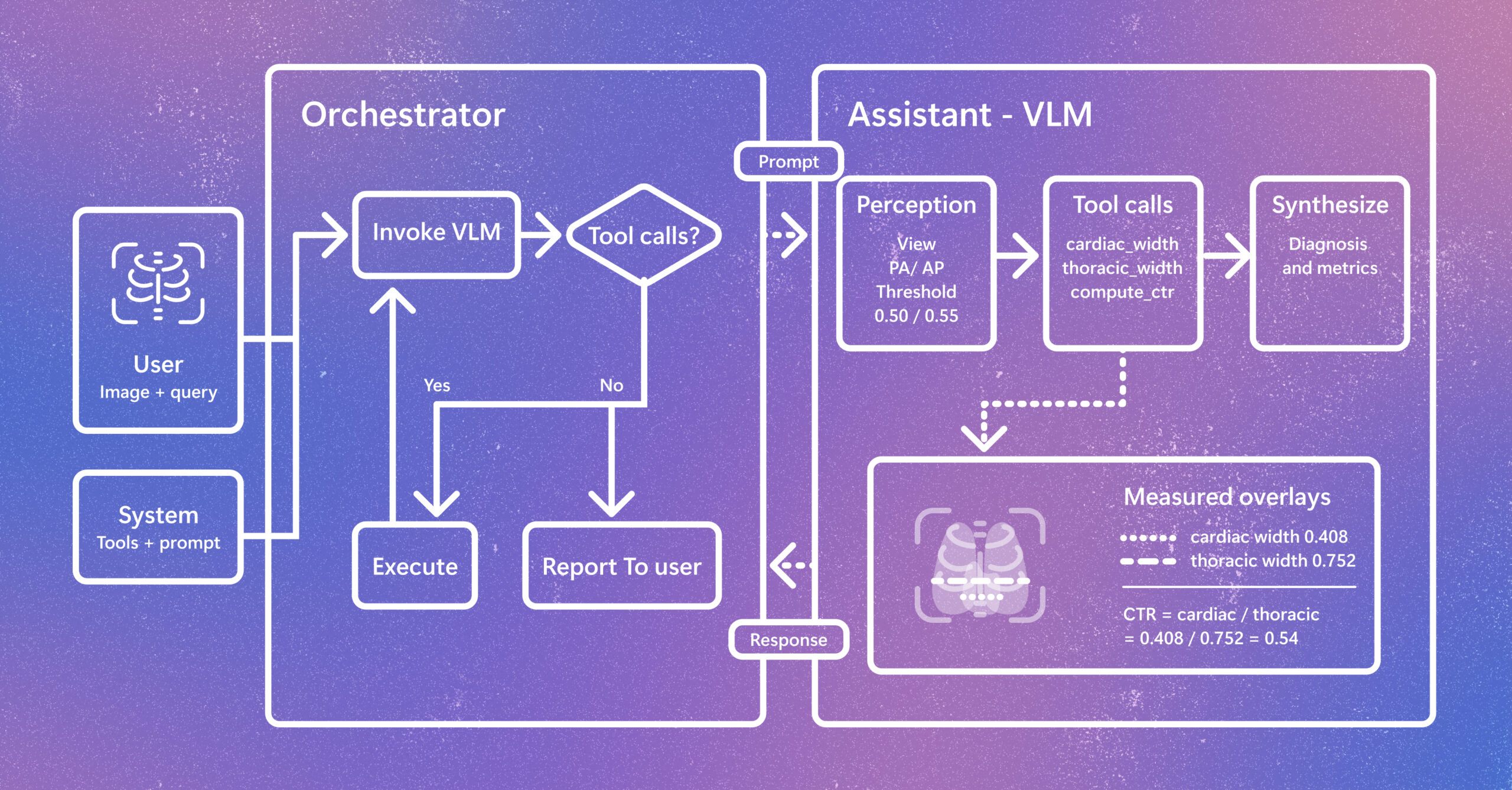
Introducing CARE-X: Towards Clinically Useful Radiology VLMs with Auxiliary Supervision, Reward-Aligned Learning, and Tool-Augmented Measurement

Radiology AI is evolving beyond report generation. CARE-X explores a unified approach that combines flexible reasoning, calibrated predictions, and measurement-based tools for chest X-ray interpretation. The post Introducing CARE-X: Towards Clinically Useful Radiology VLMs with Auxiliary Supervision, Reward-Aligned Learning, and Tool-Augmented Measurement appeared first on Microsoft Research.

We use cookies to run the site and, with your consent, for analytics and to show ads. See our Cookie Policy.