Sep 2026· IEEE Transactions on Smart Grid· Vol 17, pp. 4097-4108· 1 citation· 47 references
Abstract
The rapid growth of cloud-edge collaborative computing and its increasing electricity demand are forging strong interdependencies between computing and power markets. This paper proposes a market-driven joint trading strategy that coordinates computing services and electricity procurement within a cloud-edge collaborative system. To capture heterogeneous operational characteristics, we introduce a differentiated modeling paradigm, combining a task-queuing model for the cloud data center with an empirically-grounded nonlinear delay model for edge servers to characterize its performance saturation. These models are then embedded in a unified trading framework that explicitly characterizes the bidirectional interaction between computing and electricity markets, where the cloud acts as a price-making participant. The resulting large-scale, non-convex problem is transformed into a tractable mixed-integer second-order cone program by applying targeted convexification techniques—specifically, second-order cone relaxation for nonlinear delay constraints and special ordered sets of type 2 for bilinear market-clearing terms. Numerical case studies demonstrate that the differentiated modeling paradigm reduces the overall operational cost of the test system by 16.3%, including both electricity and delay costs. Furthermore, the solution methodology ensures high scalability and computational efficiency for large-scale instances while maintaining an optimality gap below 0.3%.
With the urgent need to achieve carbon neutrality goals and the rapid development of distributed energy resources, traditional electricity markets face challenges in effectively integrating environmental and economic values, lacking unified mechanisms to simultaneously clear energy and environmental transactions. This study proposes an energy credits–electricity joint trading mechanism for virtual power plants that achieves co-equilibrium through explicit coupling between energy and environmental value markets. First, a multi-dimensional energy credit quantification model is established, integrating energy type, time period, trading volume, and behavioral characteristics to differentiate environmental contributions. An optional reputation assessment enhancement covering prediction accuracy, fulfillment reliability, response timeliness, trading frequency, and anomaly behavior can be integrated for virtual power plant (VPP) operators requiring behavioral differentiation. Second, a unified joint clearing model is constructed that co-optimizes energy and credit trading, employing the alternating direction method of multipliers (ADMM) to decompose large-scale optimization problems into parallelizable prosumer and market coordination subproblems. Simulation results across single-day, multi-day (5-day cycle), and seasonal scenarios demonstrate that the mechanism successfully distinguishes prosumer performance: renewable energy prosumers accumulate substantial positive credits (136.2 credits over 5 days), while fossil fuel users incur credit deficits (−25.1 credits single-day), achieving system-level carbon credit balance over multi-day settlement cycles. The proposed mechanism effectively realizes the principle of “green contributors benefit, polluters pay” and provides a practical pathway for integrating environmental value in electricity markets.
Mingyu Ou, Feng Liu, Menglong Sun et al.· Frontiers in Energy Research· 0 citations
The coupling of electricity and carbon markets presents new challenges for the operation of industrial park integrated energy systems. This paper proposes a comprehensive framework to address inaccurate response modeling, scalability limitations in pricing, and a lack of trust in distributed trading. A dynamic sensitivity matrix based on a hybrid neural network is developed to quantify the real-time response potential of flexible resources. A three-layer Stackelberg game model is then constructed and solved via a distributed algorithm to determine optimal pricing. Furthermore, a blockchain-based verification mechanism is introduced to ensure transaction trust. Validation based on real-world data from an industrial park in the Guangdong-Hong Kong-Macao Greater Bay Area demonstrates that the proposed method effectively captures energy-carbon coupling effects and improves market efficiency and fairness.
Xiaotao Nie, Qiu Wang, Pengfei Wang et al.· International Conference on...· 0 citations
To address the coupling among bidding decisions, resource allocation, and coordinated utilization of environmental rights for distributed resource aggregators in multiple markets, including the energy market, peak regulation ancillary service market, carbon trading market, and tradable green certificate market, this paper proposes a bi-level optimization model for multi-market joint trading considering a limited carbon–green certificate linkage mechanism. First, a quantitative mapping relationship between the emission reduction attribute of surplus green certificates and carbon emission reduction is established, and an upper limit constraint on the offset ratio is introduced to describe the limited conversion of green certificate environmental attributes into carbon emission reduction value. Second, an upper-level bidding model for the distributed resource aggregator is constructed, aiming at profit maximization while considering revenues from the energy, peak regulation ancillary service, carbon trading, and green certificate markets, as well as the operational constraints of gas turbines, energy storage, and flexible loads. This model characterizes the aggregator’s joint bidding strategy and internal resource coordination. Then, a lower-level unified market clearing model is developed to minimize system operating cost and simulate the segmented bidding and unified clearing process of the aggregator, wind power, and thermal power units in the energy and peak regulation ancillary service markets. Finally, the bi-level model is transformed into a solvable single-level model using the Karush-Kuhn-Tucker (KKT) conditions and the Big-M method, and case studies are conducted to verify its effectiveness. The numerical results show that under the complete multi-market mechanism, the distributed resource aggregator (DRA) obtains a net profit of 2245.03 yuan, which is higher than 1450.33 yuan in the scenario without the carbon–green certificate mechanism and 773.48 yuan in the energy-only scenario. The wind curtailment rate decreases from 8.53% in the energy-only scenario to 2.71%, and the carbon emissions accounted for within the DRA boundary are reduced to 2865.40 kg. Although the price-taker scenario obtains a slightly higher net profit of 2300.20 yuan, its average regulation price reaches 455.20 yuan/MWh, compared with 412.50 yuan/MWh under the proposed model, indicating that the proposed strategy achieves a better balance between aggregator revenue and system-side regulation cost.
Xue Cui, Pingzheng Tong, Zixin Lu et al.· Sustainability· 0 citations
The growing integration of Battery Energy Storage Systems into electricity markets has highlighted the importance of coordinated participation across energy and balancing services to fully exploit their operational flexibility. However, existing revenue-stacking models often simplify market sequences and neglect the impact of rolling forecasts, leading to unrealistic scheduling and overestimated revenues. This paper addresses this gap by introducing a sequential, data-driven optimization framework for Front-of-the-Meter Battery Energy Storage Systems that mirrors actual market operations. The framework explicitly models market mechanisms and its respective Gate Closure Times across Frequency Containment Reserve, automated Frequency Restoration Reserve, Day-Ahead Auction, and Intraday Continuous markets. Each market stage optimizes expected revenue over all remaining markets using updated price forecasts while maintaining feasibility within both technical and regulatory limits. A key contribution is the opportunity-cost-based bidding strategy, which endogenously derives market-consistent bid prices and quantities from residual capacity optimization. Validation for a representative operating day demonstrates that the framework yields consistent and feasible schedules, effectively adapts to updated forecasts, and minimizes deviations between planned and realized dispatch, thereby enhancing the realism and profitability of BESS operation.
Steffen Kortmann, Hannah Sanders, Andreas Ulbig· 0 citations
With the high penetration of renewable energy, tapping the regulation potential of smart buildings in distribution networks plays a pivotal role in enabling orderly renewable energy accommodation. Customer directrix load-based demand response serves as an effective mechanism for guiding smart building interaction. However, its incentive price, derived as the equilibrium point of a leader-follower game between the operator and load entities, relies on a corresponding bilevel optimization model that suffers from low computational efficiency.
To address this limitation, an efficient incentive pricing method is proposed. The proposed linear similarity metric and incentive revenue formulation ensure the linearity of the lower-level optimization problem. Subsequently, based on primal-dual feasibility, an aggregated strong-duality equality, and a discrete-price reformulation, the original bilevel model is accurately reformulated into a single-level mixed-integer linear programming problem, enabling a one-shot determination of the incentive price.
Simulation results demonstrate that the proposed linear metric is highly consistent with traditional nonlinear metrics in terms of ranking monotonicity. Compared with time-of-use-only demand response and fixed incentive pricing strategies, the proposed method can identify an economically balanced incentive price that effectively guides smart building energy consumption behavior, improves renewable energy accommodation, and maintains favorable economic performance for both the distribution system operator and smart buildings.
These findings support the use of the proposed single-level MILP framework for balancing renewable energy accommodation with the economic interests of the distribution system operator and smart buildings.
Jian-Jun He, Xu-Dong Lei, Bo-Chun Zhan et al.· Frontiers in Energy Research· 0 citations
Related blog posts
MIT News · Artificial Intelligence· news.mit.eduSep 2, 2026
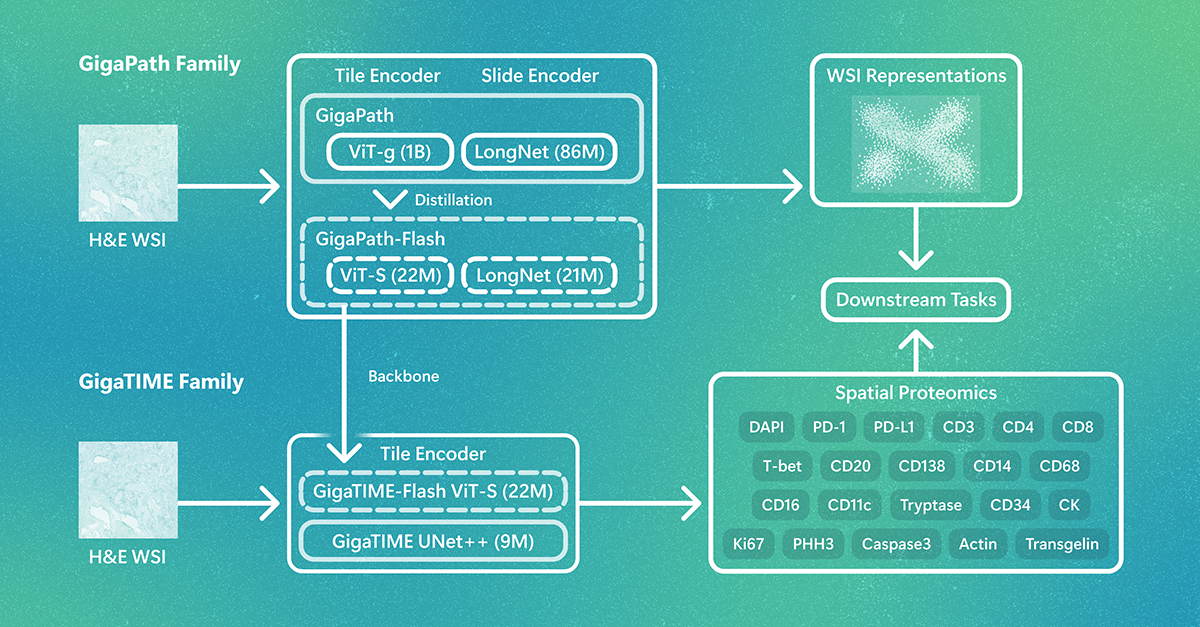
What if pathology foundation models could do more with less? GigaPath-Flash and GigaTIME-Flash cut computational demands while maintaining strong performance, opening the door to larger studies and broader exploration. The post GigaPath-Flash and GigaTIME-Flash: Toward population-scale discovery with efficient pathology foundation models appeared first on Microsoft Research.
MIT News · Artificial Intelligence· news.mit.eduAug 31, 2026
With millions of users across the world, Julia has been used to conduct cutting-edge research and to design new drugs, jet engines, heat pumps, and more.
MIT News · Artificial Intelligence· news.mit.eduAug 27, 2026
A new machine-learning framework aims to improve the success rate of computational protein design while moving away from results that reproduce sequences found in nature.