Sep 2026· IEEE Internet of Things Journal· Vol 13, pp. 38579-38591· 0 citations· 38 references
Abstract
Edge computing has gradually become a critical means of addressing the latency and bandwidth bottlenecks inherent in cloud computing. By deploying computing and storage resources at network edge nodes, edge computing is capable of providing low-latency and high-bandwidth services to Internet of Things (IoT) devices. To handle heterogeneous computing tasks at edge nodes, the corresponding services should be preplaced in advance, including image installation and data caching. In this study, we focus on the edge computing system that considers service placement. Taking into full account the latency and energy consumption incurred during task offloading and execution, as well as the additional cost introduced by service deployment, the joint optimization of service placement and task offloading decisions becomes exceedingly complex. Based on deep reinforcement learning (DRL), we propose a novel method that integrates double deep Q-network (DQN), dueling networks, and prioritized experience replay (PER) to make service placement and task offloading decisions, aiming to minimize the long-term weighted sum of task latency and energy consumption. Extensive simulation experiments demonstrate that our proposed method achieves stable convergence and outperforms other baseline methods.
A preference-adaptive dueling double deep Q-network algorithm, termed PA-DDQN, is proposed by integrating preference conditioning, multi-head attention, a dueling architecture, and double Q-learning, demonstrating its effectiveness in enhancing service responsiveness, energy efficiency, and reliability in smart library MEC systems.
Jingjing Qu, Peiying Zhang, Ruixin Wang et al.· Information· 0 citations
Future 6G networks will integrate communication and computing capabilities to support intelligent, delay-sensitive services. In heterogeneous cloud-edge environments, however, task offloading and routing decisions are strongly coupled, and dynamic workloads, limited computing resources, and constrained link capacity make efficient service provisioning challenging. Existing reinforcement learning-based offloading methods can improve decision efficiency, but many focus on simplified or single-domain settings and do not adequately account for backbone topology and bandwidth constraints. To address this problem, this paper studies joint task offloading and routing optimization in multi-domain cloud-edge networks, explicitly modeling network topology and link capacity. We propose a cooperative multi-agent deep reinforcement learning method that coordinates distributed edge agents through centralized training and decentralized execution. Routing optimization feedback is further incorporated to guide constraint-aware policy learning. Simulation results demonstrate that the proposed method reduces end-to-end latency, mitigates network congestion, and avoids link and node overload in cloud-edge networks.
Yi Yue, Shuai Zhang, Zhen Han et al.· IEEE International Conferenc...· 0 citations
A new paradigm for satisfying the ever-growing demands of real-time Sixth Generation (6G) applications is Mobile Edge Computing (MEC). Additionally, base stations and Internet of Things devices that incorporate renewable energy harvesting capabilities have the potential to lower grid energy use. To maximize system potential and lower carbon emissions, it is crucial to make effective decisions about job offloading and resource allocation. A carbon-aware MEC architecture that uses both grid and renewable energy sources is proposed in this paper. Our goal is to jointly manage resource allocation and task offloading while monitoring carbon emissions and task queue delays to optimize system behavior under uncertainty, specifically for stochastic workloads and variable renewable generation. To balance these two cost components (emissions and queue length), we create a combined optimization problem. We develop a deep deterministic policy gradient (DDPG)-based joint optimization technique to address this issue in a constantly changing environment. In the optimization, we consider greedy policy (GP) and full offloading (FO), as well as time-average carbon emission (TACE) and time-average queue length (TAQL) as performance metrics, and time-average queue length (TAQL) and full execution (FE) as baseline strategies; we also evaluate normalized time-average cumulative reward (NTACR). This method uses continuous-action reinforcement learning to generate efficient, real-time control policies. For the proposed MEC network, numerical statistics show that our approach can lead to effective offloading and lower carbon emissions.
M. Saeed, Rashid A Saeed, M. A. Ahmed et al.· 2026 6th International Confe...· 0 citations
Mobile edge computing (MEC) has emerged as a promising paradigm to support latency-sensitive applications by deploying computing and storage resources closer to end users. Service caching at the network edge is an effective approach to further reduce response latency and improve quality of service (QoS). However, the increasing scale and dynamic nature of user requests pose significant challenges to efficient service caching and updating under limited edge resources and cost budgets. In this article, we investigate the joint optimization problem of service caching and dynamic updating in a cloud–edge–end collaborative architecture, with the objective of minimizing the average service access latency of users. We first construct a comprehensive system model that captures communication latency, service response delay, and the costs associated with service caching and updates. The problem is formulated as a nonlinear integer programming problem and addressed via a two-stage solution framework. Specifically, in the initial caching stage, we employ Lagrangian relaxation to reduce the high-dimensional knapsack problem and design an efficient algorithm integrated with Tabu Search. In the dynamic updating stage, we develop a Monte Carlo tree search (MCTS)-based algorithm enhanced by service popularity awareness, along with a novel service replacement strategy that considers user preference and service reliability. Extensive experiments under various system scales demonstrate that the proposed approach significantly outperforms state-of-the-art methods in terms of average service latency, cost budget satisfaction, and update efficiency.
Tianyang Zheng, Pengfei Yang, Kang Shen et al.· IEEE Internet of Things Jour...· 0 citations
A task-driven offloading algorithm based on Balanced Multi-Agent Deep Deterministic Policy Gradient (BMADDPG) that reduces average task processing latency by approximately 22.67% and decreases total system cost by at least 18.32% under high-load scenarios.
A constrained optimization model that supports different management goals through alternative objective functions (latency-aware or power-aware) while enforcing operational constraints, including node capacities, slice-specific latency bounds, and explicit limits on VNF migrations/relocations between scheduling periods is proposed.
R. Moreno-Vozmediano, E. Huedo, R. Montero et al.· Journal of Network and Syste...· 0 citations
Related blog posts
MIT News · Artificial Intelligence· news.mit.eduSep 2, 2026
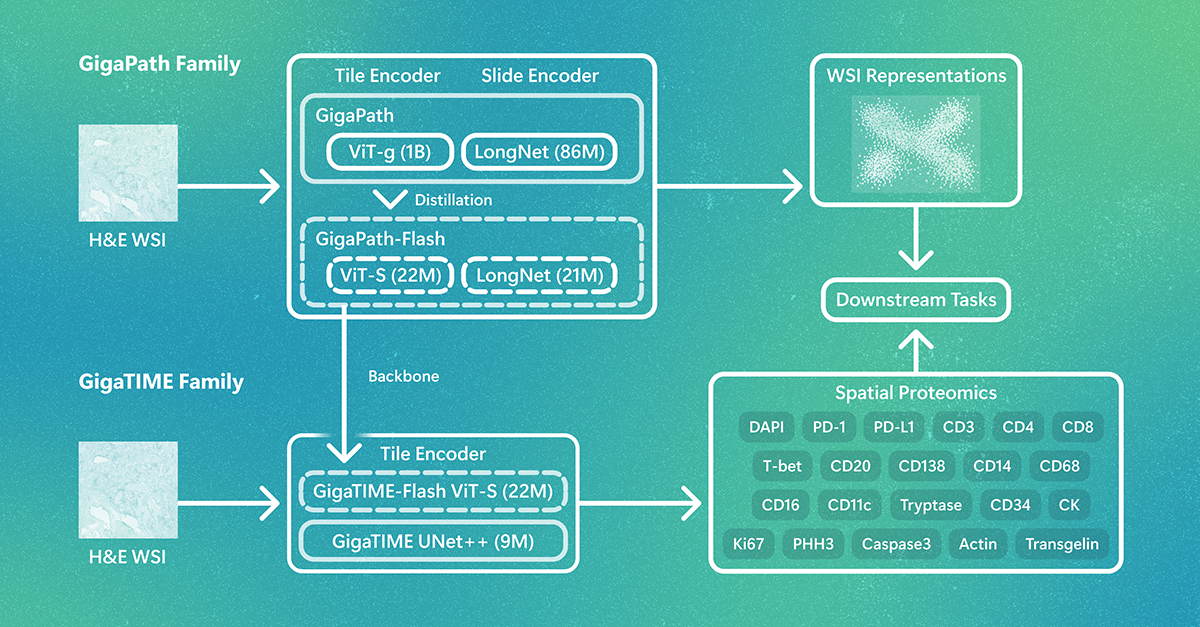
What if pathology foundation models could do more with less? GigaPath-Flash and GigaTIME-Flash cut computational demands while maintaining strong performance, opening the door to larger studies and broader exploration. The post GigaPath-Flash and GigaTIME-Flash: Toward population-scale discovery with efficient pathology foundation models appeared first on Microsoft Research.
MIT News · Artificial Intelligence· news.mit.eduAug 31, 2026
With millions of users across the world, Julia has been used to conduct cutting-edge research and to design new drugs, jet engines, heat pumps, and more.
MIT News · Artificial Intelligence· news.mit.eduAug 27, 2026
A new machine-learning framework aims to improve the success rate of computational protein design while moving away from results that reproduce sequences found in nature.