Sep 2026· IEEE Internet of Things Journal· Vol 13, pp. 38676-38694· 0 citations· 107 references
Abstract
The Intelligent Internet of Things (IIoT) is transitioning from a data-centric to a human-centric paradigm, creating an urgent demand for reliable human–machine interaction. While transformer-based brain foundation models have emerged to decode human intentions, most existing studies focus on improving performance for individual tasks on a single device, and the deployment in real-world IIoT scenarios remains largely unexplored. Specifically, there are three primary challenges for deployment in IIoT: deployment on resource-constrained edge devices, efficient cloud–edge collaborative scheduling, and online update for new users. To address these challenges, this study introduces the edge brain computing (EBC) framework. The framework consists of three key components: 1) a hierarchical cloud–edge split decoding architecture; 2) a game theory-based dynamic self-supervised distillation strategy; and 3) an online updating mechanism to meet the requirements for deployment in IIoT. The experimental results demonstrate that EBC achieves a 97.88% reduction in model parameters and outperforms centralized deployment strategies in inference latency, power consumption, and communication cost, providing a robust pathway for deployment of brain foundation models in human-centric IIoT.
Vision-Language-Action (VLA) models have emerged as a promising foundation for Embodied AI, but their high inference cost poses significant challenges for deployment in robotic systems. In practice, on-device inference is constrained by limited compute capacity and energy budgets, struggling to simultaneously satisfy real-time control and energy efficiency requirements. Alternatively, offloading the inference workload to an edge server is susceptible to fluctuations in system conditions, introducing unpredictable latency risks. Device-edge co-inference offers a promising solution, but systematic research tailored to VLA models remains scarce, particularly a unified co-inference framework that jointly addresses real-time constraints and system-level energy efficiency. Thus, we propose EcoVLA, an adaptive device-edge co-inference framework for VLA models that maximizes system energy efficiency under real-time constraints. EcoVLA first introduces a unified stage-level abstraction over different VLA paradigms, establishing an architecture-agnostic co-inference design space. It then formulates a joint device-edge-network latency and energy prediction model to enable rapid runtime evaluation of candidate co-inference schemes. Building on this, EcoVLA continuously selects the energy-optimal scheme satisfying real-time constraints with millisecond-level overhead, adapting to runtime variations in network and system states. Furthermore, EcoVLA incorporates a lightweight transmission mechanism for inter-stage intermediate tensors to reduce the communication overhead incurred by cross-device collaboration. Experimental results across VLA models show that EcoVLA improves system energy efficiency by up to 236% over existing co-inference approaches under a 20 Hz action output frequency constraint, while consistently maintaining SLO satisfaction under dynamic network and edge workload conditions.
Embodied intelligence is shifting artificial intelligence from passive digital perception toward active physical interaction. However, foundation-model-enabled embodied agents face a fundamental tension between open-world cognition and resource-constrained deployment. On-device models are limited by computation, memory, and energy budgets, whereas cloud-centric solutions introduce latency and reliability risks over dynamic wireless links. Edge general intelligence provides a promising cognitive backbone, but existing frameworks still lack physical grounding, action awareness, and mechanisms for actively acquiring useful physical experience. To address these limitations, this article introduces edge-native embodied intelligence (ENEI), an action-aware wireless edge framework that integrates embodied agents, the 6G communication and networking fabric, and edge cognitive services into a 6G-mediated bidirectional edge-embodiment loop. Along the edge-to-embodiment axis, confidence-aware assistance and edge-driven generative adaptation enhance local autonomy under out-of-distribution (OOD) conditions. Along the embodiment-to-edge axis, value-of-experience guided active embodied federated learning enables physical actions to generate informative experience for continuous edge model evolution. The 6G fabric supports both directions through goal-oriented transmission and programmable radio-resource allocation. Two case studies on OOD drone navigation and mobility-driven federated learning illustrate the feasibility and communication efficiency of the proposed mechanisms. ENEI provides a unified perspective in which edge cognition strengthens embodied action, while embodied agency actively enriches edge cognition, laying the foundation for scalable, adaptive, and self-evolving embodied wireless systems.
Yiru Wang, Chuan'ao Jiang, Jiahui Cui et al.· 0 citations
The rapid proliferation of Internet of Things (IoT) devices across domains such as smart transportation, healthcare, and smart city infrastructure has intensified the demand for low-latency, energy-efficient, and scalable computing paradigms. While cloud computing has traditionally served as the backbone for IoT data processing, its inherent limitations have catalyzed the emergence of edge/fog computing, forming a distributed edge-cloud continuum. This review examines emerging trends in Artificial Intelligence (AI)-driven resource management within this continuum, with a focus on three directions: (1) the transition from centralized to distributed and collaborative intelligence, (2) cross-domain adaptation and knowledge transfer for heterogeneous IoT applications, and (3) the nascent integration of foundation models into edge environments. We ground our discussion in three complementary case studies: smart transportation as a representative vertical domain, cross-domain heterogeneous IoT application scheduling as a horizontal perspective, and industrial transferred arc plasma monitoring as an emerging industrial IoT scenario, and conclude with forward-looking research directions, including quantum-enhanced edge optimization, edge-native continual learning, digital twin-driven resource orchestration, and neuromorphic computing for ultra-low-power edge AI.
Zhiyu Wang, Nilotpal Kapri, L. Bittencourt et al.· Frontiers in The Internet of...· 0 citations
Wireless intelligence requires not only large foundation models for network-wide planning and decision-making, but also a compact"cerebellum"for fast and precise physical-layer inference. Unlike the computation-intensive architectures used at upper layers, the physical-layer cerebellum must operate within stringent microsecond-to-millisecond latency constraints. This article presents ScoreFM, a lightweight score-based foundation model designed for this role. ScoreFM learns reusable score functions that characterize the priors of wireless channels, source signals, and structured interference. During inference, these learned priors are embedded into task-specific message-passing algorithms as plug-and-play denoisers, allowing the same compact score networks to support diverse downstream tasks. This design combines the expressive power of score-based generative learning with the efficiency, interpretability, and modularity of model-based inference. Case studies on channel estimation, localization, and blind semantic communication demonstrate the flexibility and effectiveness of ScoreFM. Finally, we discuss future directions and open challenges toward realizing a practical wireless cerebellum.
Chang Cai, Boyu Teng, Xiaojun Yuan et al.· 0 citations
Acquiring channel state information (CSI) with manageable overhead has been essential to provide high-performance communication services, which is extremely challenging in the emerging sixth generation (6G) mobile network. Channel extrapolation has been proposed to infer complete CSI using a small portion of known CSI, its performance can be dramatically enhanced by artificial intelligence (AI). However, AI-driven channel extrapolation suffers from poor generalization across scenarios and high computational complexity, which is common in the broad research of AI and large language models. Inspired by the modular function of human brain, we propose a configurable AI-driven framework to achieve generalizable and computational efficient channel extrapolation from a modular perspective. We propose a three-stage framework, consisting of experts emergent, experts construction and experts selection. This framework assumes that CSI correlations can be captured by a small number of specialized functional modules (experts) that are activated differently across scenarios. Such modularity emerges in the experts emergent stage via pre-training using CSI data covering comprehensive scenarios. The neurons with similar weight-space patterns are grouped as experts in the experts construction stage. A lightweight gating function is added to control the routing of experts and is fine-tuned for each scenario in the experts selection stage. Simulation results demonstrate that the proposed three-stage framework reduce the channel extrapolation error and computational complexities dramatically by $1.1-19.1$ db and $38$ \%, respectively. In addition, attributed to the proposed experts emergent and section modules, the proposed framework outperforms its counterpart mix-of-expert model dramatically in terms of channel extrapolation performance.
Yuan Gao, Xinyi Wu, J. Jun et al.· 0 citations
Related blog posts
MIT News · Artificial Intelligence· news.mit.eduSep 2, 2026
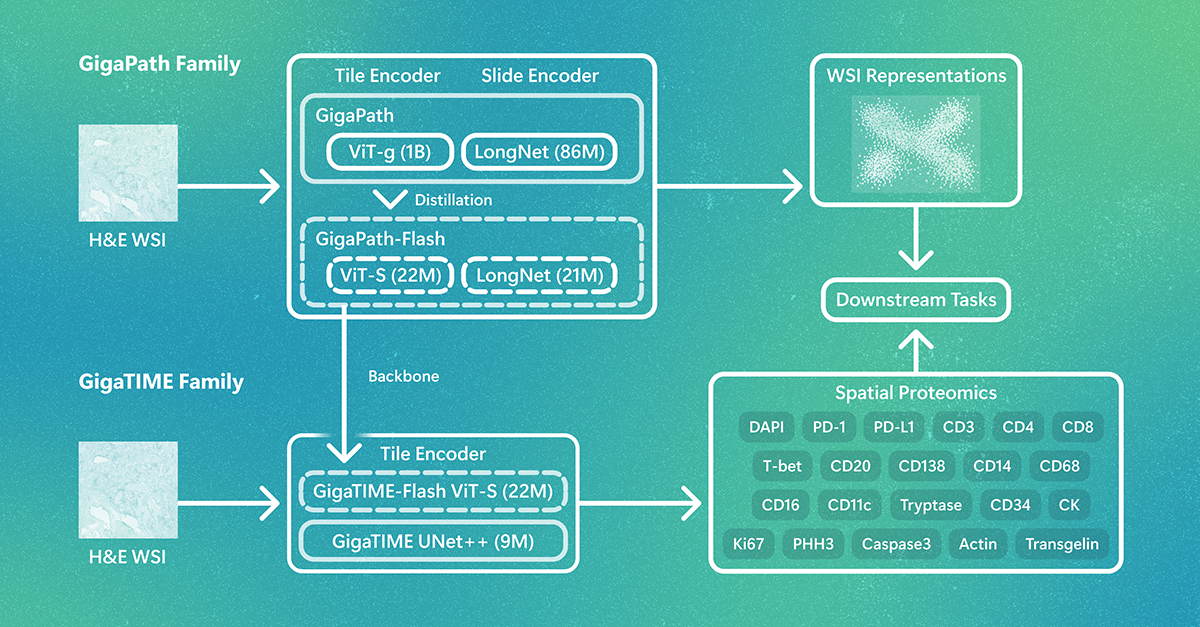
What if pathology foundation models could do more with less? GigaPath-Flash and GigaTIME-Flash cut computational demands while maintaining strong performance, opening the door to larger studies and broader exploration. The post GigaPath-Flash and GigaTIME-Flash: Toward population-scale discovery with efficient pathology foundation models appeared first on Microsoft Research.
MIT News · Artificial Intelligence· news.mit.eduAug 31, 2026
With millions of users across the world, Julia has been used to conduct cutting-edge research and to design new drugs, jet engines, heat pumps, and more.
MIT News · Artificial Intelligence· news.mit.eduAug 27, 2026
A new machine-learning framework aims to improve the success rate of computational protein design while moving away from results that reproduce sequences found in nature.