Sep 2026· IEEE Internet of Things Journal· Vol 13, pp. 40198-40209· 0 citations· 43 references
Abstract
Passenger demand prediction is essential for intelligent transportation systems (ITSs) and the Internet of Vehicles (IoV), supporting efficient transit management, network bandwidth allocation, onboard content distribution, and edge computing scheduling. With buses increasingly equipped with wireless connectivity, passengers frequently access onboard networks, generating traffic patterns closely tied to their mobility behavior—especially during midday and evening peaks, when spatiotemporal movement and communication demand in vehicular social networks surge. While this data-rich environment provides unprecedented opportunities for network optimization, the inherent complexity of passenger mobility makes high-fidelity modeling a nontrivial task. Specifically, passenger flow at bus stops exhibits both macrolevel spatial clustering and microlevel periodic temporal variations, which existing studies seldom model within a unified framework. To address this gap, we proposed MPGNet, a multipattern and multiperiod transit demand prediction framework. MPGNet leverages deep clustering on stop distance networks and stop-specific attributes to extract IoV-relevant mobility patterns, capturing regional group-level travel dynamics. It then applies temporal variation modeling to project 1-D flow sequences into a 2-D structural space and integrates a spatiotemporal module (STBlock) to learn coupled periodic dependencies across stops. Extensive experiments on a real-world bus dataset demonstrate that MPGNet achieves strong performance in both short- and long-term forecasting, underscoring its practical value for IoV-based network traffic management and its potential to enhance the integration of IoV technologies with intelligent public transportation systems. The code is available at https://github.com/switchsky/MPGNet
In dynamic Vehicular Edge Computing (VEC) environments, rapidly changing vehicle mobility and traffic lead to fluctuating edge resource demands, challenging task offloading and scheduling. Accurate prediction of future traffic flow and traffic-state-derived workload representations is thus crucial for proactive resource management. To address the limitations of existing methods in short-term dynamic characterization, complex spatial interaction modeling, and heterogeneous target prediction, this paper proposes a Spatio-Temporal Graph Attention Network (TA-STGAT). The proposed model constructs multi-dimensional RSU-level state sequences from simulated trajectories generated on a real-world road network and separately forecasts vehicle flow within RSU coverage areas and the associated traffic-state-derived workload representation under a unified spatio-temporal modeling framework. By integrating gated dilated temporal convolutions with a topology-constrained multi-head graph attention mechanism, the model captures multi-scale temporal dependencies and nonlinear spatial correlations. Experimental results show that, compared with the best-performing baseline in terms of RMSE for each forecasting task, TA-STGAT reduces RMSE by 10.89% and 11.29% in workload-representation prediction and traffic flow prediction, respectively, demonstrating its effectiveness for short-term edge-state forecasting.
This framework introduces an adaptive graph learning module that dynamically infers meaningful connectivity relationships among traffic sensors—not relying on fixed geographic or distance-based assumptions—but instead leveraging real-time traffic correlations and node-level embeddings, enabling effective modeling of both localized spatial interactions and multi-scale temporal dependencies across varying prediction horizons.
Zhengxu Luan, Huan Wang, Miaobowen Wang et al.· Computers and artificial int...· 0 citations
Network-scale traffic speed prediction plays a central role in signal timing, routing, traffic control and congestion management. However, existing methods face challenges in capturing complex spatiotemporal dependencies among road segments, and in achieving computational efficiency in large-scale urban networks. To address these challenges, we propose an enhanced Dynamic Spatiotemporal Residual Network (DST-ResNet) framework for network-scale traffic speed prediction. First, the method employs a multi-scale grid partitioning strategy to segment urban road networks at varying levels of granularity, enabling precise predictions at both local and global scales. Second, a dynamic convolution mechanism is introduced to integrate real-time traffic data with static road network features, allowing the model to adaptively capture the dynamic and heterogeneous characteristics of urban traffic. Then, a spatiotemporal attention mechanism is incorporated to capture sequential dependencies in traffic patterns, improving the accuracy and robustness of long-term traffic speed prediction. Last, we conduct experiments based on GPS trajectory data from taxis in Xi’an city, China. The results demonstrate that DST-ResNet outperforms five baseline models. The model maintains stable performance across five spatial resolutions, and a mask-aware retraining strategy reduces the average MSE by 49.65% under missing observations. Ablation studies confirm the contributions of dynamic convolution and attention mechanisms, while residual units mitigate the vanishing gradient problem, facilitating deeper network training.
As urbanization continues to reshape large cities, traffic congestion remains a persistent challenge for urban transportation systems. Using Beijing as a case study, this paper examines the spatiotemporal evolution of urban traffic congestion from a deep learning perspective based on multi-source data. The results suggest that traffic congestion in Beijing displays a pronounced “dual-peak” pattern associated with daily commuting activities. Compared with the pre-pandemic period, weekday travel demand has generally recovered and in some cases exceeded previous levels, whereas holiday travel remains relatively subdued, accompanied by increasingly concentrated travel behavior. Among the models considered, Long Short-Term Memory (LSTM) performs particularly well in capturing nonlinear variations and temporal dependencies in traffic flow, leading to improved prediction accuracy. Between 2020 and 2025, the congestion index experienced a trajectory of decline, recovery, and subsequent stabilization, a pattern that appears to be associated with the gradual implementation of intelligent traffic management measures. These findings contribute to a better understanding of recent changes in urban traffic dynamics and may offer useful insights for future traffic planning and governance.
Zihan Zhou· Computers and artificial int...· 0 citations
Population explosion in cities has led to an ever-increasing need of smart, efficient, dynamic, and affordable transportation. Current public transport systems are mostly static, bound to certain routes and time-tables, limiting their adaptability to dynamic changes in demand and availability. Furthermore, these systems often lead to problems of buses missing stops, long wait times for passengers, and inadequate information for passengers to reach their destinations on time. Navi bus: A Smart Urban Mobility and Passenger Intent Prediction System for Intelligent Transportation is an alternative approach designed to tackle these problems. The proposed Navi Bus platform integrates intelligent routing algorithms with real-time GPS and passenger request data to optimize bus operations, minimize waiting time, and improve service efficiency. The Adaptive System Initialization and Resource Management Algorithm (ASIRMA) facilitate initialization of the system and allocation of resources, while Real-Time Passenger Monitoring and Interaction Algorithm (RPMIA) deals with monitoring and interaction of passengers in real time. Intelligent Request Handling and Decision Optimization Algorithm (IRHDOA) processes requests of passengers by calculating the optimal route, and calculating any deviations or delays that may occur due to incorporation of new stops. Demand-Aware Dynamic Routing and Service Algorithm (DADRSA) dynamically plans the route and service by incorporating new pickup points without incurring operational risks. The proposed system is expected to minimize wait time for passengers, enhance communication between drivers and passengers, and pave the way for future smart transport systems utilizing AI for passenger intent prediction to make smarter decision while planning routes.
B. R, Sarathbabu P, Sornamadhavan V et al.· 2026 4th International Confe...· 0 citations
Related blog posts
MIT News · Artificial Intelligence· news.mit.eduSep 2, 2026
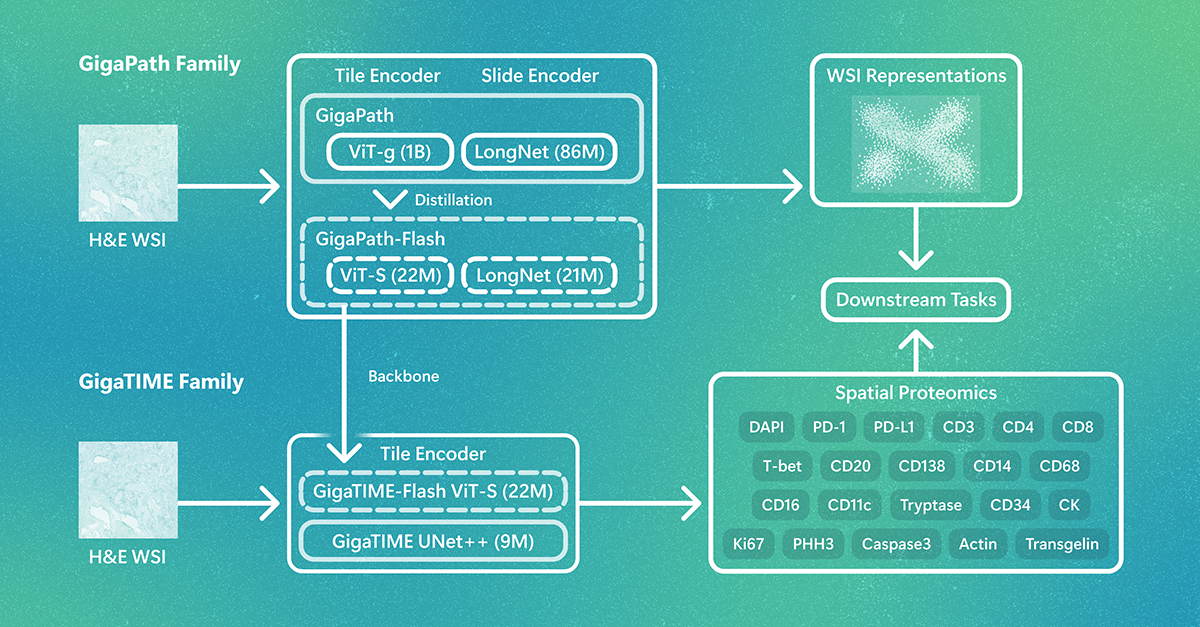
What if pathology foundation models could do more with less? GigaPath-Flash and GigaTIME-Flash cut computational demands while maintaining strong performance, opening the door to larger studies and broader exploration. The post GigaPath-Flash and GigaTIME-Flash: Toward population-scale discovery with efficient pathology foundation models appeared first on Microsoft Research.
MIT News · Artificial Intelligence· news.mit.eduAug 31, 2026
With millions of users across the world, Julia has been used to conduct cutting-edge research and to design new drugs, jet engines, heat pumps, and more.
MIT News · Artificial Intelligence· news.mit.eduAug 27, 2026
A new machine-learning framework aims to improve the success rate of computational protein design while moving away from results that reproduce sequences found in nature.