Sep 2026· IEEE Internet of Things Journal· Vol 13, pp. 40378-40392· 0 citations· 35 references
Computer Science
Abstract
Vehicular edge computing (VEC) is viewed as an important component for vehicle networks due to the prevalence of smart vehicles. However, stringent requirements such as ultralow latency and minimal energy consumption should be achieved for the emerging transmission-and-computation-intensive applications due to the limited communication and computing resources. To address these challenges, this article proposes a multiagent priority-based twin-delayed deep deterministic policy gradient (MAPTD3) approach for the joint optimization of task offloading and power allocation in a VEC system at the millimeter-wave (mmWave) band. First, the joint task offloading and power allocation problem is formulated as a nonconvex mixed-integer nonlinear program (MINLP) with a multiplicative objective function subject to delay and power constraints. Second, the proposed approach integrates two key techniques: a dynamic variance noise (DVN) mechanism for adaptive exploration and prioritized experience replay (PER) to enhance sample efficiency. Finally, it is shown in the simulation results that MAPTD3 consistently outperforms existing benchmarks with 96%–99% optimality ratios (ORs) under various load scenarios.
Vehicular edge computing (VEC), a key enabler for the Internet of Things (IoT) in intelligent transportation, addresses onboard processing constraints through collaborative task offloading among vehicles, facilitating latency-sensitive applications such as autonomous driving. However, developing efficient offloading st...
Momiao Zhou, Yimin Zhou, Yanshi Sun et al.· IEEE Internet of Things Jour...· 0 citations
With the advancement of autonomous driving and smart navigation, Internet of Vehicles (IoV) systems face stringent requirements for real-time data delivery and processing reliability. Traditional metrics cannot fully capture information timeliness due to network dynamics and packet loss. Existing approaches also strugg...
Chao He, Wanting Wang, Dongfeng Fu et al.· 2026 International Conferenc...· 0 citations
A Prioritized Adaptive Weighting based on Deep Deterministic Policy Gradient (PAW-DDPG) as an enhanced Deep Deterministic Policy Gradient (DDPG) algorithm to minimize both processing delay and energy consumption by jointly optimizing user scheduling, partial-task offloading, and UAV trajectory is proposed.
W. Saber, Hanan Algamil, Fifi Farouk et al.· Future Internet· 0 citations
6G vehicular services, including cooperative perception, augmented reality navigation, and high-definition map updating, need computation support close to moving vehicles. Vehicular Edge Computing (VEC) is a natural solution, but the offloading decision becomes difficult when wireless channel conditions, vehicle densit...
Zi-Heng Gu· 2026 8th International Confe...· 0 citations
The results demonstrate that the proposed PP-SAPF is suitable for real-time deployment in intelligent transportation systems (ITS) and autonomous vehicles where low latency, reliable connectivity, and adaptive resource management is significant.
Irshad Khan, Neetha Papanna Umalakshmi, Somshekhar Durgaiah et al.· Bulletin of Electrical Engin...· 0 citations
This paper addresses the joint task offloading and resource allocation problem in multi-user MEC systems and proposes a decentralized control framework based on Multi-Agent Reinforcement Learning (MARL), which achieves lower total system cost and faster convergence than the full-local, full-offload, and heuristic basel...
Youssef Oukissou, Mohamed Amine Meddaoui, Ayoub Belaidi et al.· International journal of Com...· 0 citations
Related blog posts
Microsoft Research Blog· microsoft.comOct 21, 2026
For decades, a fundamental question about the difficulty of computing in high-dimensional spaces has resisted proof. New research resolves this question, removing a major theoretical obstacle to understanding the efficiency of randomized algorithms used across science and computing. The Kannan–Lovász–Simonovits (KLS) conjecture was proposed in 1995. It asks whether, for a broad class of high-dimensional […] The post Solving a 31-year-old grand challenge in mathematics – the KLS conjecture appear…
MIT News · Artificial Intelligence· news.mit.eduOct 15, 2026
A new computational approach reveals how cells communicate to assemble into tissues. This could accelerate stem cell engineering, improve disease models, and inform therapies.
Microsoft Research Blog· microsoft.comOct 15, 2026
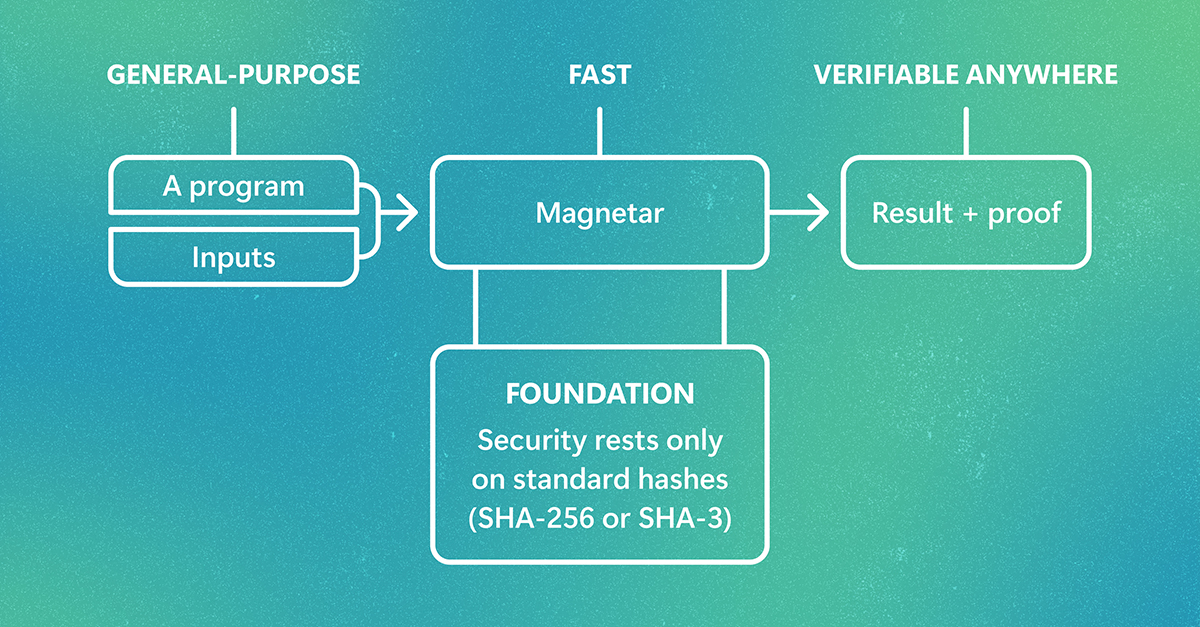
Zero-knowledge proofs can verify computing results without rerunning workloads or exposing sensitive data. Magnetar helps bring them into the mainstream with support for standard programming languages, major speed gains, and quantum-resistant security. The post Proof-based general-purpose computing with Magnetar appeared first on Microsoft Research.
MIT News · Artificial Intelligence· news.mit.eduOct 8, 2026