Sep 2026· IEEE Internet of Things Journal· Vol 13, pp. 40522-40537· 0 citations· 37 references
Abstract
Multiaccess edge computing (MEC) has emerged as a key paradigm to empower resource-constrained edge devices through task offloading. However, dynamically fluctuating user preferences regarding latency and energy tradeoffs severely complicate the task scheduling and resource allocation, while existing methods struggle to accommodate this variability. To address this, we first formulate the dynamic-weight task offloading challenge as a nonconvex, nondeterministic polynomial-time (NP) hard multiobjective optimization problem (MOOP). We then propose a dynamic multiobjective task offloading framework built upon an enhanced proximal policy optimization algorithm to tackle this MOOP, namely DMT-PPO, which incorporates a dynamic reward structure and preference-aware subnetworks to effectively model user preferences and adapt to varying weight conditions. By introducing a discrete-continuous hybrid action space, DMT-PPO achieves the joint optimization across server selection, offloading decision, and computing provisioning. Moreover, DMT-PPO leverages a domain-based transfer learning (TL) paradigm coupled with an edge caching mechanism to accelerate both training and decision processes, enabling fine-grained coordination among heterogeneous task, device, and edge server settings. Extensive experiments demonstrate our framework’s superiority in dynamic environments, achieving up to 12.5% energy savings and a 10.6% reduction in task completion time, alongside a $3.5\times $ improvement in training efficiency compared to state-of-the-art baselines like Hybrid-PPO.
A constraint-aware multi-agent edge collaborative offloading algorithm (CARE-CTDE) that achieves better scheduling performance, resource utilization, and constraint satisfaction than baseline methods in dynamic heterogeneous MEC scenarios, demonstrating its effectiveness and robustness for constrained edge computing systems.
Yuxuan Yang, Hexing Wang, Yang Zhou· Mathematics· 0 citations
This study jointly optimizes task offloading and system resource scheduling to minimize the long-term delay–energy cost of NOMA-MEC systems using a master-refined multi-agent proximal policy optimization algorithm.
This paper addresses the joint task offloading and resource allocation problem in multi-user MEC systems and proposes a decentralized control framework based on Multi-Agent Reinforcement Learning (MARL), which achieves lower total system cost and faster convergence than the full-local, full-offload, and heuristic baselines.
Youssef Oukissou, Mohamed Amine Meddaoui, Ayoub Belaidi et al.· International journal of Com...· 0 citations
A Mixed Integer Nonlinear Programming (MINLP) model with the objective of a weighted sum of long-term average task completion rate, total latency and energy consumption is established, which improves the task completion rate by 4% in high load scenarios and achieves a better balance between latency and energy consumption.
Mobile edge computing (MEC) enables mobile devices to offload computation-intensive tasks to nearby edge nodes in order to reduce delay and improve service continuity. The Quality-of-Experience-Oriented Computation Offloading (QECO) algorithm addresses this problem through a QoE-oriented deep reinforcement learning framework that models computation offloading as a Markov decision process and uses a D3QN-LSTM architecture to jointly consider task completion, delay, and energy consumption [1]. However, the original QECO reward formulation does not explicitly distinguish highly urgent near-deadline tasks from newly arrived tasks with larger timing slack. This limitation may lead to urgency-blind decisions in deadline-constrained MEC environments. In this paper, we propose an urgency-aware reward redesign for QECO while preserving the original MEC system model, state-action representation, and DRL backbone. The proposed modification amplifies the delay penalty according to task urgency and introduces a stronger penalty for unfinished tasks, thereby encouraging more deadline-sensitive offloading behavior without increasing architectural complexity. Experimental comparison with the reproduced original QECO implementation shows lower average delay and fewer dropped tasks, although at the cost of higher energy consumption. Because the redesigned reward uses a different numerical scale from the baseline, absolute QoE/reward magnitudes are reported only with appropriate scale interpretation; performance claims are based primarily on operational metrics such as delay, energy consumption, and task drops. The results indicate that urgency-aware reward shaping is a lightweight and effective extension for improving deadline-constrained MEC offloading.
Najlaà Abdulrahman Abu-Taleb, A. Zahary, Asma Alshargabi et al.· 2026 6th International Confe...· 0 citations
A task-driven offloading algorithm based on Balanced Multi-Agent Deep Deterministic Policy Gradient (BMADDPG) that reduces average task processing latency by approximately 22.67% and decreases total system cost by at least 18.32% under high-load scenarios.
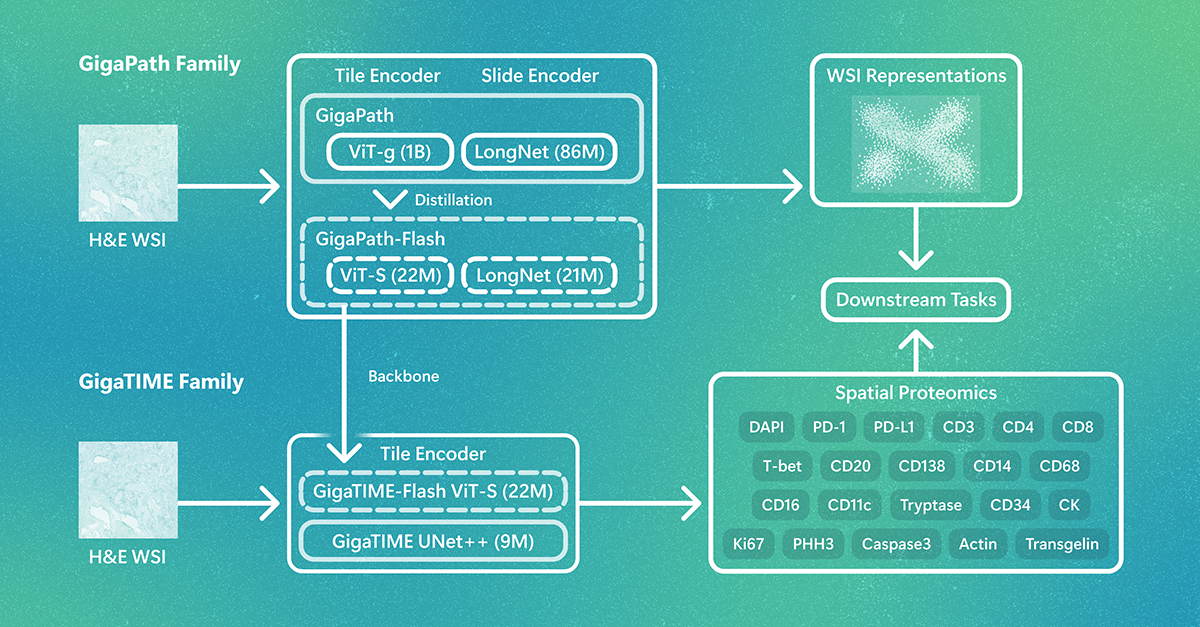
What if pathology foundation models could do more with less? GigaPath-Flash and GigaTIME-Flash cut computational demands while maintaining strong performance, opening the door to larger studies and broader exploration. The post GigaPath-Flash and GigaTIME-Flash: Toward population-scale discovery with efficient pathology foundation models appeared first on Microsoft Research.
MIT News · Artificial Intelligence· news.mit.eduAug 31, 2026
With millions of users across the world, Julia has been used to conduct cutting-edge research and to design new drugs, jet engines, heat pumps, and more.
MIT News · Artificial Intelligence· news.mit.eduAug 27, 2026
A new machine-learning framework aims to improve the success rate of computational protein design while moving away from results that reproduce sequences found in nature.