IGG (Image Generation informed by Geodesic dynamics), a novel framework that integrates topology-preserving geodesic principles into the diffusion-based generative process, where geometric object changes are learned as smooth and invertible smooth mappings from a given template/source image.
Abstract
Generative diffusion models have emerged as a class of powerful techniques for various imaging applications, including but not limited to synthesis, reconstruction, and segmentation. Despite their success, current generative models pose two key limitations. First, they primarily rely on image intensity and texture information, with limited attention to underlying object geometry. As a result, they do not guarantee geometric or topological consistency during the generation process, which is a crucial requirement for high-stakes domains such as computational anatomy, biology, and robotics, where preserving object structure is critical. Second, existing models fail to explicitly learn or represent shape changes in the generative process. Such deformation dynamics remain occluded within network parameters; hence leaving the transformation process uninterpretable and physically uninformed. To address these challenges, we introduce IGG (Image Generation informed by Geodesic dynamics), a novel framework that integrates topology-preserving geodesic principles into the diffusion-based generative process. In contrast to conventional methods that operate in image intensity space, IGG learns and synthesizes diverse samples within geodesic deformation spaces, where geometric object changes are learned as smooth and invertible smooth mappings from a given template/source image. Our code is publicly available at https://github.com/nellie689/IGG.
This work repurposes pretrained video generative models as a unified and data-efficient framework for geometry estimation, formulated innovatively as a next-frames prediction task, and inherits naturally structured knowledge and richer priors from the video model, enabling more data efficient and effective learning of...
Haosen Yang, Ji-Fei Song, Zhensong Zhang et al.· 1 citation
Conditional latent diffusion has become a promising paradigm for synthesizing paired image-mask data for segmentation, yet preserving structural topology remains challenging for curvilinear objects such as vessels and cracks. Existing methods mainly focus on how to inject spatial conditions into generative backbones, w...
Qin Lei, Ce-Ran Chen, Jiang Zhong et al.· IEEE Transactions on Neural...· 0 citations
SpatialCrafter is presented, a novel two-stage framework that addresses explorable image-to-scene generation issues by introducing a global 3D proxy for high-fidelity image-to-scene generation and appearance refinement and introduces Parallel Geometry Injection and Proxy-Aware Corruption training strategies.
Chuan Fang, Lingteng Qiu, Yixun Liang et al.· 1 citation
GeoFlow is a novel framework designed to achieve efficient driving video generation by harnessing explicit geometric priors, using a Geometry-Aligned Prior (GAP) distribution as starting point, and can achieve remarkable efficiency of both training and inference.
Jia-Zhen Liu, Hangbiao Li, J. Zhang et al.· 0 citations
Related blog posts
Microsoft Research Blog· microsoft.comAug 11, 2026
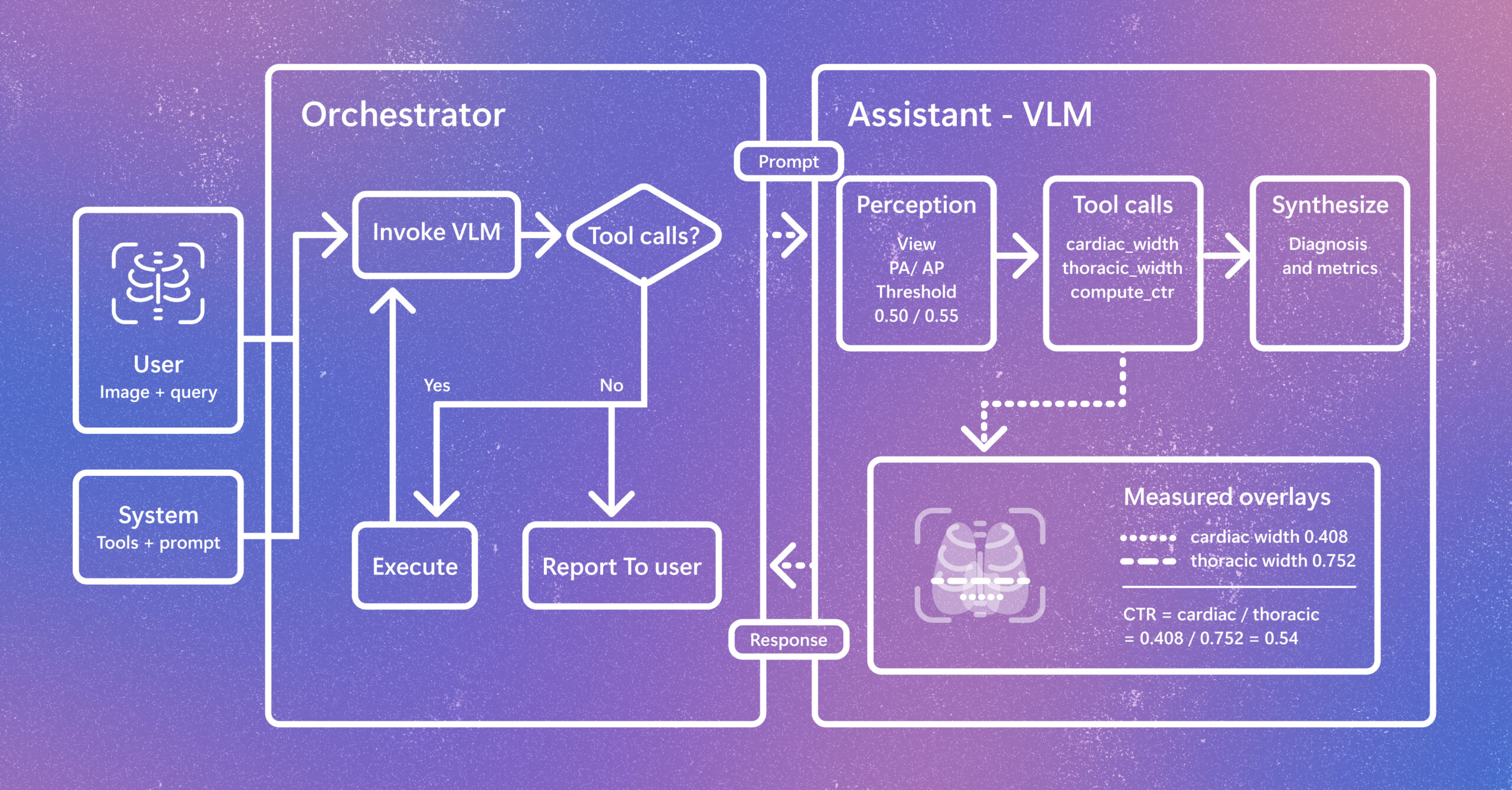
Radiology AI is evolving beyond report generation. CARE-X explores a unified approach that combines flexible reasoning, calibrated predictions, and measurement-based tools for chest X-ray interpretation. The post Introducing CARE-X: Towards Clinically Useful Radiology VLMs with Auxiliary Supervision, Reward-Aligned Learning, and Tool-Augmented Measurement appeared first on Microsoft Research.
Students in MIT’s Concourse program delve deeply into the human condition, debate challenging questions, and learn to develop judgment about issues that can’t be quantified.
Training AI agents with reinforcement learning can be challenging because their tools, context, and decision-making are managed by complex frameworks. Agent Lightning connects existing agents to RL training, making it easier to improve them without rebuilding them. The post Agent Lightning v1.0: A 3,500-Line Lightweight Agentic RL Framework for Training Agents with Real Harnesses appeared first on Microsoft Research.
We use cookies to run the site and, with your consent, for analytics and to show ads.
See our Cookie Policy.