Skip to content

A Systematic Analysis of Automatic Differentiation versus Discretization-based Constraints for Physics-Informed PDE Solvers

Sep 2026 · 0 citations · 50 references
Mathematics Computer Science Physics

TL;DR

As nonlinearity strengthens, the accuracy advantage of discretization-based constraints becomes increasingly pronounced, with smaller optimization errors compensating for the truncation errors, and the more complex the nonlinearity and boundary conditions, the greater the advantage of GNN over MLP.

Abstract

Physics-informed neural networks (PINNs) represent a growing frontier in using artificial intelligence to solve partial differential equations (PDEs). Automatic differentiation (AD) plays a central role in this paradigm, which is mesh-free and replaces traditional iterative solvers with gradient-based optimization in continuous space. However, the inherent limitations of AD, particularly in handling higher-order derivatives and discontinuous solutions, pose significant challenges for complex problems. This has motivated a growing number of researchers to explore discretization-based constraints as an alternative path. Yet, the respective applicability of these two paradigms remains largely unexplored. In this work, we conduct systematic experiments across a wide spectrum of problems, from simple linear Poisson to high-Mach hypersonic flows with strong discontinuities. Through a rigorous decomposition of approximation, optimization, and truncation errors, we systematically elucidate the fundamental trade-offs and error-governing mechanisms of both paradigms, as well as two representative network architectures: multi-layer perceptron (MLP) and graph neural network (GNN). Our results reveal a consistent trend: as nonlinearity strengthens, the accuracy advantage of discretization-based constraints becomes increasingly pronounced, with smaller optimization errors compensating for the truncation errors. Moreover, the more complex the nonlinearity and boundary conditions, the greater the advantage of GNN over MLP. These insights offer a robust practical guideline for configuring neural PDE solvers in demanding engineering applications. Our source data and code are available at https://github.com/guoxing0809/neuropde_analysis.
View source

Similar papers

#machine learning Preprint Sep 2026

Solving the Elastic Wave Equation with Physics-Informed Neural Networks: A Robust and Critical Assessment

Physics-Informed Neural Networks (PINNs) have recently emerged as a promising approach for solving Partial Differential Equations (PDEs), offering a meshfree alternative that integrates physical principles into the learning process. This presents a new paradigm compared to traditional discretization methods and purely...

D. Staub, Ben Moseley · 1 citation

A New Technique for Neumann Boundary Conditions in the Radial Basis Function Finite Difference Method

Partial differential equations (PDEs) play a central role in modeling a wide range of phenomena in science and engineering. Due to the difficulty in obtaining analytical solutions, especially on complex geometries, it is necessary to use numerical methods for determining approximate solutions. Radial Basis Function Fin...

Karinna Leanne Stevenson · 0 citations
Open access Aug 2026

Variational Physics-Informed Neural Network with Functional Constraints Based on Operator Self-Adjointness

Experiments show that FC-VPINN achieves approximately one-order-of-magnitude lower prediction errors than the traditional PINN and reduces memory usage to 40% of that required by the baseline, demonstrating improved accuracy and computational efficiency in multidimensional problems.

Wenjie Zhang, Yu-Bo Li, Wei-Dong Cui et al. · 0 citations
Preprint Sep 2026

Optimal Recovery for Solving Variational Problems

In science and engineering, many physical laws and scientific principles naturally arise as variational problems of minimizing an energy functional over an appropriate functional space. In many cases, it is more advantageous to directly discover the minimizer of the energy functional than to solve the associated Euler-...

Ting Wang, Gideon Simpson, Jaroslaw Knap · 0 citations
Preprint Sep 2026

Mesh-Free Numerical Approximation of the Biharmonic Equation via Optimized Kolmogorov--Arnold Neural Networks

A mesh-free numerical framework based on \textit{Kolmogorov--Arnold Physics-Informed Neural Networks} (KAN-PINNs) is developed for the approximation of fourth-order elliptic boundary value problems, with specific application to the biharmonic equation governing thin plate deflection. Unlike conventional Multi-Layer Per...

B. V. S. N. Rao · 0 citations
Open access 2026

A Physics-Informed Neural Network Approach for Solving the Monge-Ampère Partial Differential Equation

This paper presents a comparative study of classical numerical and machine learning techniques for solving the nonlinear Monge–Ampère Equation (MAE). A finite difference method (FDM) implemented in MATLAB is first validated using a quadratic exact solution on a square domain. Two neural network approaches are then inve...

C. Ogbonna, Maliki Olaniyi S, Nkem Ogbonna · 0 citations

Related blog posts

Microsoft Research Blog Jul 13, 2026

Verifying Rust cryptography in SymCrypt, from standards to code

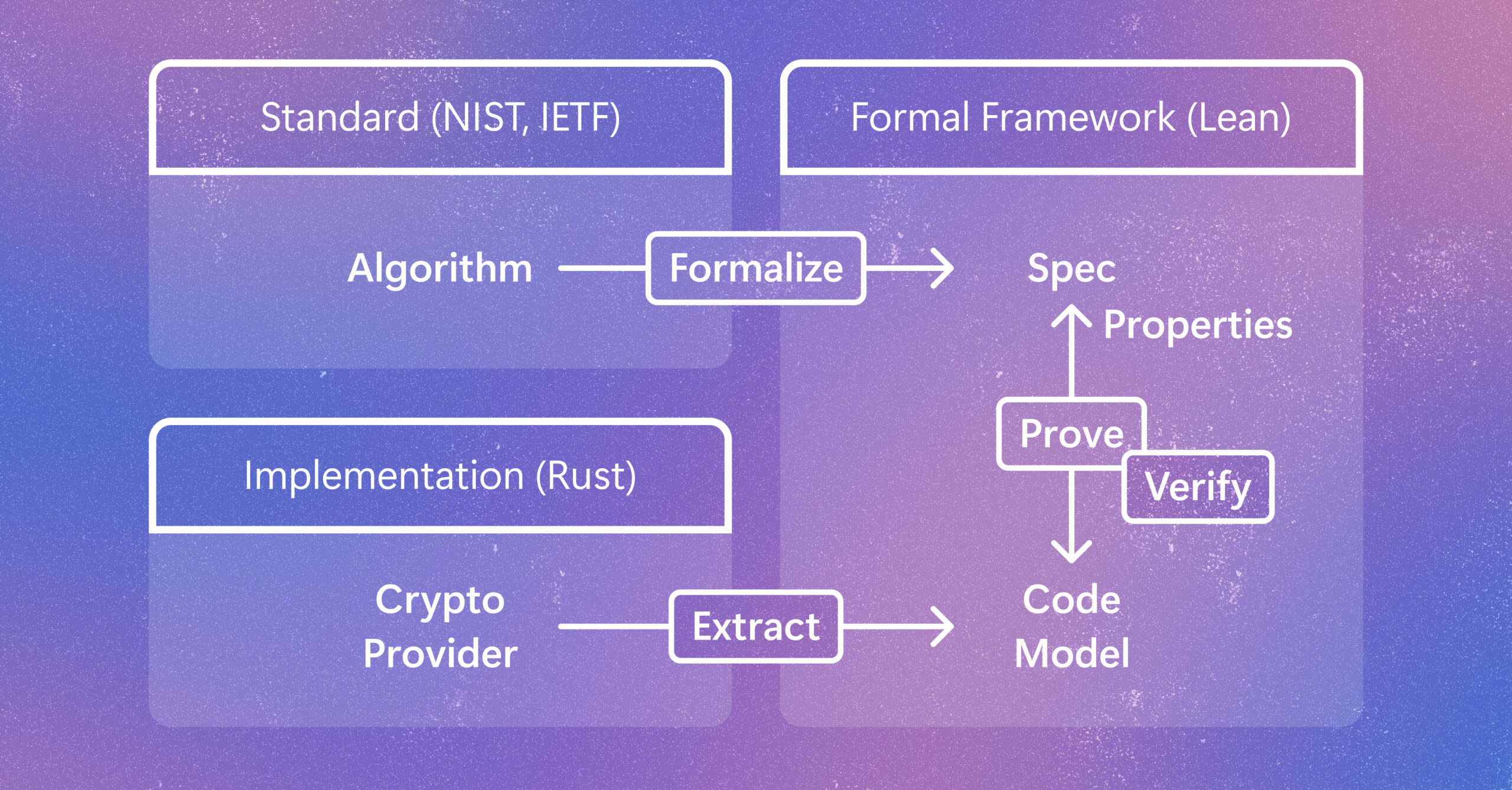
Cryptographic code supports vital protections in modern computing systems. Learn how a new method helps verify code as developers write it while preserving speed and adaptability as it gets implemented and evolves. The post Verifying Rust cryptography in SymCrypt, from standards to code appeared first on Microsoft Research.

MIT News · Artificial Intelligence Oct 7, 2026

Discovering the value of humanistic inquiry

Students in MIT’s Concourse program delve deeply into the human condition, debate challenging questions, and learn to develop judgment about issues that can’t be quantified.

We use cookies to run the site and, with your consent, for analytics and to show ads. See our Cookie Policy.