Skip to content

To Adapt or Not to Adapt? Selective Adaptation for Vision-Language Models

Sep 2026 · 1 citation · 79 references
Computer Science

TL;DR

This work proposes Cross-Augmentation Similarity (CAS), a simple baseline that performs adaptation only when predictions across augmented views exhibit low similarity, which not only preserves but in some cases improves overall accuracy, even when skipping nearly 85% of the adaptation process.

Abstract

Test-time adaptation (TTA) has emerged as a prominent strategy for adapting vision-language models to distribution shifts during inference. We conduct a per-sample analysis of model predictions before and after adaptation, and observe two failure modes in existing TTA methods that echo previous work. Adaptations are frequently negligible, yielding no change in the model's predictions, and more severely, they can be detrimental by flipping previously correct predictions to incorrect ones. This naturally raises a question: Can we identify and skip such negligible or harmful adaptations? In this work, we introduce a new problem of selective adaptation, which aims to determine whether a given test sample should undergo adaptation or be skipped. To this end, we propose Cross-Augmentation Similarity (CAS), a simple baseline that performs adaptation only when predictions across augmented views exhibit low similarity. Notably, CAS not only preserves but in some cases improves overall accuracy, even when skipping nearly 85% of the adaptation process. We hope other researchers will explore this new direction and surpass the performance of our baseline. Our code is available at https://github.com/sirujiang/selective-adaptation.

View source

Similar papers

#artificial intelligence Preprint Aug 2026

From Inference to Adaptation: A Unified Optimal Transport View of Vision Language Model

This work proposes a principled VLM TTA method called \algname, and theoretically reveals that the InfoNCE loss can be neatly reformulated as a Wasserstein OT formulation, thereby unifying the objectives of the inference and adaptation of VLMs to achieve their mutual benefits.

Qi Yu, Zhichen Zeng, Katherine Tieu et al. · 0 citations
Preprint Aug 2026

Towards Purified Multi-Label Test-Time Adaptation of Vision-Language Models

PuRF is introduced, a novel PuRiFication-driven cache-based method for multi-label test-time adaptation of vision-language models that consistently outperforms state-of-the-art methods on ViT-B/32 across five datasets.

Yiwen Liang, Hui Chen, Yizhe Xiong et al. · 0 citations
#machine learning Preprint Sep 2026

Not All Layers Need Tuning: Diagnosing and Directing Adaptation in Vision-Language-Action Models

Fine-tuning a Vision-Language-Action (VLA) model for a new deployment environment is expensive, yet most methods apply uniform-capacity adapters to every network region as if every region requires equal adjustment. This paper tests that assumption on five architecturally diverse VLAs (OpenVLA-OFT, $\pi_0$, SmolVLA, DTP...

Shahram Najam Syed, Arthur Jakobsson, Prayuj Sachdev et al. · 0 citations
#computer vision Preprint Oct 2026

Efficient Test-time Adaptation through Candidate Verification and Divergence Shifts

This paper proposes Test-Time Correction (TTC), a hypothesis-based correction framework guided by a simple principle: hypothesize, reconstruct, correct, that consistently improves accuracy over state-of-the-art VLM-TTA methods while achieving up to 2x speedup, over 3x lower CPU memory usage, and up to 1.4x lower GPU me...

Seungmin Oh, Seung-Hun Kang, Jongbin Ryu · 0 citations
Preprint Oct 2026

Unsupervised Long-Tailed Adaptation of Vision-Language Models

Adapting vision-language models to downstream tasks has achieved remarkable success by leveraging pseudo-labels generated from unlabeled data. Existing methods typically assume a uniform unlabeled data distribution, and thus the resulting pseudo-label distribution is likewise uniform. However, real-world data distribut...

Ke-Liang Chen, Ya-Xin Hou, Hui Liu et al. · 0 citations

Related blog posts

Microsoft Research Blog Aug 11, 2026

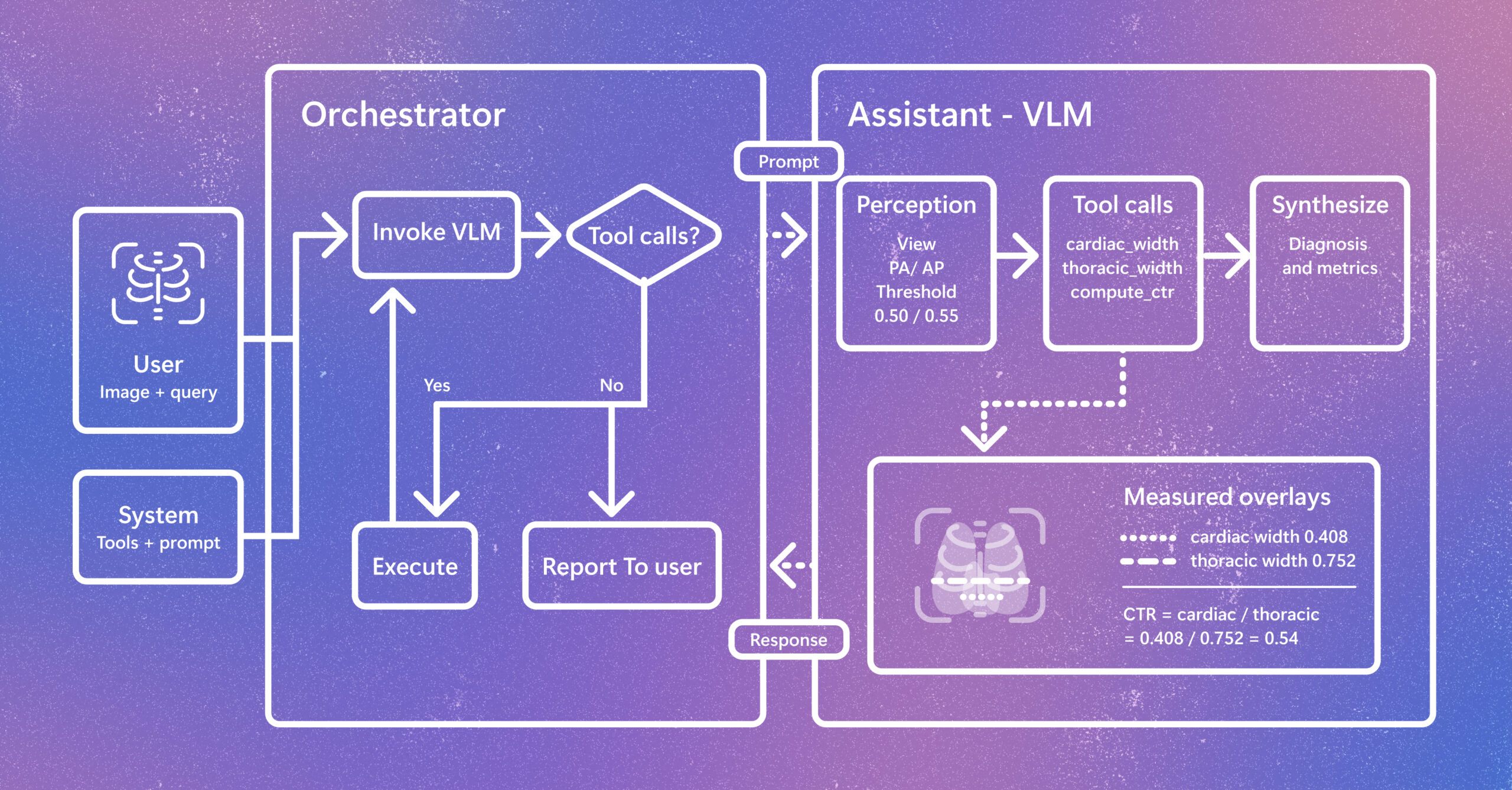
Introducing CARE-X: Towards Clinically Useful Radiology VLMs with Auxiliary Supervision, Reward-Aligned Learning, and Tool-Augmented Measurement

Radiology AI is evolving beyond report generation. CARE-X explores a unified approach that combines flexible reasoning, calibrated predictions, and measurement-based tools for chest X-ray interpretation. The post Introducing CARE-X: Towards Clinically Useful Radiology VLMs with Auxiliary Supervision, Reward-Aligned Learning, and Tool-Augmented Measurement appeared first on Microsoft Research.

We use cookies to run the site and, with your consent, for analytics and to show ads. See our Cookie Policy.