This work studies the stochastic first-order oracle complexity for constrained or regularized convex-concave min-max optimization and stochastic monotone variational inequalities and extends to prove the same complexity for problems without the bounded variance, by using the Blum-Gladyshev assumption.
Abstract
We study the stochastic first-order oracle complexity for constrained or regularized convex-concave min-max optimization and stochastic monotone variational inequalities. We focus on the case when suboptimality is measured in terms of the gradient mapping, also known as, forward-backward or natural residual, an optimality notion that generalizes the gradient norm for unconstrained problems. In this setting, under standard unbiased oracle access with now-standard variance assumptions, the best-known complexity for making the norm of the gradient mapping less than $\varepsilon$ is $\widetilde{O}(\varepsilon^{-4})$, compared to the near-optimal $\widetilde{O}(\varepsilon^{-2})$ that is established in the unconstrained case. We bridge this gap to improve the gradient mapping complexity for constrained convex-concave min-max problems to $\widetilde{O}(\varepsilon^{-2})$. We then extend to prove the same complexity for problems without the bounded variance, by using the Blum-Gladyshev assumption.
We study the time-uniform convergence of the raw iterate of standard stochastic gradient descent (SGD) for unconstrained smooth convex objectives. We prove that, under standard noise assumptions, the time-uniform convergence rate gets arbitrarily close to $\sqrt{\log n / n}$ but never reaches it. More specifically, we...
Minimizing gradients of a convex function is an important problem across optimization and learning tasks. The gradient provides a directly computable certificate of approximate stationarity, and its minimization usually implies stronger results than those for minimization of function values. In this work, we study grad...
Nico Pelleriti, Maryam Shiran, David Martínez-Rubio et al.· 0 citations
A single fixed smooth convex hard instance is constructed using a Moreau-smoothed biased max chain, an exact prefix-shielding mechanism, and batched delayed rotations to preserve consistency with the full adaptive transcript and establish the optimality of the square-root complexity branch for deterministic bounded-que...
Wen-Dao Wu, Hai-Han Zhang, Chen-Heng Zhang et al.· 0 citations
We analyze a stochastic algorithm with Halpern-type anchoring for constrained convex-concave problems and monotone variational inequalities. This single-loop and single-call algorithm uses one unbiased sample of the gradient operator at every iteration, to be applicable to monotone games with noisy feedback. With $t$ d...
We consider the problem of noisy gradient-free minimization of the k-th order partial derivative of a $\beta$-H{\"o}lder function supported on a d-dimensional cube. We show that T ^{($\beta$+d+k)/(2$\beta$+d)} log(T )^{(\beta-k)/(2\beta+d)} is a non-asymptotic minimax rate of the T step cumulative regret for all $\beta...
Théo Paquier, A. Tsybakov, F. Portier et al.· 0 citations
The same accuracy exponent holds beyond tensor update rules, even for randomized queries and arbitrary feasible outputs, for smooth convex--concave minimax optimization.
Yan-Yi Li, Hai-Han Zhang, Chen-Heng Zhang et al.· 0 citations
Related blog posts
MIT News · Artificial Intelligence· news.mit.eduOct 2, 2026
Martin Trust Center Managing Director Bill Aulet introduces Dear Dreamer, a free platform for middle and high school students who want to learn about entrepreneurship.
Microsoft Research Blog· microsoft.comSep 30, 2026
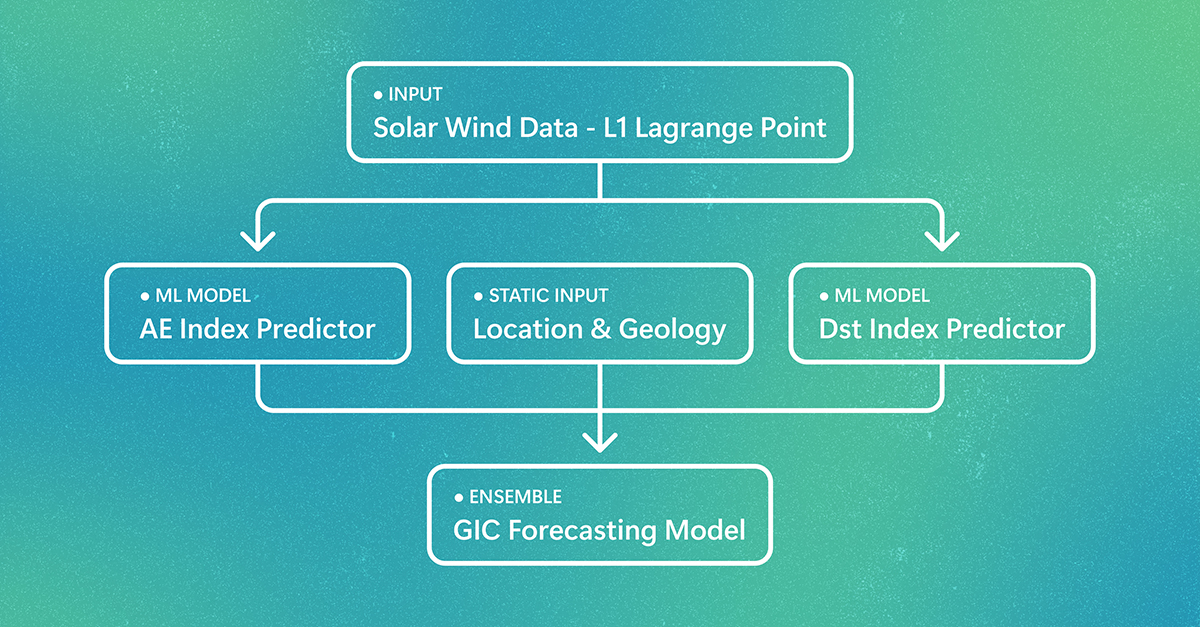
Extreme space-weather events can damage power systems on Earth and degrade GPS accuracy and satellite operations. A new machine learning system can predict where damage is likely to occur 30-60 minutes before a storm arrives. The post Forecasting space weather risks on power grids appeared first on Microsoft Research.
We use cookies to run the site and, with your consent, for analytics and to show ads.
See our Cookie Policy.